ESE Congress 2024: Carina Stoettner Takes the Embedded Software Industry on a Journey to 2040

How will the embedded software industry change by 2040? Which technological, societal and geopolitical developments will shape the next generation of software solutions across industry and services? These are the questions at the heart of the opening keynote by Carina Stoettner, futurist and managing director of the think tank Themis Foresight, at the ESE Congress 2024.

On 3 December 2024, her talk “Time Travel to the Future: Opportunities and Risks for the Software Industry” will open the largest embedded systems event in the German-speaking world.


Embedded software in 2040: what’s coming?

Carina Stoettner takes the audience into possible futures for software development. The focus isn’t on technical detail alone but on the bigger picture:

  • How are global value chains changing?
  • What role do resilience, digital sovereignty and energy-efficient systems play?
  • And how are customer needs evolving in industry, in mobility and in medical technology?

Five key drivers for the future of the embedded sector

Among the areas of transformation Stoettner examines in her keynote:

  1. Systemic complexity: embedded software is becoming the backbone of connected, autonomous systems. Modularity and real-time capability turn into strategic success factors.
  2. Energy and resources: energy efficiency and long-lived software architectures become mandatory — regulation included.
  3. Regulation and security: geopolitical tension and new cyber risks call for robust governance.
  4. New ways of working and the talent shortage: the working world is shifting — teams need to operate remotely, in an agile way and across disciplines.
  5. Future markets and customer needs: embedded software has to orient itself more closely around use cases emerging beyond traditional industry — in health, education or climate technology.
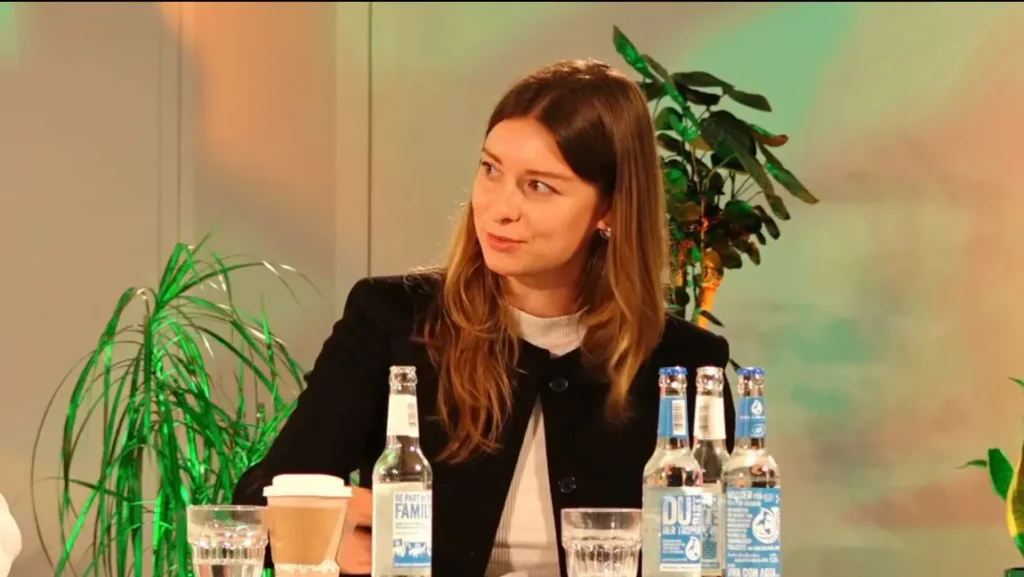
#CRX24: Carina Stöttner in conversation with Otto Group CEO Birken on climate transformation

On 24 September 2024, the Otto Group launched the second edition of its Corporate Responsibility Experience — #CRX24 — with two high-profile panel discussions on one of the most pressing questions of our time: how can climate transformation succeed when climate fatigue and regulatory pressure are mounting?

Among the participants was Carina Stöttner. Alongside leading figures from business, civil society and the media, she explored how responsibility, motivation and optimism about the future can be brought together.

“Climate transformation has to make economic sense” — Carina Stöttner on the panel

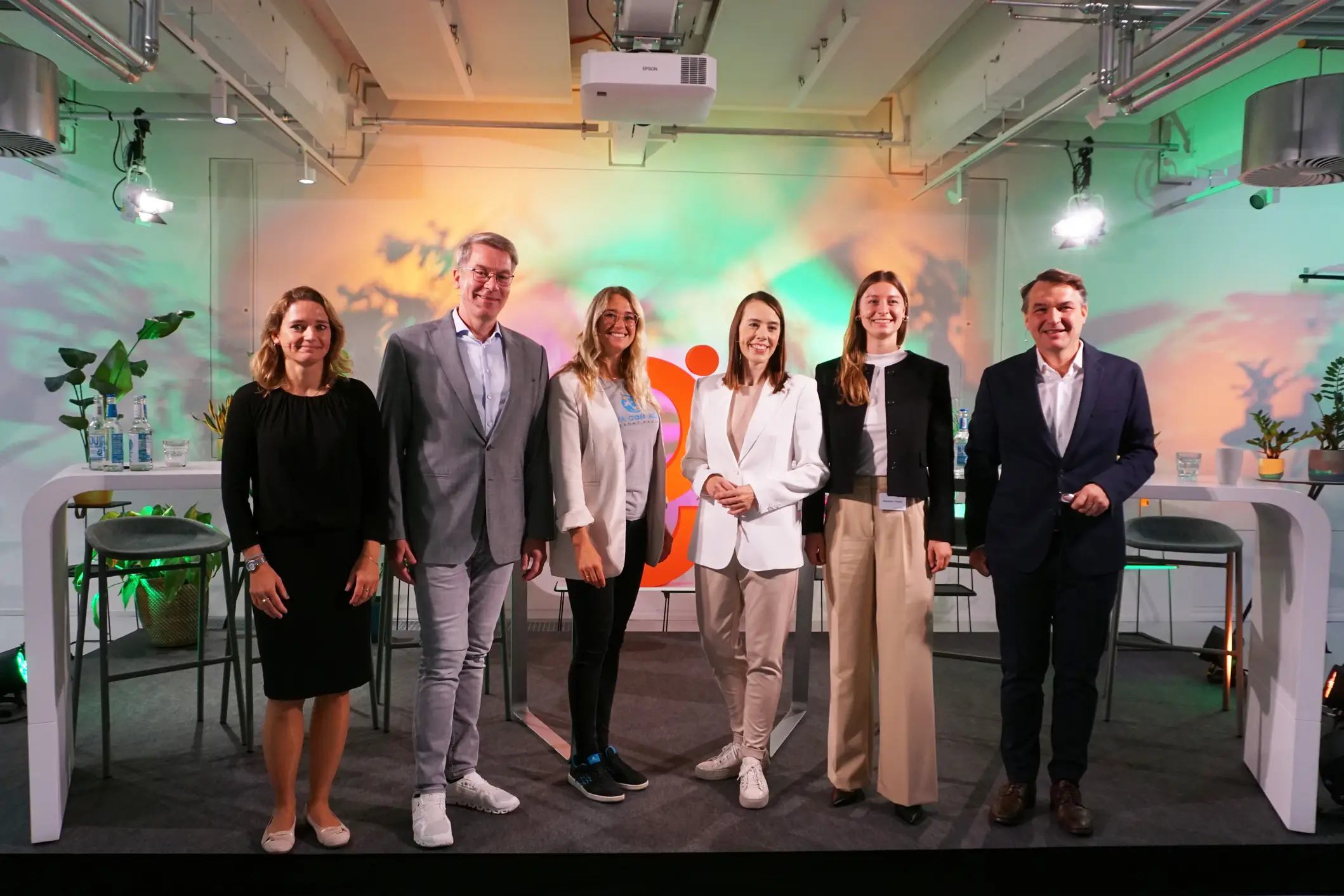
The first panel brought together:

  • Alexander Birken, CEO, Otto Group
  • Carolin Stüdemann, CEO, Viva con Agua
  • Marina Beermann, Cociety foundation network
  • Carina Stöttner, Themis Foresight
  • Jens Schröder, science journalist

Carina Stöttner made the case for developing new economic frameworks — going beyond regulation and incentive schemes alone.

“We need a shared vision that brings people together rather than driving them apart. Climate transformation can’t be a project built on fear — it has to be one of design and perspective.”

She argued that economic and social sustainability need to be thought through together in order to avoid social tension and build long-term stability. Equally decisive, she said, is the work of building institutional bridges — between business, government and civil society — so that visions of the future can be designed and delivered collectively.


The takeaway: the future needs collaboration — and new narratives

#CRX24 made one thing clear: climate transformation is about more than technology and regulation — it’s a cultural and communicative project too. Positive visions of the future, honest dialogue and cross-sector alliances are what it takes to counter climate fatigue and embed sustainable strategy meaningfully inside companies.


Carina Stöttner — futurist and keynote speaker on sustainability, transformation and futures literacy

Carina Stoettner at the Handelsblatt Hydrogen Summit 2023: Innovation, Standards and the Business Case for Green Energy

At the Handelsblatt Hydrogen Summit in May 2023, leading figures from industry, government and technology discussed the role of green hydrogen in the climate transition — and how Germany might become a global engine of innovation in the field.
On the panel: Carina Stoettner as a foresight expert, alongside Uwe Kerkmann, managing director of H2UB. The conversation was moderated by Kevin Knitterscheid.

Rethinking innovation: setting standards, shaping the future

Carina Stoettner argued that the transition isn’t only about the energy source itself, but about how we build an industry around it:

“This isn’t just about using hydrogen. It’s about helping define the global standards with every innovation, every component, every valve built to handle it.”

Every component developed and manufactured in Germany, she said, is a lever: for a share of the economic value, for technology exports — and for an active German role in the global hydrogen market.

Hydrogen as part of a wider climate transition

The discussion made clear that hydrogen is not the whole answer but one central building block in a much larger systemic shift.
The climate transition has to be thought about well beyond clean energy supply — toward new models of production, innovation and value creation.

“The decisive question isn’t only how a product becomes green. It’s how it becomes green AND commercially relevant,” Stoettner said.

Industry leading the way: the Salzgitter example

Particular attention went to Salzgitter AG and CEO Gunnar Groebler. Salzgitter is among the first companies in Germany to commit fully to hydrogen-based steel production — a signal to the entire sector.

“When companies like Salzgitter move boldly, they take on a pioneering role — technologically, commercially and socially,” Stoettner said.

The takeaway: shaping the future through innovation

The Hydrogen Summit made one thing clear: if Germany wants to hold its own in global competition, clean energy sources won’t be enough on their own. It will take intelligent industrial policy, companies willing to take risks — and people prepared to think past the obvious solutions.

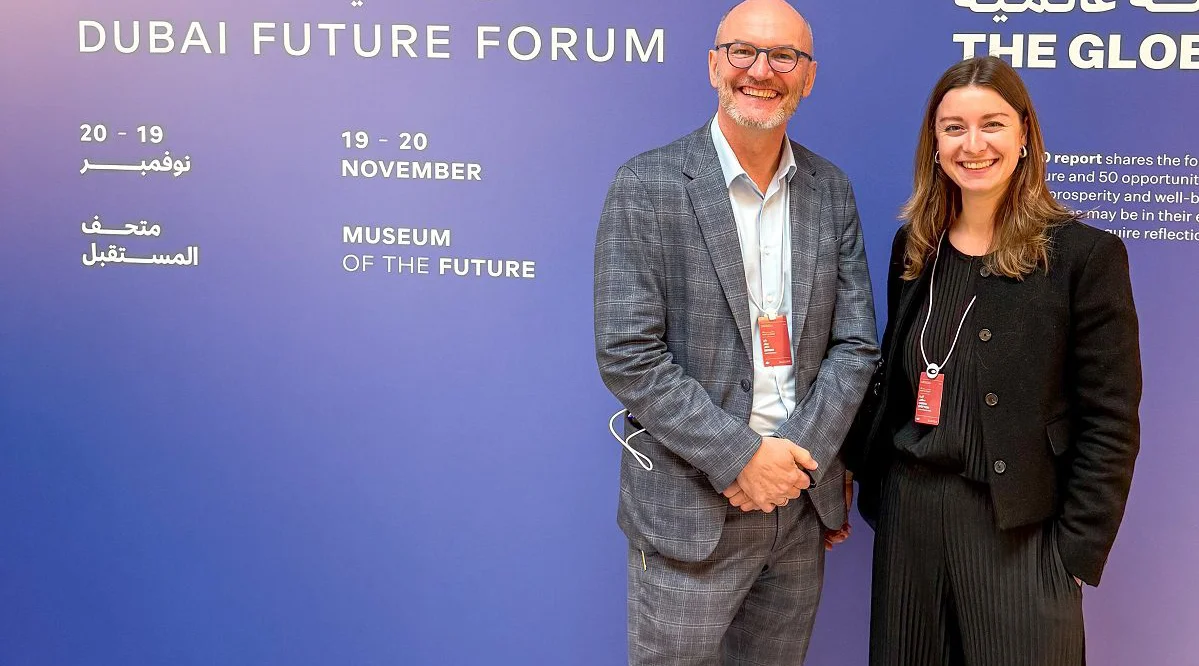
Dubai Future Forum 2024: Carina Stöttner at the world's largest gathering of futurists

What happens when more than a hundred of the world’s leading futurists, strategists and technology pioneers come together to work through the big questions of the coming decades? That’s exactly what Carina Stöttner experienced at the Dubai Future Forum 2024 — the largest gathering of futurists in the world.

Held at the iconic Museum of the Future, the event drew more than 2,500 attendees, 150+ speakers and 100+ leading organizations from over a hundred countries — cementing Dubai’s position not only as a global hub for technological and social innovation, but as a driving force behind global futures strategy.

Inside the forum’s four major themes

The Dubai Future Forum 2024 was structured around four central themes, each aimed at developing approaches to the most pressing challenges of our time:

1. Futuring Nature

The focus here was on nature-based solutions in the face of accelerating climate change. The numbers speak for themselves: more than 1.2 billion people could be displaced by environmental disasters by 2050. Mangroves and coral reefs were presented as critical lines of defense.

“More than 50% of global GDP depends directly on natural resources.” — Emirates Nature-WWF

2. Empowering Generations

How do we educate the next generation for a complex, technological future?
Alternative education, out-of-school programs and equity of access were at the center of the discussion. Egyptian astronaut Sara Sabry made an urgent case:

“We have to offer young people a future in their own countries if we want to stop the brain drain.”

3. Optimising Health

AI and biotechnology are transforming medicine. Digital twins, personalized treatment and epigenetics were presented as the key technologies of the coming decades, with the intersection of healthcare and data ethics running through the whole track.

4. Transforming Humanity

How is technology reshaping our social structures and our sense of ourselves?
From the prospect of an AI-run CEO to the proposal to replace GDP with measures like wellbeing and sustainability, the forum took a genuinely bold look ahead.

“We need to learn to think in generations rather than quarters.” — Anne Beate Hovind


The future is a global project — and it needs new narratives

Carina Stöttner, futurist and sought-after speaker on the future, technology and transformation, was struck by the range of perspectives in the room:

“The forum makes one thing clear: shaping the future is already a collective global project. The challenges are complex, but the knowledge is there — what we need now is more courage to act on it.”


Dubai Future Forum 2024 in numbers

  • 2,500+ attendees
  • 150+ speakers
  • 70+ sessions and workshops
  • 100+ countries and organizations represented
  • Multiple award ceremonies, including the Dubai Foresight Awards
  • The launch of major initiatives such as the Dubai Future Experts Programme

The takeaway: Dubai is setting the standard for global futures planning

The Dubai Future Forum 2024 was far more than a conference — it was a collaborative laboratory for the future, and it made something clear: tomorrow’s questions demand interdisciplinary thinking, international cooperation and visionary leadership today.

Carina Stöttner is looking forward to bringing what she took from Dubai into her work with companies and institutions around the world.

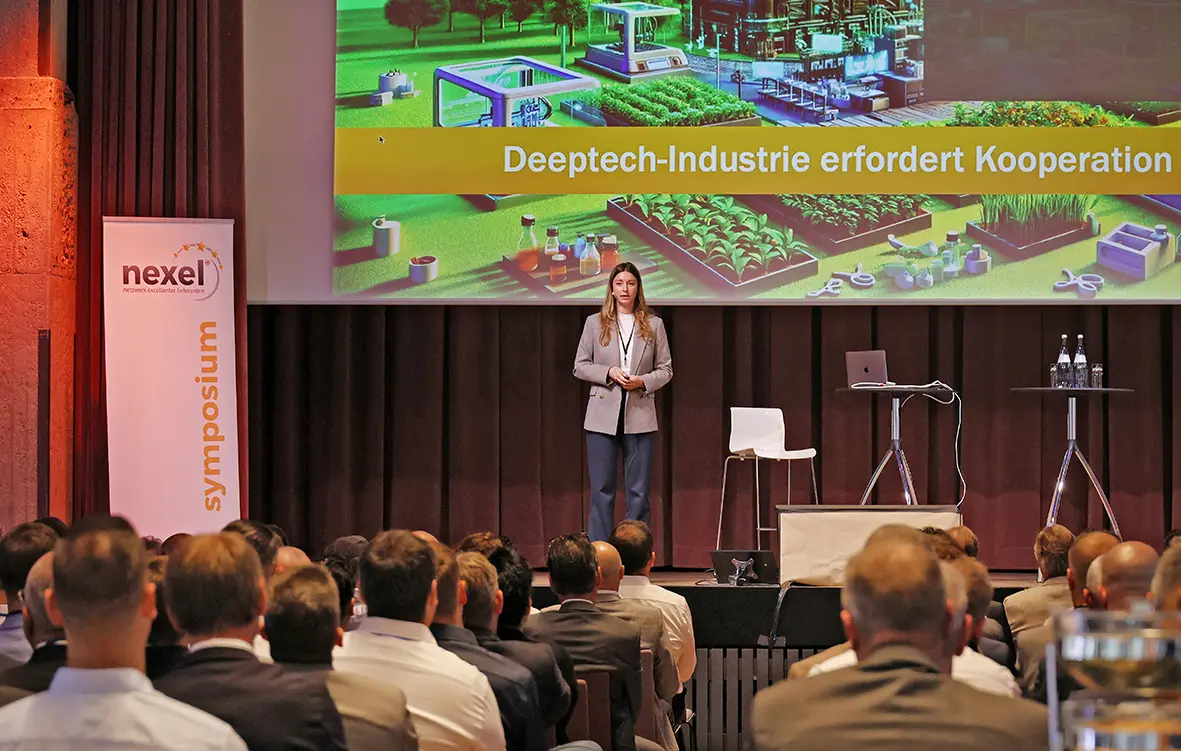
Full Speed into the Future: Carina Stoettner Delivers the Keynote at the 5th Nexel Symposium

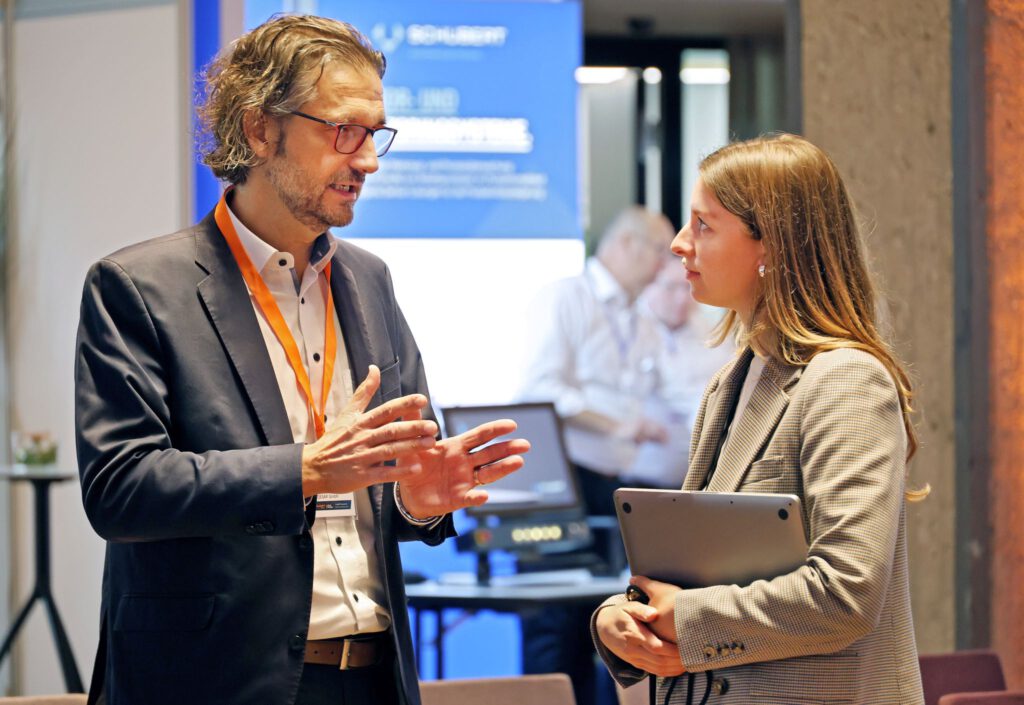
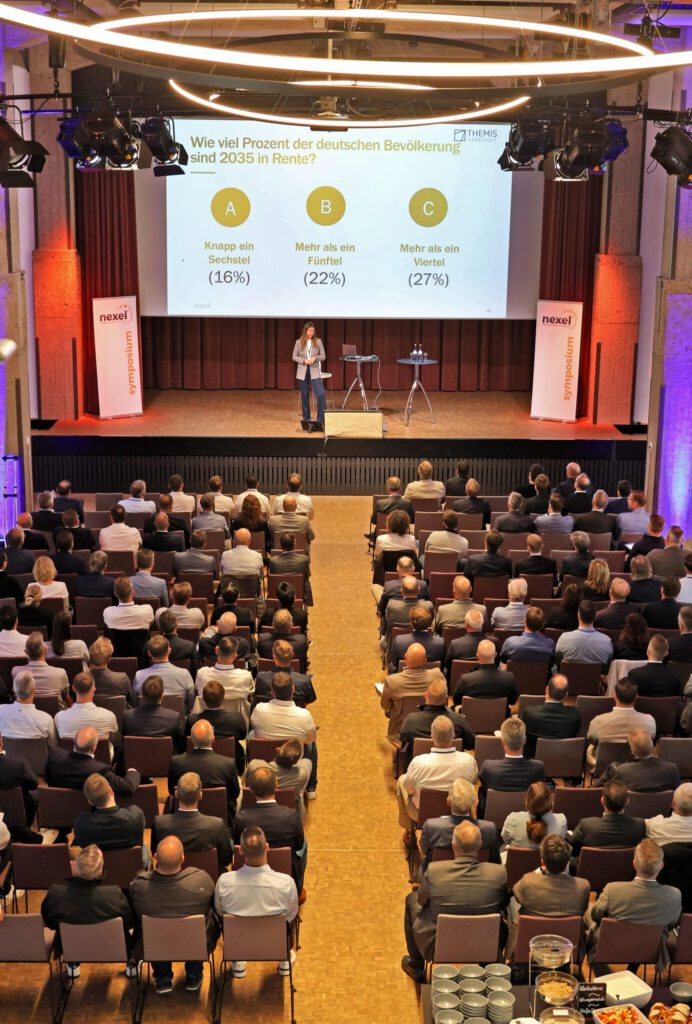
On 1 October 2024, the 5th Nexel Symposium hosted by the Qesar network took place in Schwäbisch Hall, under the forward-looking banner “Full Speed into the Future.” Among the speakers: Carina Stoettner, futurist, foresight expert and sought-after keynote speaker on industry, transformation and technology.

Alongside well-known figures including Prof. Michael Groß, Ralf Bouffleur and Gert Hansen, Carina Stoettner offered a deep look into the future of industry — and at the strategic questions companies will have to answer over the coming decades.

Three scenarios for the industry of the future

In her keynote, Carina Stoettner presented three cross-sector scenarios describing possible developments through 2045 — covering not only technological trends but the structural and social conditions around them.

“The future can be shaped — but only if we’re thinking about it today. Scenarios make complexity tangible and let you think strategically ahead of it,” as Carina Stoettner put it on stage.

Each scenario brings its own challenges and opportunities:

  • How do you integrate technologies in a way that makes sense?
  • What new models of collaboration emerge between sectors?
  • And which capabilities and structures do companies need to build to stay successful over the long term?

What it means for key sectors: packaging, machinery, optics, automotive, chemicals

The most compelling part was translating all of it into specific sectors. Whether packaging, machinery and equipment, optics, automotive or chemicals, the same things hold:

  • Agility becomes a survival skill.
  • Spotting technologies early is decisive.
  • Collaboration rather than rivalry creates new value.

The scenarios gave participants practical starting points for developing strategy in a period of growing uncertainty.


Foresight as a catalyst for change

The Nexel Symposium wasn’t only a place for expert exchange but a real catalyst for the transformation of entire industrial sectors. The contributions from Carina Stoettner and the other speakers made one thing clear: orienting toward the future isn’t a nice-to-have. It’s a business necessity.


Carina Stoettner — keynote speaker on the future, industry and foresight

Looking for a speaker who combines substance with real clarity?
Carina Stoettner delivers keynotes on topics including:

  • The future of industry and work
  • Approaching the future strategically

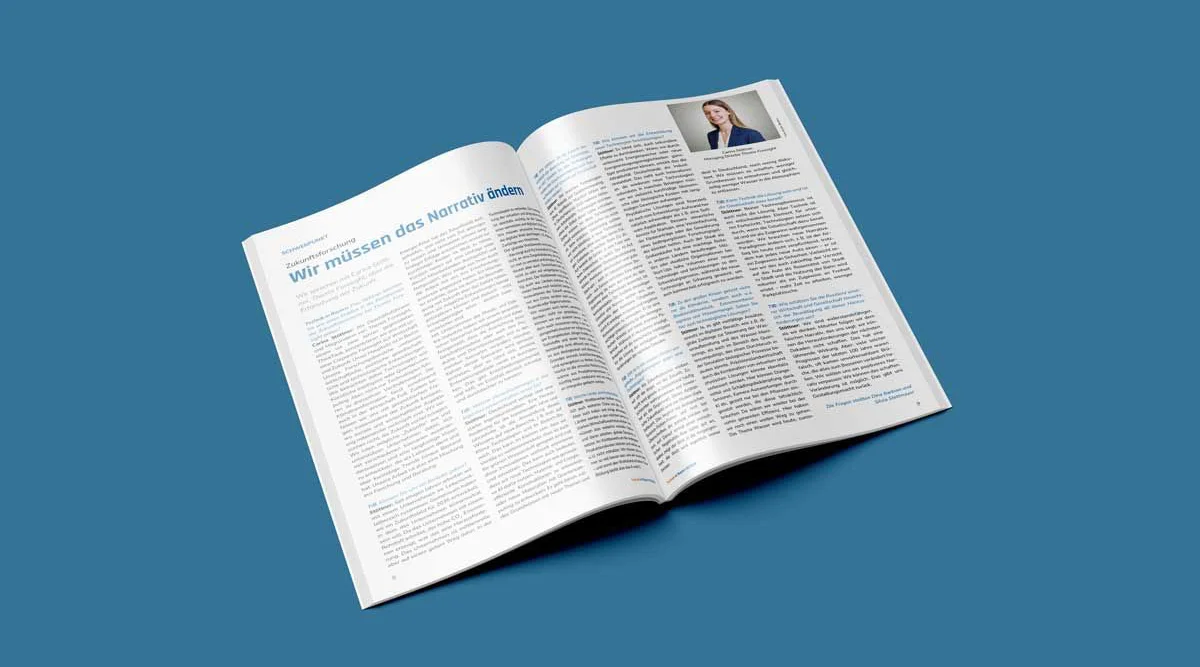
Interview in 'Technik in Bayern': Carina Stoettner on Foresight, Fear and Futures Literacy

How can strategic foresight help companies and society prepare for an uncertain future? What role do skills, narratives — and the way we handle technology — actually play? These questions were at the center of a recent interview with futurist Carina Stoettner in Technik in Bayern, the magazine of VDI Bayern Nordostbayern.

Dr. Dina Barbian and Silvia Stettmayer spoke with Carina Stoettner, managing director of the think tank Themis Foresight. The interview offers a layered look at how foresight methods are applied inside companies, and at why futures literacy matters in a period of accelerating change.


Foresight as a strategic lever — beyond fear and techno-optimism

Stoettner makes the case plainly: companies that use foresight deliberately give themselves a head start. It isn’t about predicting the future but about the ability to think in scenarios, recognize risks — and actively shape opportunities.

“Fear is a poor adviser. Shaping the future takes openness, a willingness to learn, and a shared sense of where we’re going.”
— Carina Stoettner

The conversation also examines how societal paradigms get written into technological developments — the airbag as an expression of a promise of safety, for instance. At the same time, Stoettner warns against naive techno-optimism: the future needs more than technical solutions. It needs ethical, social and cultural negotiation.


Futures literacy as the key skill of the coming decades

A central theme of the interview is building futures literacy: the ability to work with uncertainty, understand change and recognize where there’s room to act. In Stoettner’s view, this is one of the decisive success factors for companies and education systems through 2040.


Further contributions and perspectives on the future

Alongside the interview with Carina Stoettner, the issue contains other compelling pieces — including one by Prof. Lothar Abicht — on the technologies of the future, the working world, society and change. Very much in the spirit of the line attributed to Pericles:

“It is not about predicting the future, but about being prepared for it.”

Read the article (in German)

Carina Stöttner at the Handelsblatt AI Summit: artificial intelligence needs leadership, values and room to experiment

At the Handelsblatt AI Summit 2023, leading figures from business, technology and research came together to discuss the future of artificial intelligence in the enterprise. In the middle of the debate: Carina Stöttner, managing director of Themis Foresight, futurist and sought-after speaker on technology, AI and foresight.

A high-profile panel with Mattias Ulbrich (CIO, Porsche) and Sven Mulder (Managing Director, SAP Germany) tackled the opportunities and the risks — and the conditions that need to be in place for responsible use of AI inside a company.

“AI needs a clear framework — technological, ethical and cultural. Only then can it be genuinely productive and genuinely trustworthy.”
— Carina Stöttner

Foresight meets reality: AI needs leadership and the nerve to shape it

The discussion made one thing clear: implementing AI doesn’t happen on its own. It takes leaders who can build both a technological vision and ethical guidelines into company strategy. Carina Stöttner emphasized the importance of giving people room to experiment:

“You have to bring employees along with you. Spaces where people are allowed to work with AI, play with it and test it take the fear out of it and build trust.”

Fear of AI was central to the conversation. Doomsday scenarios about an all-powerful superintelligence, in Stöttner’s view, miss the point. What’s needed instead is a more nuanced debate about the range of possible AI futures — and a realistic look at the opportunities, the limits and the room we have to shape them.

The EU AI Act: regulation without stalling innovation

Another central topic was the then-forthcoming EU AI Act. The panel agreed: regulation is necessary, but it can’t become an obstacle to innovation. Companies need clarity and reliability if they’re to build AI strategies that hold up over the long term.

Other takeaways from the summit

  • Jonas Andrulis, CEO of Aleph Alpha, predicted in his keynote that with full AI integration, as much as 70% of knowledge work could be automated.
  • Dr. Thierry Bücheler took a historical view of technological development, comparing today’s AI to the early days of aviation — a suggestion that the real breakthrough may still lie ahead.

Carina Stoettner on AI Strategy in Waidhofen an der Ybbs

“You can’t simply buy an AI system, switch it on and hope for the best — that will end in disaster.”
That’s how one expert in a recent AI study summed up a central problem in how companies are approaching the technology.

Artificial intelligence is widely seen as the key technology of our time. The reality check tends to follow close behind: systems fail, produce unreliable results, or create new risks. Why? Because technology without context and without a clear set of values doesn’t produce solutions that last.

Foresight instead of flying blind: AI needs onboarding

Carina Stoettner, managing director of Themis Foresight and an experienced speaker on AI, technology and the future, set out her perspective on using AI productively and responsibly in June at Rise of Technology in Waidhofen an der Ybbs.

Her central argument:

“AI systems need to be introduced, trained and tied to company goals — exactly like new employees.”

Which means companies need more than technical infrastructure. They need a strategic foresight perspective that builds ethical guidelines, company values and a clear sense of direction into how AI is designed and used.

Ethical AI pays off — strategically and financially

Building ethical principles and strategic objectives into AI systems delivers:

  • Better data quality
  • Better decisions over the long term
  • Lower reputational and compliance risk
  • A stronger return on investment

Carina Stoettner — speaker on AI, technology and the future

A sought-after speaker on AI and foresight, Carina Stoettner delivers keynotes for companies, conferences and leadership events. Her approach combines technological expertise with a wider view of where society is heading — for anyone who would rather not leave the future to chance.

👉 Enquire about booking
👉 Learn more about our AI strategy consulting

Carina Stoettner at the Handelsblatt Hydrogen Summit

On 3 and 4 May 2023, the Handelsblatt Hydrogen Summit brought together decision-makers from government, research and industry. The focus: the role of green hydrogen as a key technology in the climate transition across industry and mobility.

Carina Stoettner, futurist and an experienced speaker on national and international stages, took part in the panel “Innovation for the Climate.” She made the case that the transition doesn’t mean going without — it’s above all an opportunity to secure prosperity.

“We need a vision that connects industrial progress, climate innovation and economic strength. Green hydrogen isn’t just an energy carrier — it’s the engine of a new industrial revolution,” Carina Stoettner said on the panel.

Green hydrogen as the basis for decarbonization

In her remarks, Stoettner argued that German industry in particular — from mid-sized firms to large corporations — needs to set standards and scale solutions now. Green hydrogen could do more than replace fossil fuels in future: it could restructure entire production chains.

Another central element of her vision: building the circular economy into materials-processing industries such as chemicals. She pointed here to the Themis Foresight study “Chemical Futures 2050”, which develops scenarios around renewable carbon and closed material loops.

Shared responsibility across government, research and industry

Alongside technological developments, the summit devoted considerable attention to policy frameworks, national funding measures and the build-out of hydrogen infrastructure. Questions at the center of the discussion included:

  • Which hydrogen strategies will actually deliver climate impact over the long term?
  • How can innovations reach market readiness faster?
  • What role does Europe play in the global hydrogen market?

The debates made one thing clear: hydrogen will be decisive for a sustainable future — but only if business and government are willing to take bold steps together.

Carina Stoettner — thinking ahead, shaping change

As a speaker on the future and transformation, Carina Stoettner brings rigorous analysis, plain speaking and vision worth acting on. Her interdisciplinary view of technology, society and the economy offers valuable direction to companies and policymakers who want to play an active part in building an industry fit for the future.


Looking for a speaker for your event?
Carina Stoettner speaks on topics including the future of industry, climate transition, artificial intelligence, the future of work and futures strategy for business.