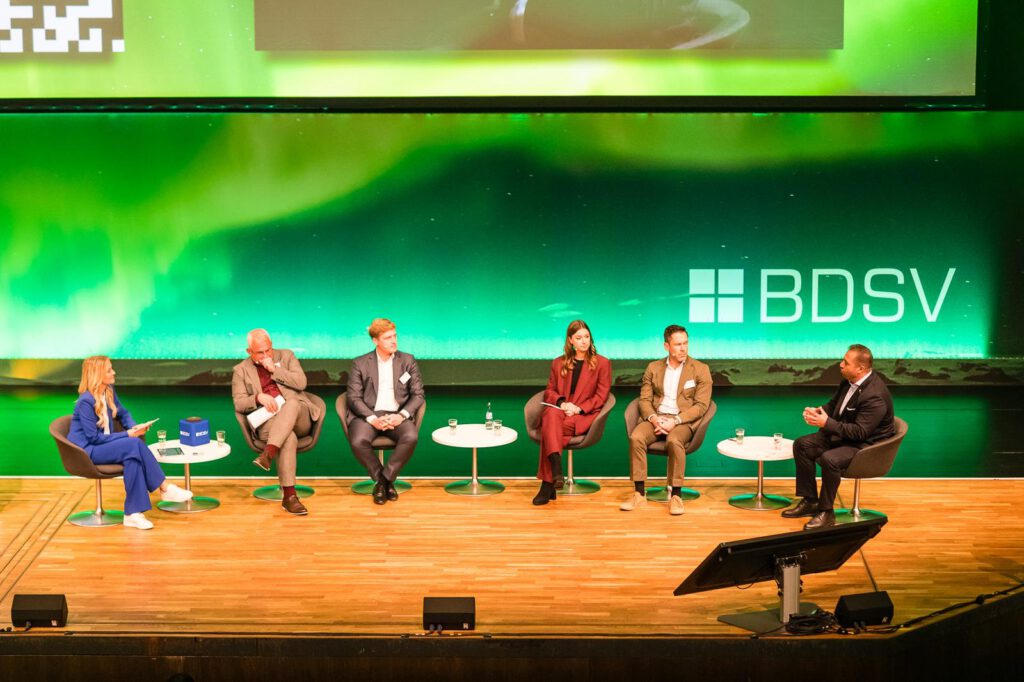
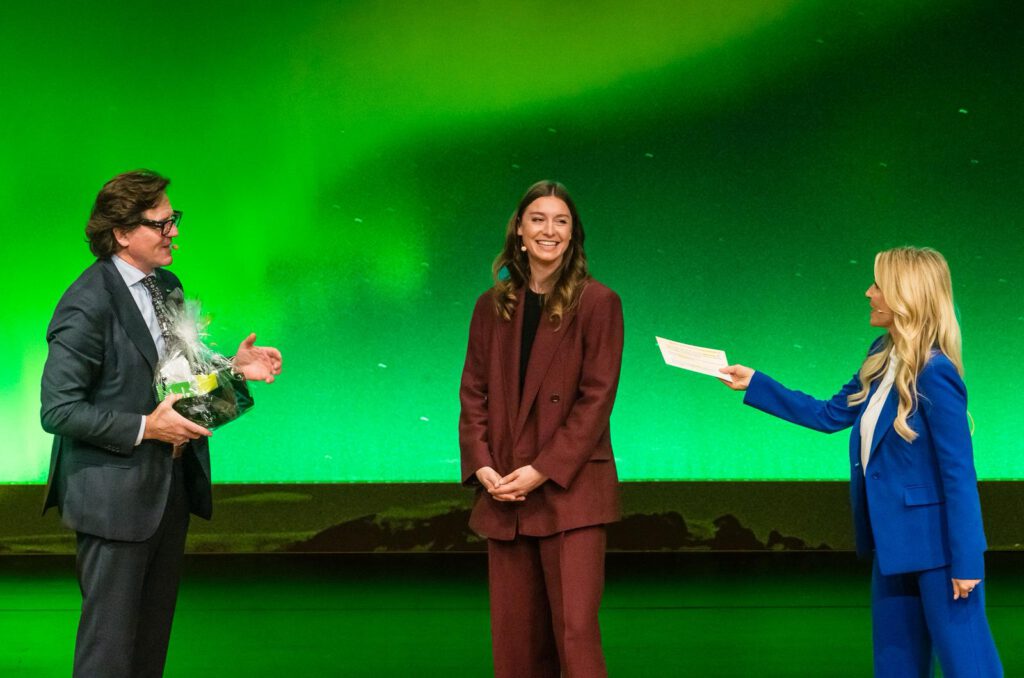
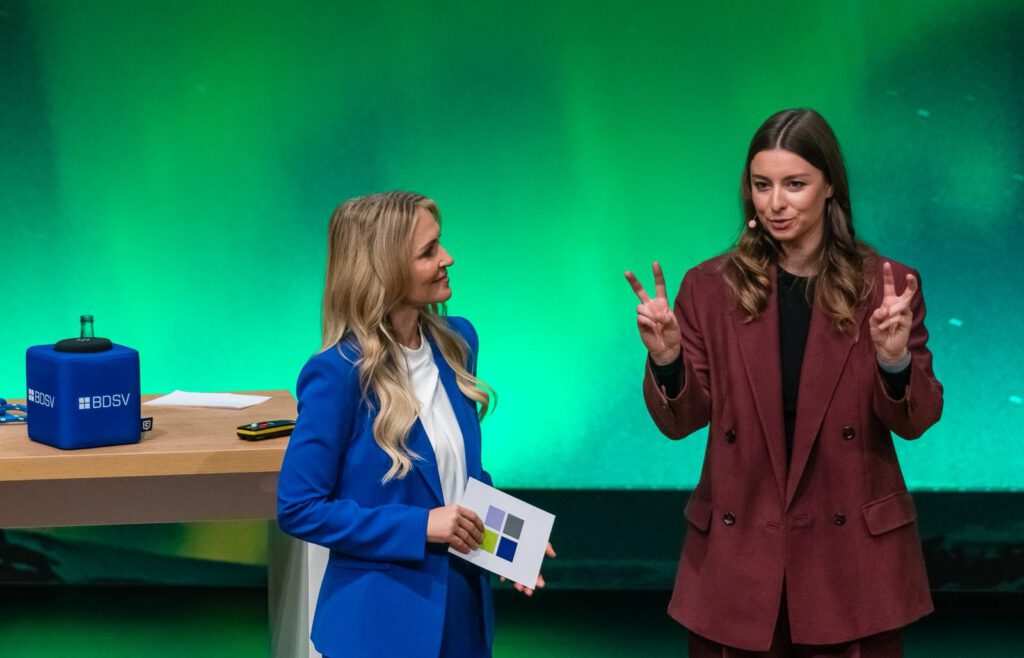
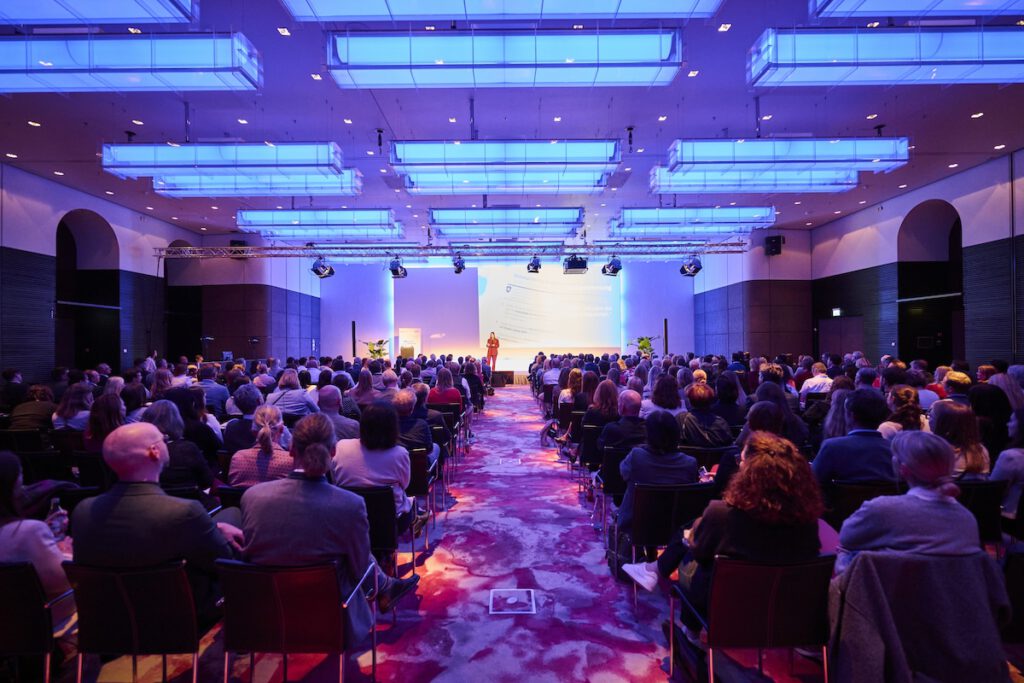
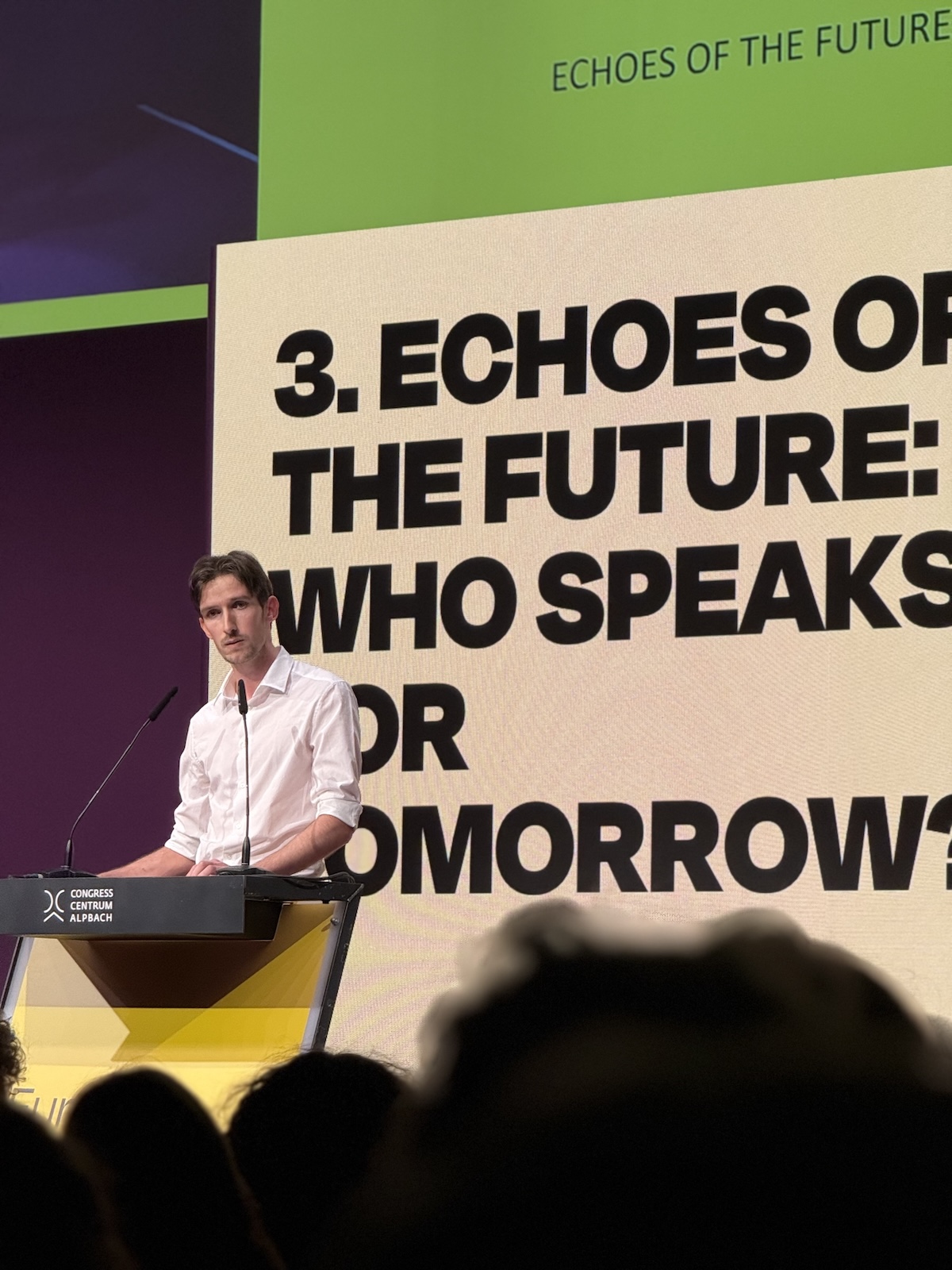
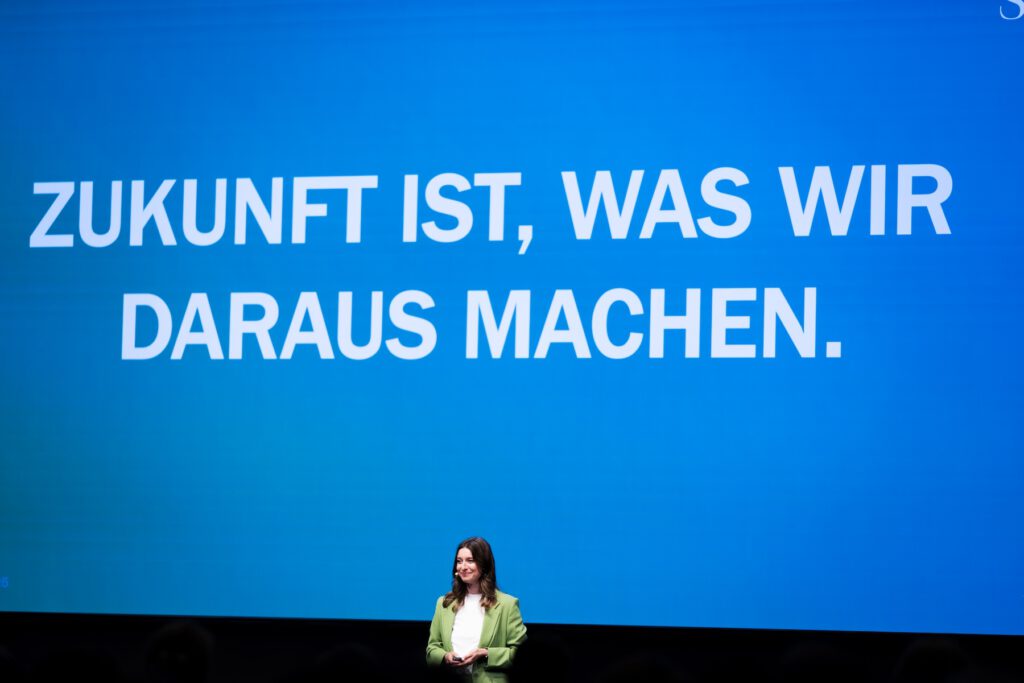
What does the future of industry look like? On 15 and 16 October 2025, the German steel recycling sector gathered in Osnabrück for the annualBDSV industry meeting, held under the banner “Global, Future-Ready, Indispensable.” The event is one of the sector’s most important platforms for exchange and strategy in a period of industrial transformation.
Against a backdrop of geopolitical uncertainty, high energy prices and sluggish permitting, one question stood at the center: how can industry — and steel recycling in particular — secure Europe’s ability to compete in the future?
Speaking as a futurist, Carina Stoettner used her talk “Four Scenarios for the Industry of Tomorrow — and What They Mean for Steel Recycling” to examine the technological, geopolitical and economic developments that will shape Europe’s industrial landscape through 2040.
Four scenarios for the industry of tomorrow
Stoettner set out how each possible future could play out for the steel and recycling sector:
Deep Tech Germany: new materials and high-tech steels turn recycling into a driver of innovation.
Designed in Germany, produced in the world: as production chains move abroad, recycling and material loops have to be thought about globally.
A regional European industry: protectionist tendencies create new competitive conditions — and recycling becomes a strategic resource.
Local for local: regional loops and resilient value chains provide stability in a fragmented world.
“Steel recycling is a precondition for Europe’s resilience”
Stoettner underlined the sector’s strategic importance for Europe’s future:
“Steel recycling is a precondition for Europe’s resilience. It contributes substantially to the continent’s infrastructure and its economic capacity. If the sector is to stay capable of innovating, it has to stay competitive even in a more protectionist environment.”
She made clear that industry can only secure its future if companies and policymakers think in terms of a shared picture of it, rather than short-term conflicts of interest:
“The local for local scenario is probably both the most realistic and the most constructive way forward. From the outside, it currently looks as though steel producers, traders and recyclers are blocking one another — while other parts of the world are already creating strategic facts on the ground. Now is the moment to get past the fragmentation and recognize that this isn’t me against you. It’s Europe in global competition.”
Thinking ahead as a competitive factor
Stoettner’s contribution made a compelling case that futures thinking and strategic foresight are increasingly a competitive factor for industry. In the transformation of the European economy, integrating long-term developments — from energy and raw material markets to new technologies — systematically into strategic planning is decisive.
The message: if you want to shape the future, you have to think it through first — with clear scenarios, interdisciplinary thinking and the nerve to take on new perspectives.
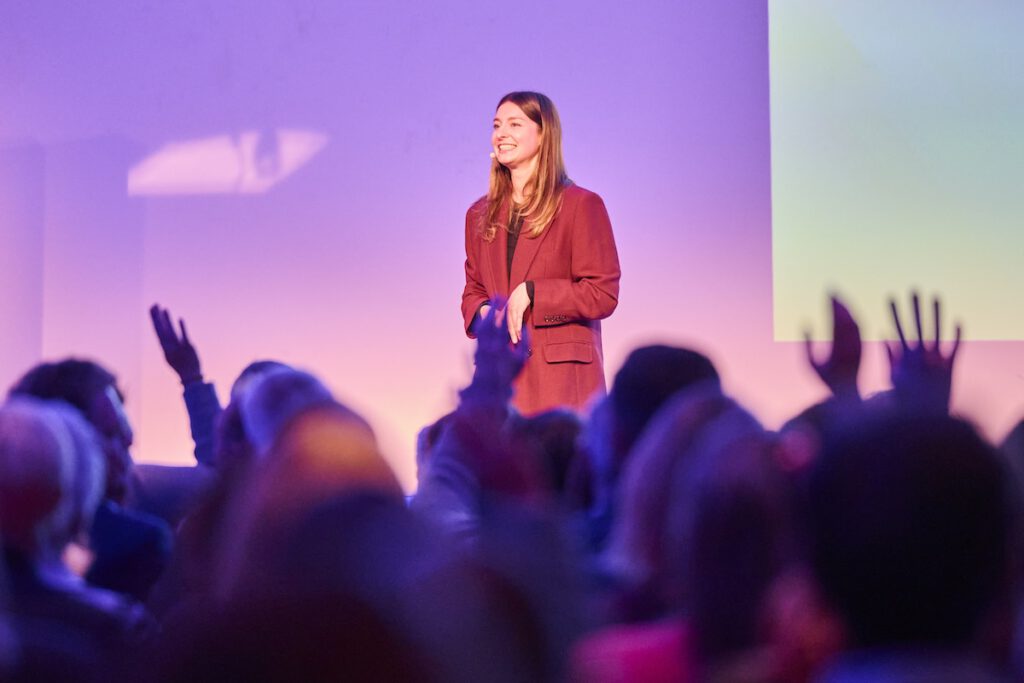
Stoettner at the BDSV industry meetingStoettner at the BDSV industry meetingStoettner at the BDSV industry meeting
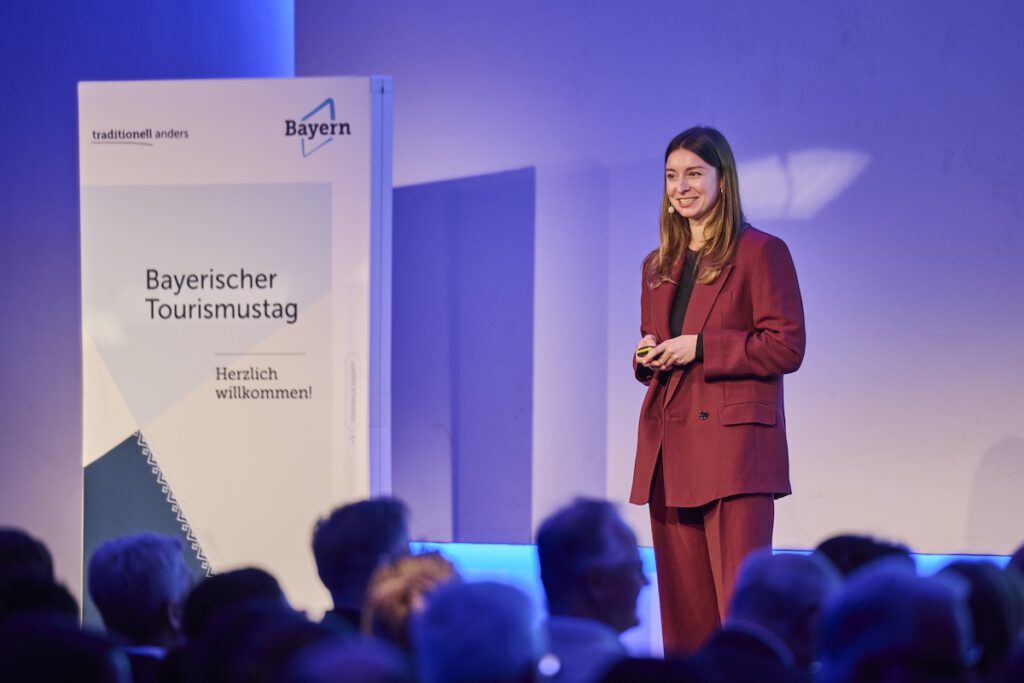
The Bavarian Tourism Day 2025 was all about working together. Under the theme “From Talking to Doing: Cooperation as a Success Factor in Tourism”, one thing came through clearly: turning good ideas into lasting action only works collectively.
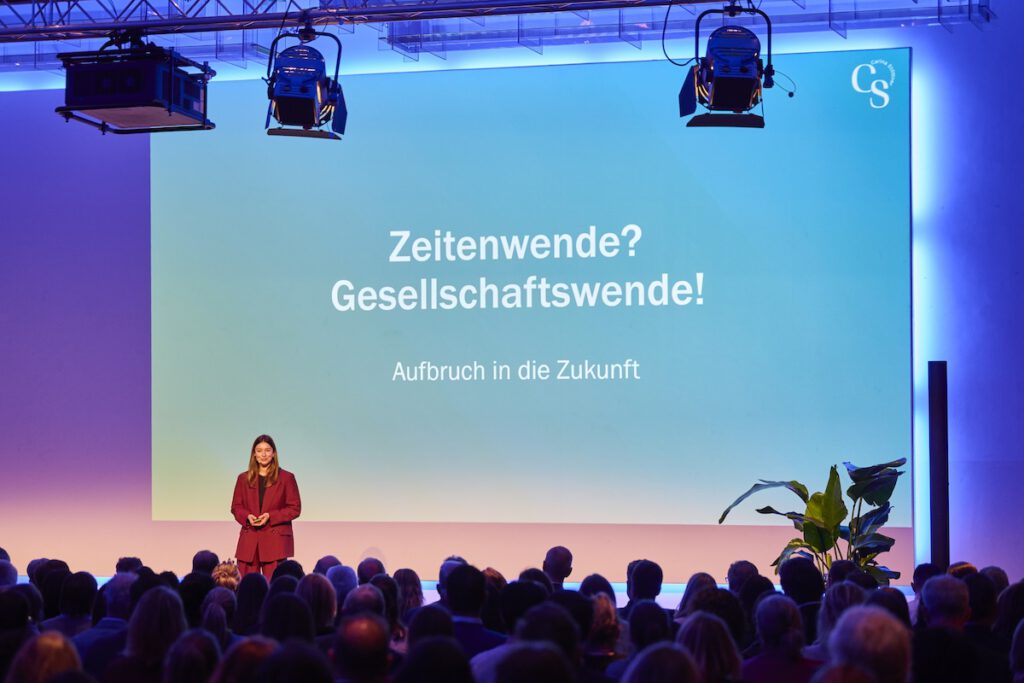
Carina Stoettner delivered the keynote, “Zeitenwende? A Society in Change,” inviting the audience to see change as an opportunity rather than a threat. The more complex our environment becomes, she argued, the more we need shared responsibility and new kinds of community. The questions she explored: ➡️ Which social challenges do we have to overcome today in order to build a future worth living in? ➡️ What are the essential pillars of trust? ➡️ How can the “quiet majority” get louder — and why does that matter so much? ➡️ And how, in an age of AI and social media bubbles, do we get back to emphasizing what we have in common rather than what divides us?
Practical examples from Bavaria and beyond — Trans Bayerwald, the Übergangshaus Lübeck, the AzubiTopHotels and the Donaulimes museum network — showed vividly how cooperation works in practice and what it can achieve.
_____
Warm thanks to Barbara Radomski and the whole BayTM team for the invitation, to host Helena Felixberger for guiding the day with such charm — and to everyone who took part for the conversations along the way.
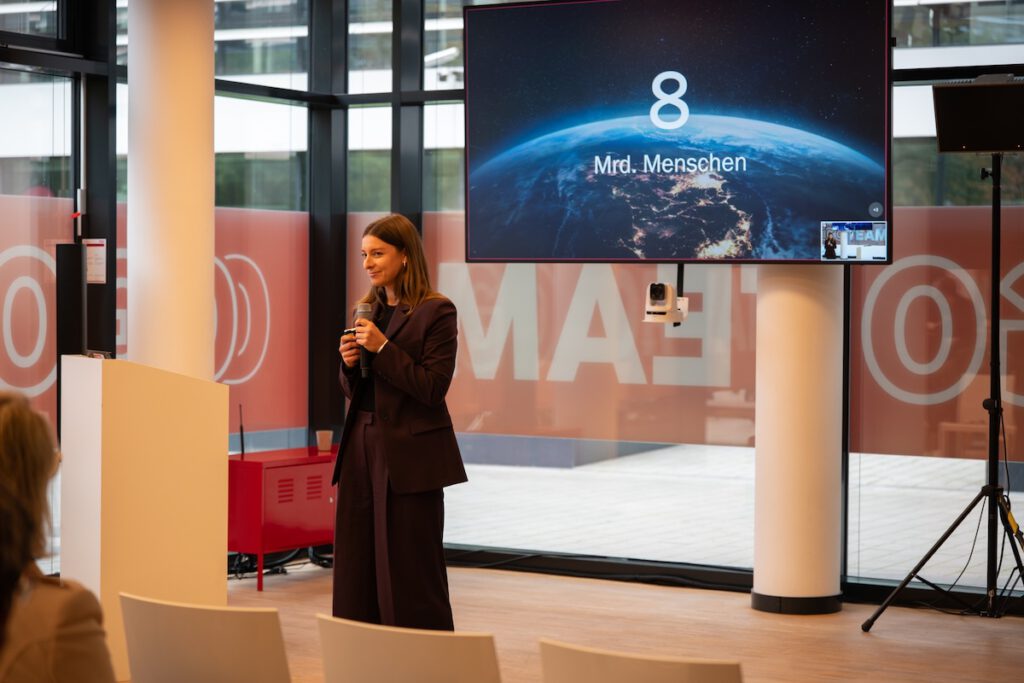
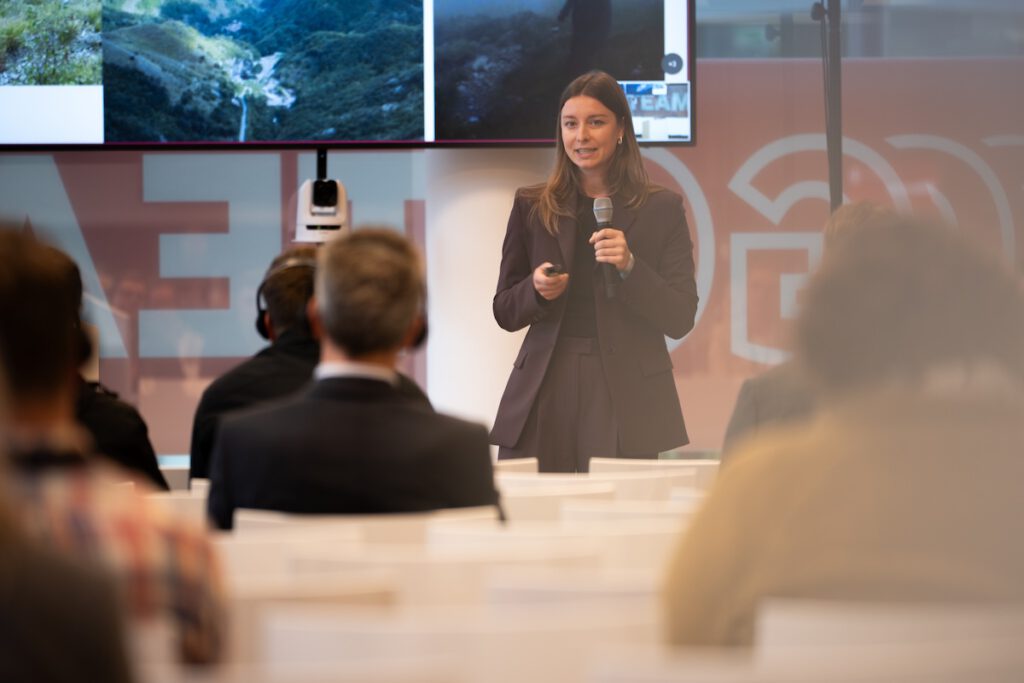
At the Vodafone Future Day, Carina Stoettner spoke about why thinking about the future has become a core leadership discipline — and what so often stands in the way. The brain, she explained, tends to think short-term and to register risks more strongly than opportunities — a mechanism that makes strategic action difficult in uncertain times.
Her work with leadership teams, she said, isn’t about predicting the future but about learning to work with uncertainty — because the uncertainty isn’t going anywhere. She showed which cognitive tendencies (the negativity bias among them) shape how we think about what’s ahead, how far out it makes sense to look, and why scenario thinking is such an effective tool for making complexity manageable.
The future, in Stoettner’s framing, isn’t a fixed point but a space to think in: sketch out several possible futures instead of clinging to a single truth, and you get your ability to act back.
Earlier in the day,Prof. Heiko von der Gracht offered a look at the scientific side of foresight work. He made clear that futures research isn’t fortune-telling: it rests on systematic observation, scenarios and the interpretation of signals. The future doesn’t arrive by accident, he argued — it can be explored methodically, by analyzing trends, wildcards and possible ruptures in a structured way.
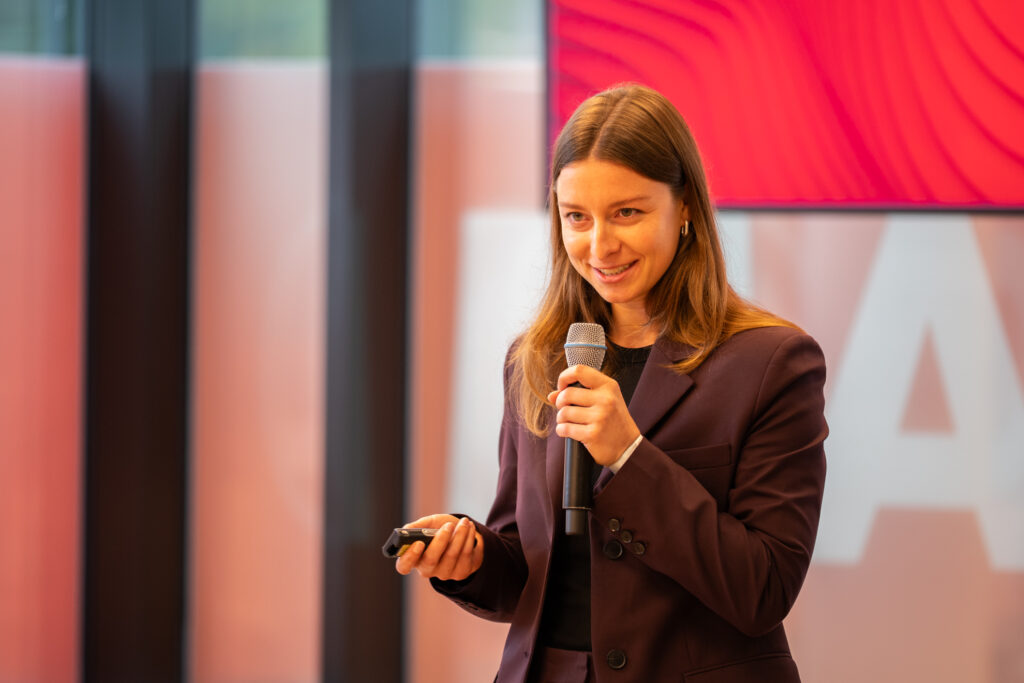
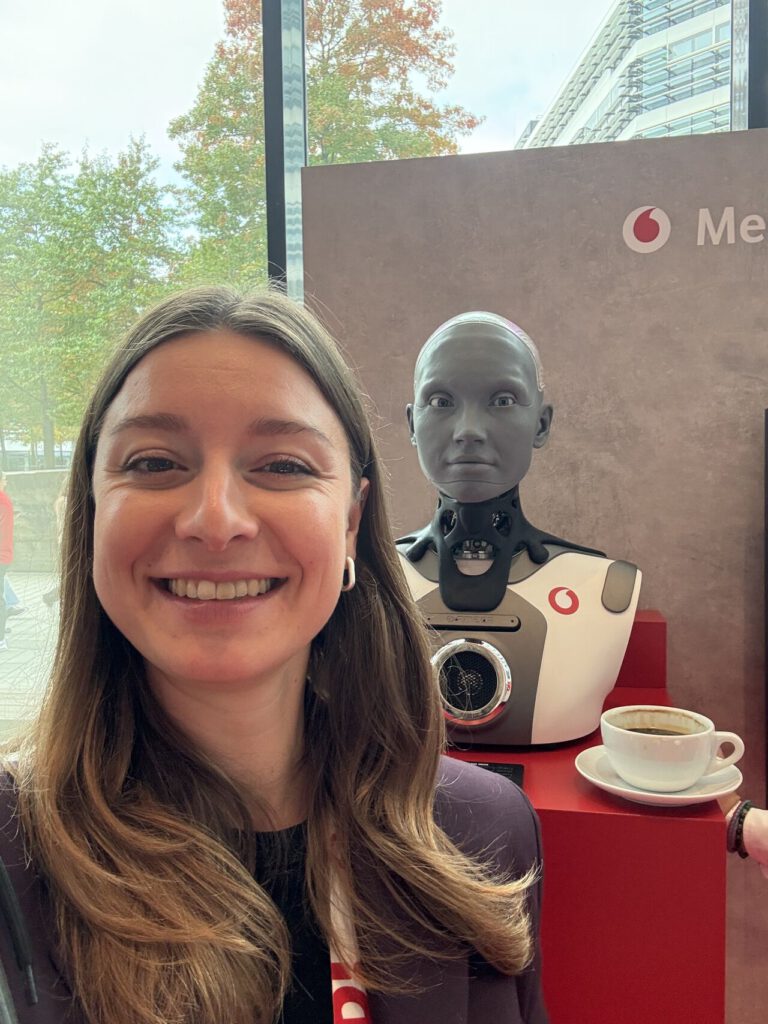
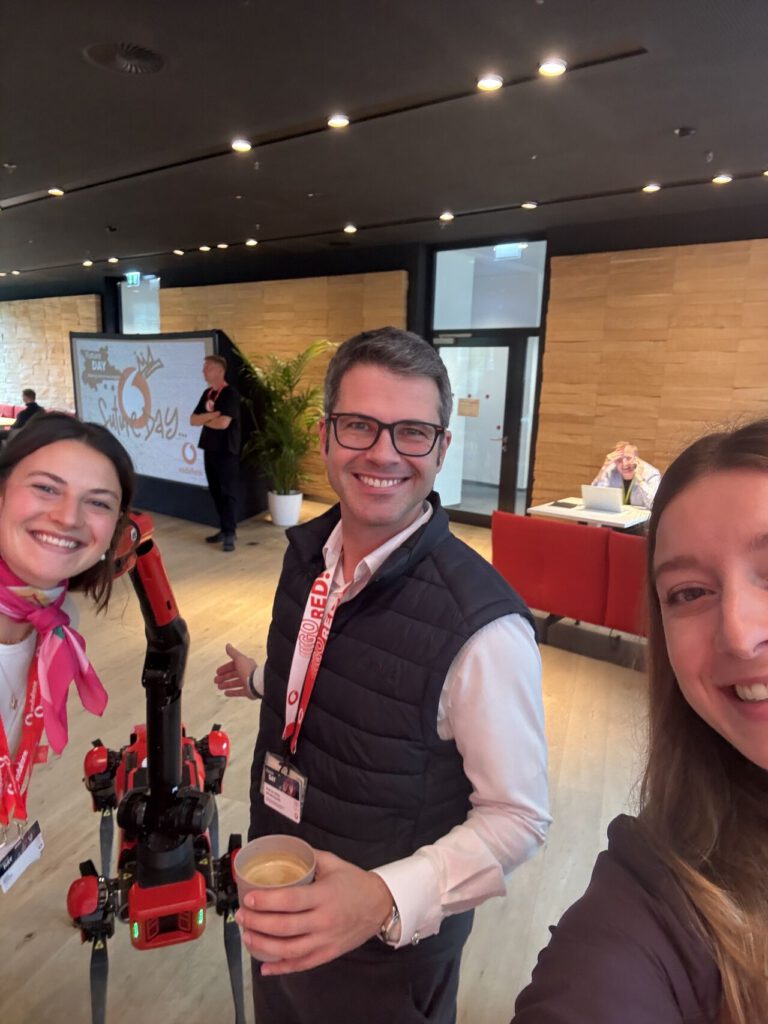
Carina Stoettner at the Vodafone Future DayCarina Stoettner at the Vodafone Future DayCarina Stoettner at the Vodafone Future DayCarina Stoettner at the Vodafone Future Day with Prof. Heiko von der GrachtCarina Stoettner at the Vodafone Future Day
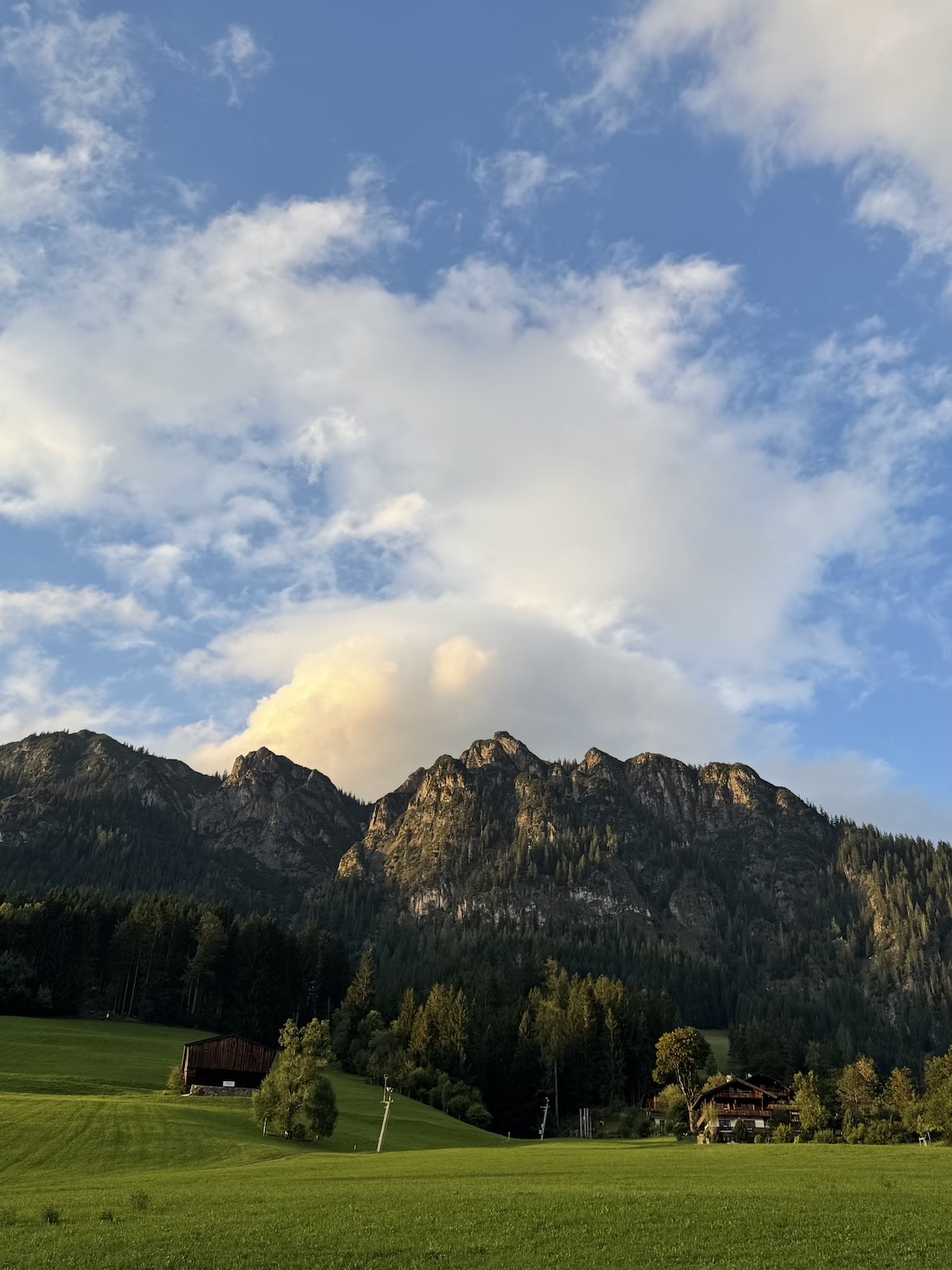
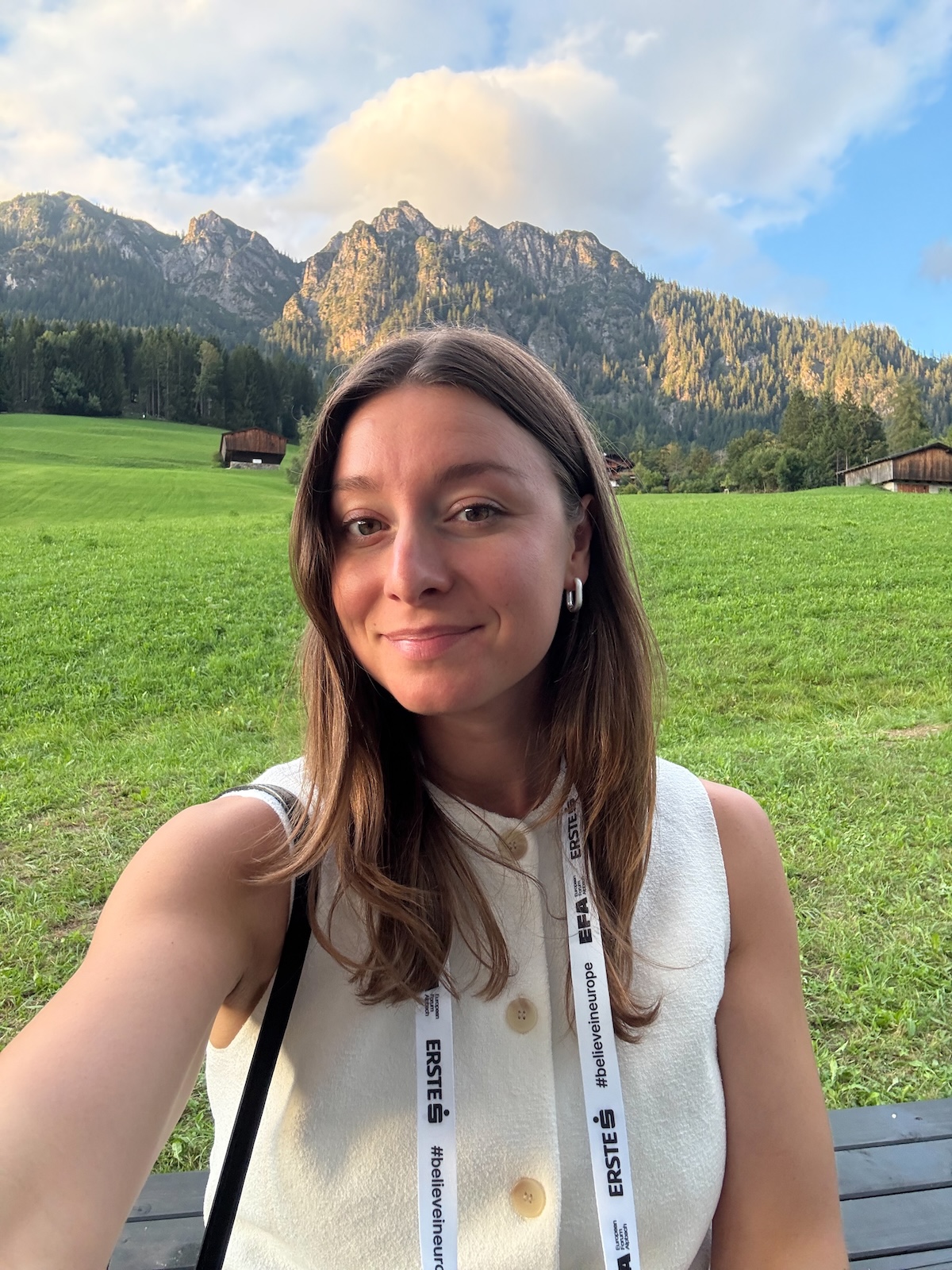
European Forum Alpbach 2025 – Inspiration zwischen Alpenpanorama und geopolitischen Debatten
Carina Stöttner
Wenn Nobelpreisträger, Kanzlerkandidaten, Außenministerinnen, Ministerpräsidenten, Tech-Leader, EU-Botschafter und führende Wissenschaftlerinnen zusammenkommen und buchstäblich gemeinsam auf Wanderschaft gehen, um miteinander zu sprechen, dann ist man wohl in Alpbach gelandet.
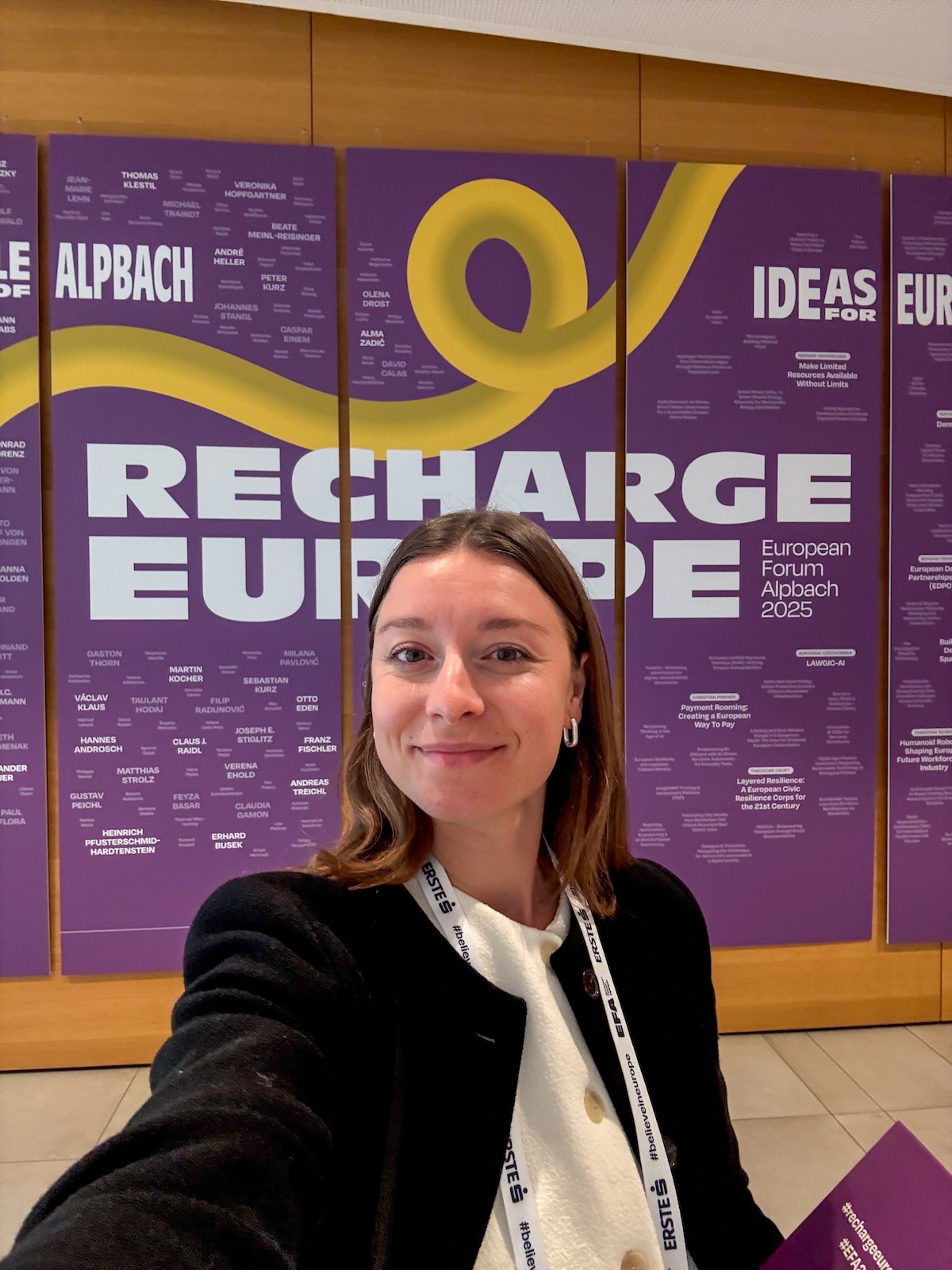
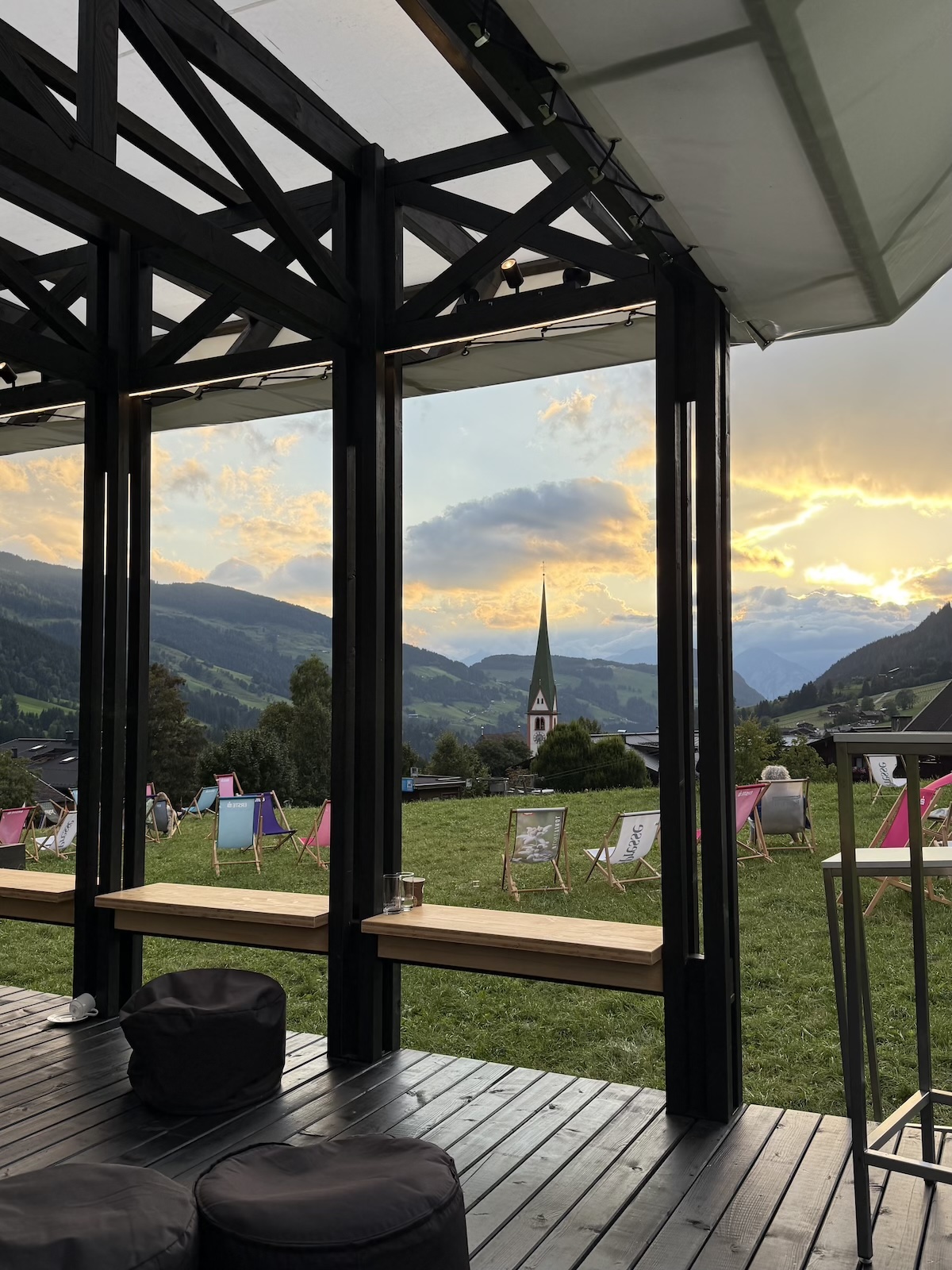
Das European Forum Alpbach (EFA) gilt als eine Art „europäisches Davos“ mit starkem Fokus auf Demokratie, Gesellschaft und die Rolle Europas in der Welt. Seit 1945 ist das kleine Tiroler Alpendorf einmal im Jahr ein Treffpunkt für Menschen, die Zukunft gestalten: Entscheidungsträger:innen, Vordenker:innen, junge Talente. Unter dem Motto „Recharge Europe“ stand 2025 die Frage im Mittelpunkt, wie Europa in Zeiten multipler Krisen wieder Energie und Orientierungskraft entwickeln kann.
Ich war dieses Jahr erstmals dabei und wollte bewusst einmal aus meiner klassischen Wirtschafts-Bubble in die EU- und Zivilgesellschafts-Bubble springen. Denn welche politischen Rahmenbedingungen gerade im Hintergrund verhandelt werden und welche gesellschaftlichen Zukunftsfragen dort diskutiert werden, ist letztlich auch für die Zukunft von Unternehmen und Wirtschaft hochrelevant.
Ein schönes Zitat aus einem Image-Film als Auftakt zu einer der Diskussionsrunden:
„Dieser Kontinent ist nicht auf Selbstzweifel gegründet. Er besteht aus Menschen mit Mut, Solidarität und dem Willen, ihre Stimme zu erheben.“
Othmar Karas, Präsident des Europäischen Forums Alpbach sagt, wir müssen uns in Perspektivenvielfalt üben:
„Jemand anderes kann genauso recht haben wie ich. Der Schlüssel liegt darin, Kompromisse zu finden.“
Meine Sessions & Eindrücke
Mainstreaming von Extremismus: Wo ist die rote Linie für die Demokratie?
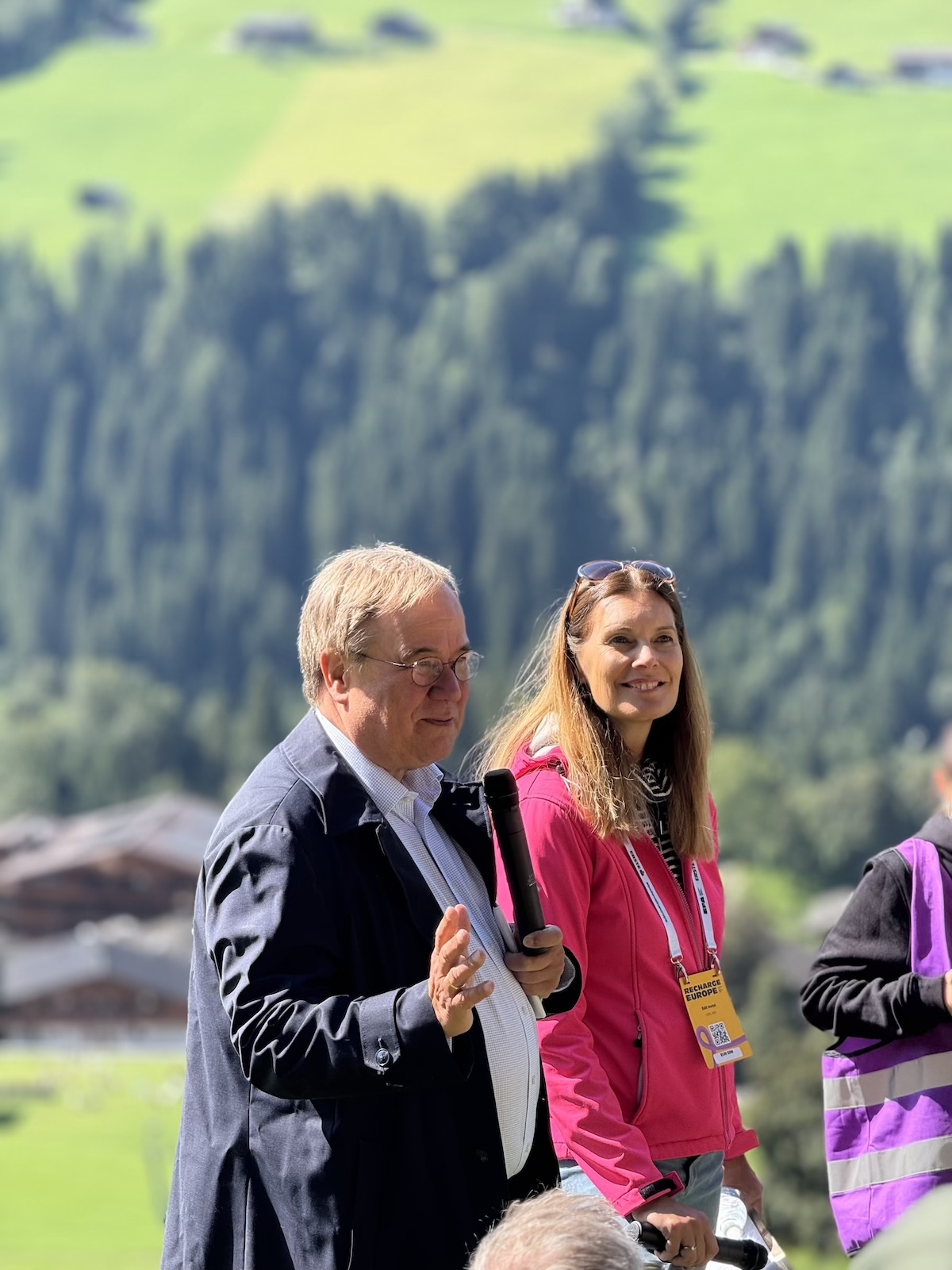
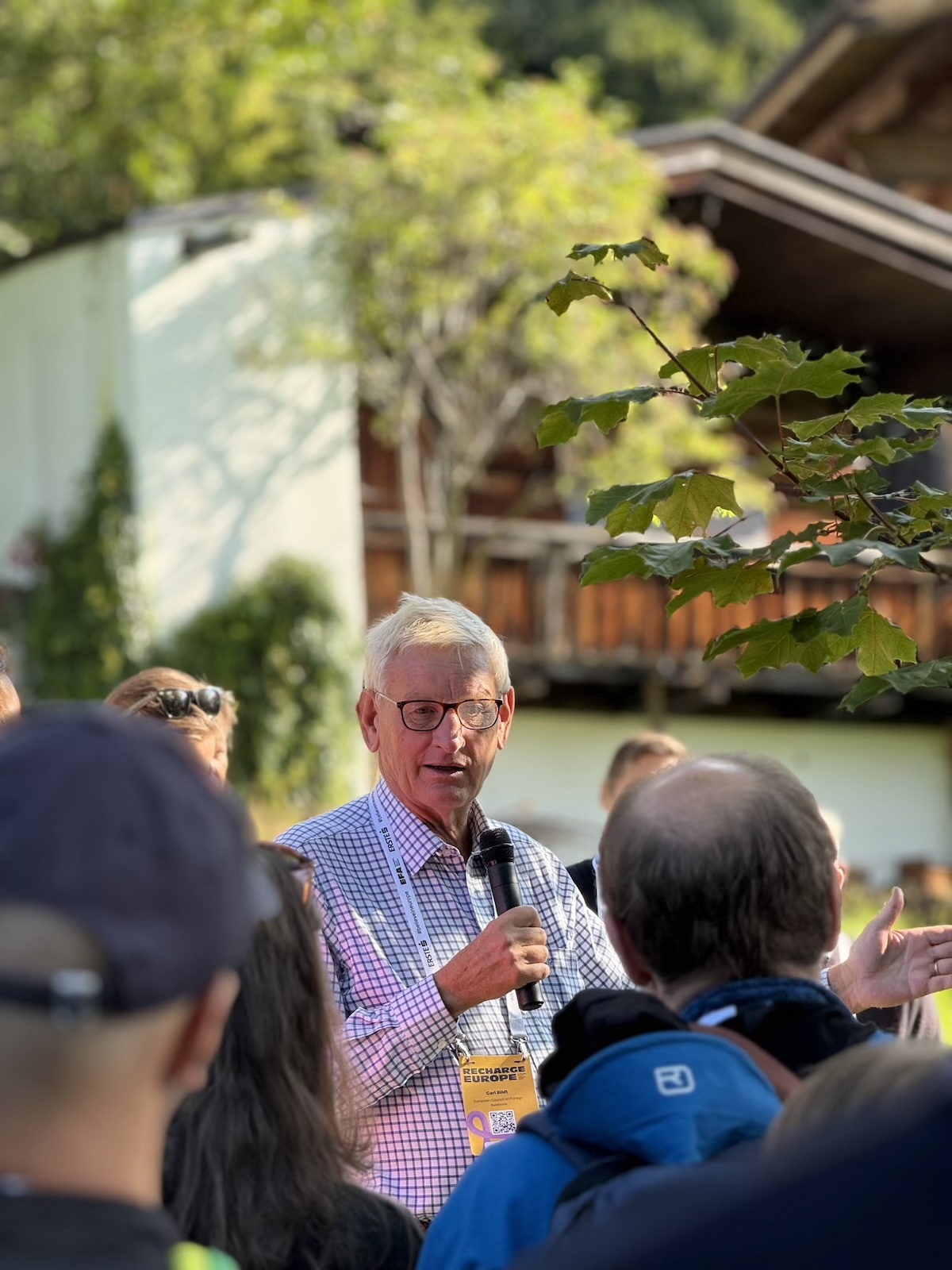
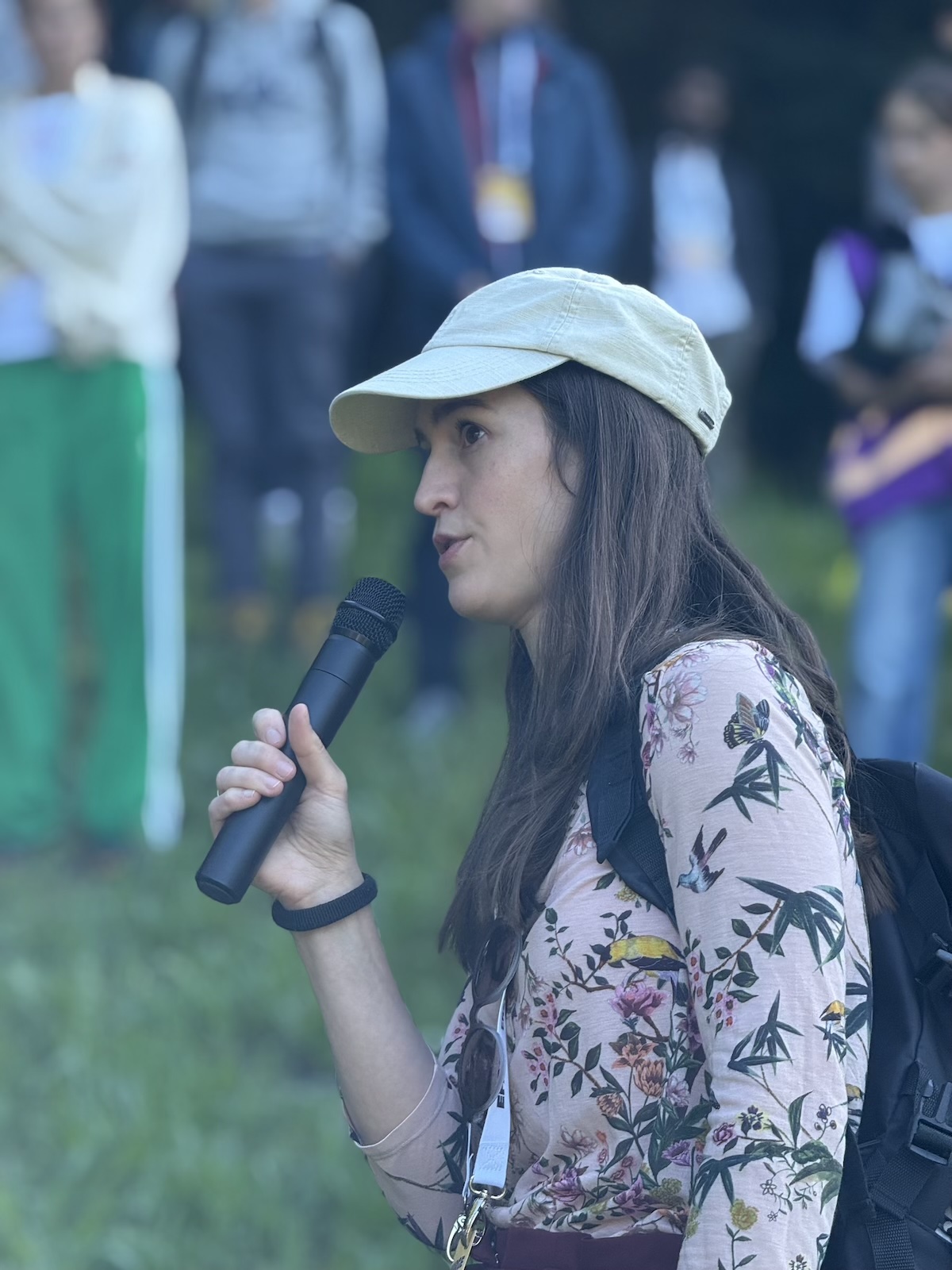
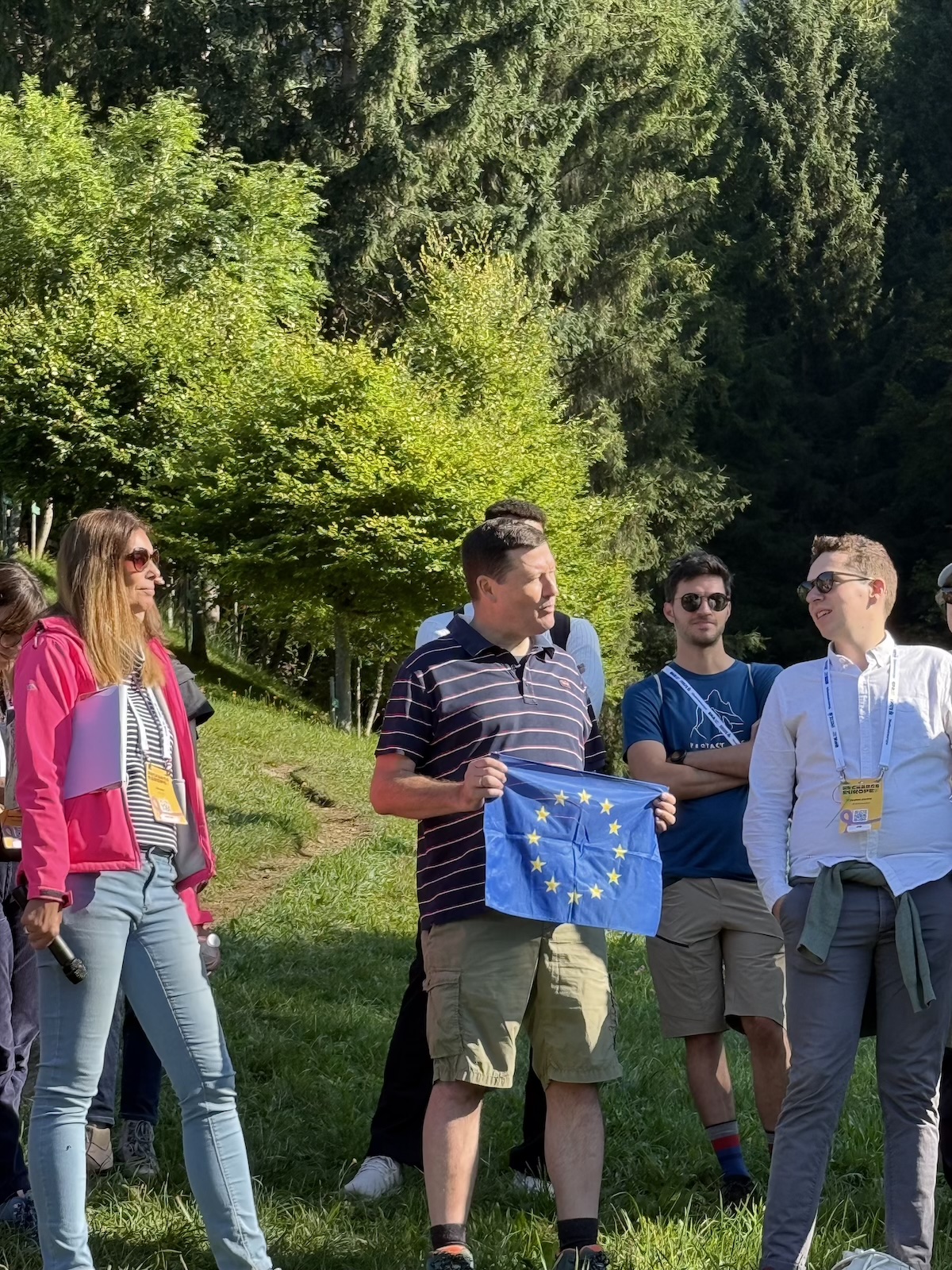
Auf einer Wanderung diskutierte ich mit u. a. Armin Laschet, Carl Bildt, Julia Ebner und Peter Neumann über die Gefahren, wenn extremistische Narrative in den gesellschaftlichen Mainstream einsickern. Wie robust sind unsere Demokratien noch und wo verlaufen die roten Linien, die wir schützen müssen? Besonders eindrücklich war, wie nah politische Praxis und wissenschaftliche Analyse hier zusammengebracht wurden und das nicht im Konferenzsaal, sondern beim Gehen durch die Berge.
“Changing democracy is a hidden process. We need to secure our democratic structures davor, von Rechtspopulisten niedergeschlagen zu werden.” – Armin Laschet, former Minister President of North Rhine-Westphalia & Member of the German Bundestag
Vereint oder losgelöst? Der Kampf um Europas Identität und Zukunft
Mit Martin Selmayr, Helmut Brandstätter, Edit Inotai und Josephine van Zeben ging es um die zentrale Frage: Wie definiert sich Europa in einer Welt, die immer fragmentierter wirkt? Spannend war vor allem, wie unterschiedlich politische, mediale und akademische Perspektiven die Herausforderungen, aber auch die Chancen für die europäische Identität beleuchteten.
„Externe Kräfte, China, Russland, die USA, tragen zur Anheizung von Extremismus bei. Doch damit er verfängt, müssen in der Gesellschaft bereits Bruchlinien vorhanden sein: eine Bankenkrise, Migrationsdruck oder ähnliche Schwachstellen.“ – Carl Bildt, ehemaliger Ministerpräsident von Schweden
In einem Gespräch während der Wanderung mit Martin Selmayr, EU-Botschafter Rom; ehemaliger Generalsekretär der Europäischen Kommission, über die Ukraine sagte er folgendes:
„Die Herausforderung für eine Gesellschaft und ein System besteht nicht nur darin, von Frieden zu Krieg zu gehen, sondern auch darin, als Nation vom Krieg wieder in den Frieden zurückzukehren.“
Auch sagt er:
„Ich bin fest überzeugt: In nur wenigen Jahren werden wir mehr als 30 Mitgliedstaaten haben.“ und bezieht sich dabei auch auf die Ukraine als neues Mitglied.
Dr. Julia Ebner, Senior Research Fellow & Leiterin des Violent Extremism Lab am Institute for Strategic Dialogue (ISD), University of Oxford, die lange tief in die extremistische Szene eingetaucht ist, meinte:
„Vertrauen verlagert sich von Institutionen hin zu einzelnen Personen, häufig zu Influencern, anstatt in etablierte Organisationen.“ Diese Dynamik sollten wir uns zu Nutze machen.
Josephine van Zeben, Professorin für transnationales Recht; Prorektor für Bildung und akademische Personalentwicklung, European University Institute sagt:
„Wir sprechen ständig über die Probleme, die die EU lösen muss. Aber wir fragen uns selten: Wie sieht Erfolg für die EU eigentlich aus?“
Der strategische Aufbruch Europas: Sicherheit in einer fragmentierten Welt
In einer Zeit, in der geopolitische Risiken zunehmen, wurde hier diskutiert, wie Europa seine Sicherheitspolitik neu denken muss. Mit Katarzyna Pisarska, Sarah Wheaton, Peter Wagner, Robert Brieger und Meredith Whittaker wurde klar: Sicherheit bedeutet heute nicht mehr nur militärische Stärke, sondern auch digitale Souveränität, Resilienz gegen Desinformation und strategische Handlungsfähigkeit im globalen Kontext. Meredith Whittaker, Präsidentin der Signal Foundation sagt:
„Wir müssen in Technologien investieren, die Unabhängigkeit von anderen Staaten ermöglichen und die Monopole der großen Tech-Konzerne herausfordern.“
Sunrise Hike auf die Gratlspitze
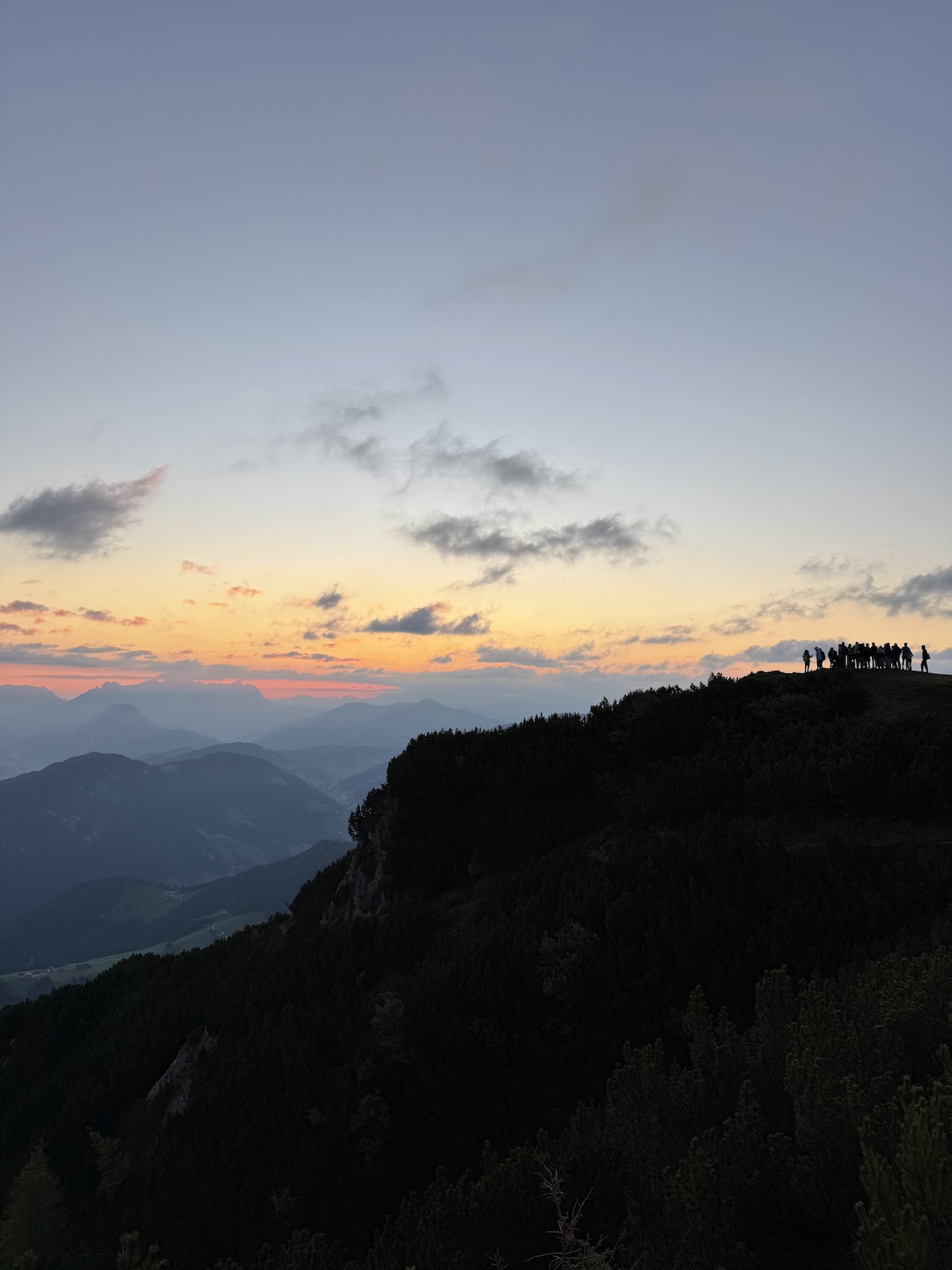
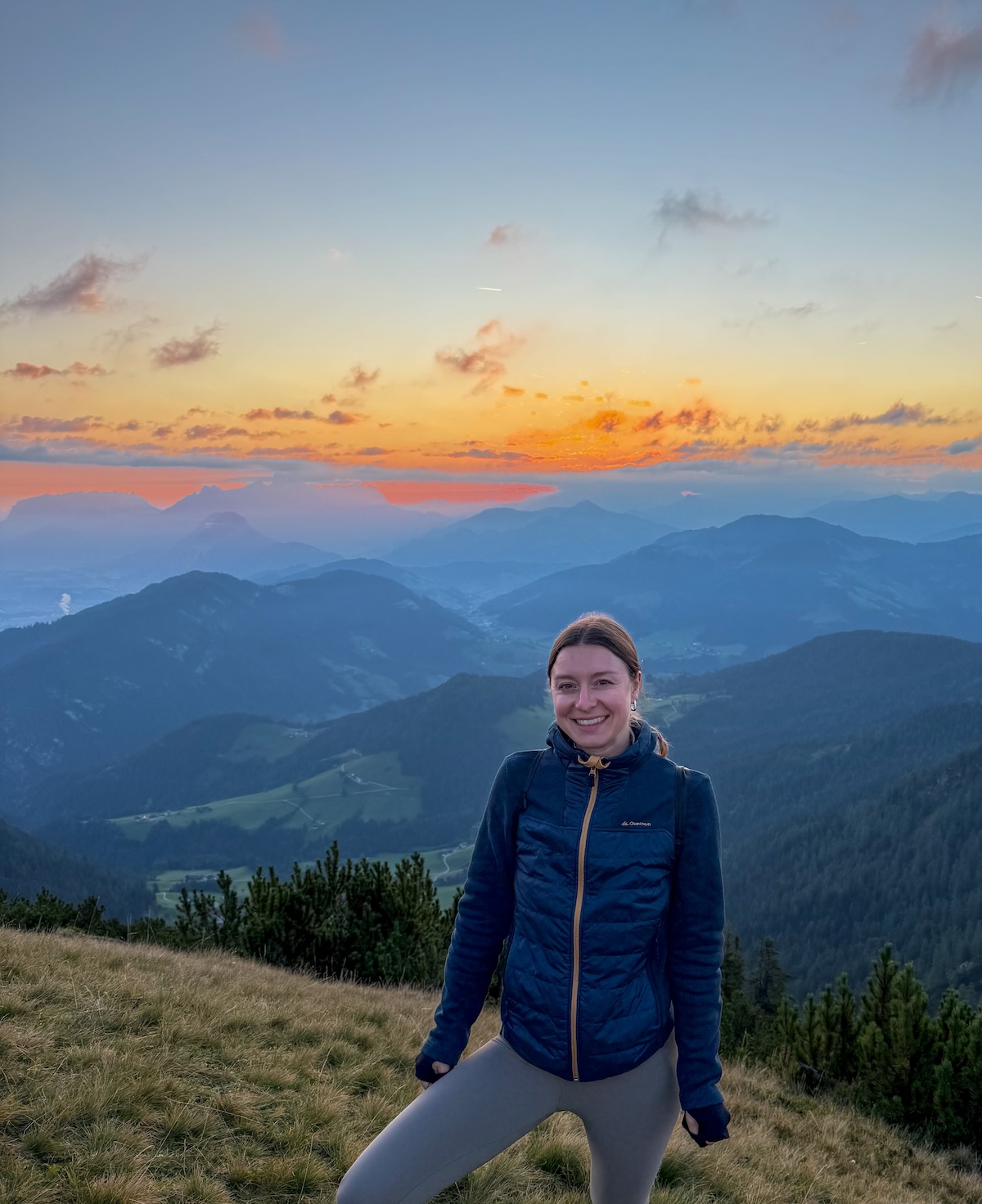
Eines meiner „Off topic“ Highlights: Um 4 Uhr morgens startete die Wanderung hinauf auf die Gratlspitze. Inmitten des Sonnenaufgangs über den Alpen entstanden Gespräche, die man in einem Konferenzsaal wohl nie so führen könnte. Für mich ein Format, das inspiriert – Lernen und Austauschen in Bewegung.
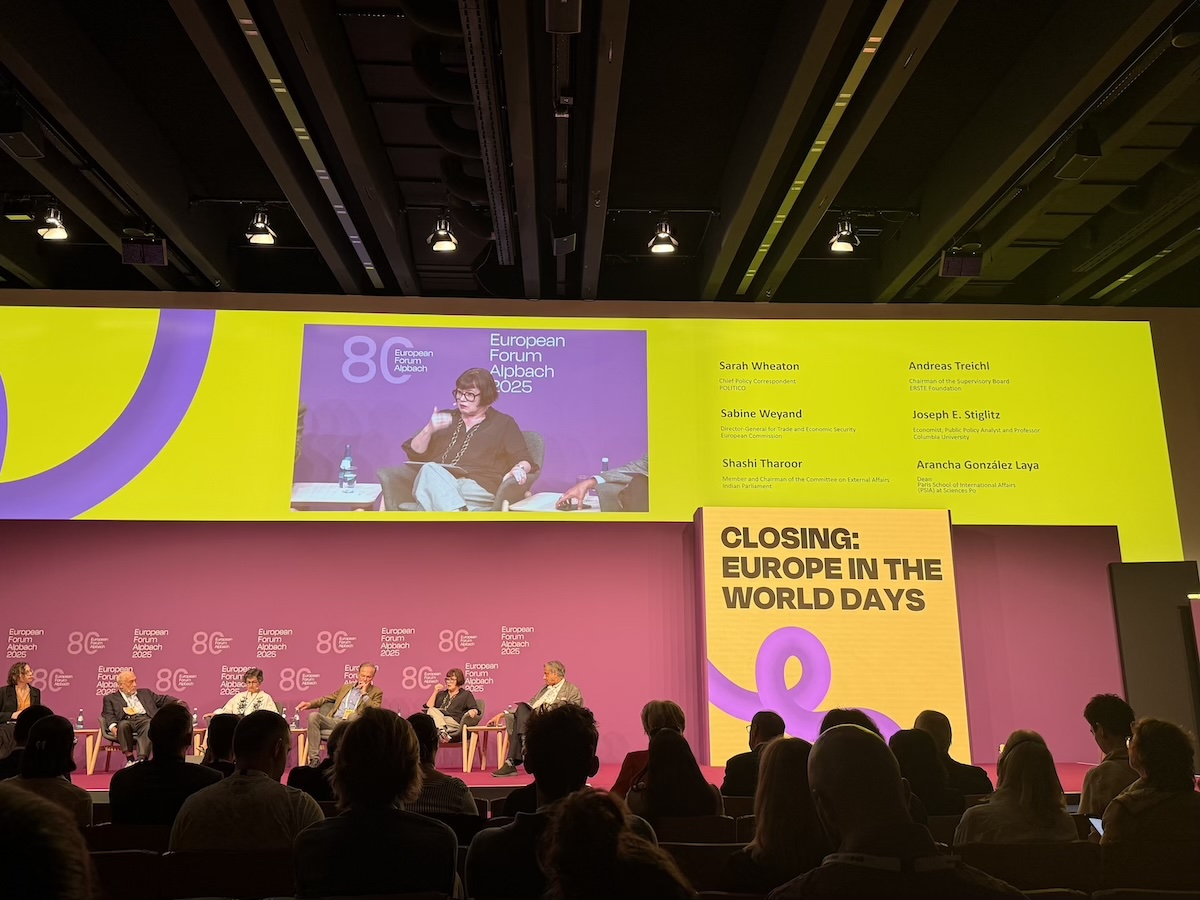
Europe in the World – Abschlussdebatte
Zum Abschluss der Europe in the World Days beim European Forum Alpbach 2025 wurde klar: Die alte regelbasierte Ordnung, in der Europa florierte, existiert nicht mehr. „The order in which Europe was thriving is a thing of the past, and it will not come back. Nostalgia is not a strategy,“ betonte Sabine Weyand (Europäische Kommission). Während die USA sich zunehmend aus multilateralen Strukturen zurückziehen, sieht Arancha González Laya (Sciences Po) die Gefahr, dass Europa in eine „vierte Phase“ abrutscht: „The fourth stage of Europe’s evolution could be that we… become somebody else’s colony.“
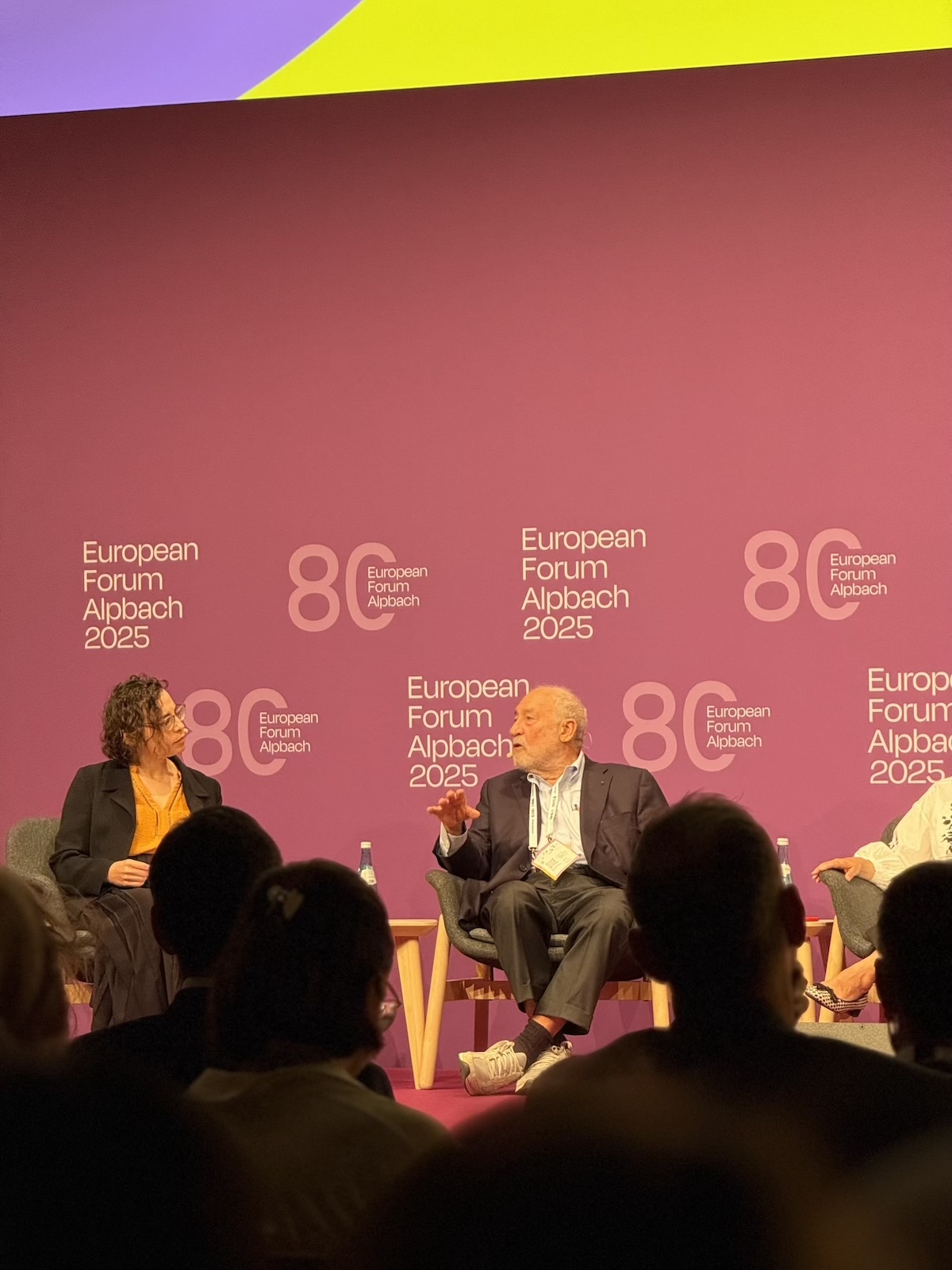
Die Panelist:innen waren sich einig, dass Europa nur durch tiefere Integration und neue Partnerschaften Stärke gewinnen kann. Shashi Tharoor (Indisches Parlament) fragte provokant: „Can Europe and India be a pole to ourselves and constitute an alternative to both the US and China?“ Andreas Treichl (ERSTE Foundation) warnte hingegen vor Europas Wehrlosigkeit: „We don’t fight with each other, but we let others kill us. This is a major change and we have no means to counter it.“ Für Nobelpreisträger Joseph Stiglitz liegt die Chance Europas in Regulierung und Wettbewerbspolitik: „If Trump says to Europe: Give up your competition policy or face 50% tariffs – what will Europe do?“ Klar wurde: Europa muss seinen Binnenmarkt vollenden, Innovation skalierbar machen und Allianzen ausbauen, sonst bleibt es Spielball einer härteren, multipolaren Welt.
Carina Stöttner – European Forum Alpbach6
Carina Stöttner – European Forum Alpbach4
Carina Stöttner – European Forum Alpbach1
Carina Stöttner – European Forum Alpbach2
Carina Stöttner – European Forum Alpbach7
Carina Stöttner – European Forum Alpbach10
Carina Stöttner – European Forum Alpbach11
Carina Stöttner – European Forum Alpbach16
Carina Stöttner – European Forum Alpbach12
Carina Stöttner – European Forum Alpbach9
Carina Stöttner – European Forum Alpbach14
Carina Stöttner – European Forum Alpbach23
Carina Stöttner – European Forum Alpbach21
Was bedeutet das für europäische Unternehmen und ihre Zukunftsstrategie?
Resilienz stärken: Lieferketten diversifizieren, Abhängigkeiten von USA/China reduzieren und neue Partnerschaften suchen.
Binnenmarkt nutzen: Europa als größten Heimatmarkt für Skalierung begreifen.
Tech-Souveränität: weniger Abhängigkeit von US-Plattformen, europäische Alternativen einsetzen. Auch bei Software-Lösungen!
Partnerschaften erweitern: Kooperationen mit dem globalen Süden als strategische Zukunftsoption, auch, um langfristig neue, junge Märkte zu erschließen.
Industry scenarios and innovation: why thinking ahead has become a strategic necessity
One thinking error persists stubbornly across many established industries: the assumption that things will somehow carry on as they always have. This normalcy bias is one of the biggest brakes on innovation we have. Companies that don’t actively push back against it risk sleeping through disruptive change.
Industry scenarios as a strategic early warning system
Which is exactly why scenarios for the future of an industry are a crucial part of strategic innovation work. They make potential paths visible — and reveal early on which kinds of innovation each scenario calls for. Digital business models, circular production, resilient supply chains: thinking through the future of your own sector lets you prepare innovation deliberately rather than simply react.
Four scenarios, four directions for innovation
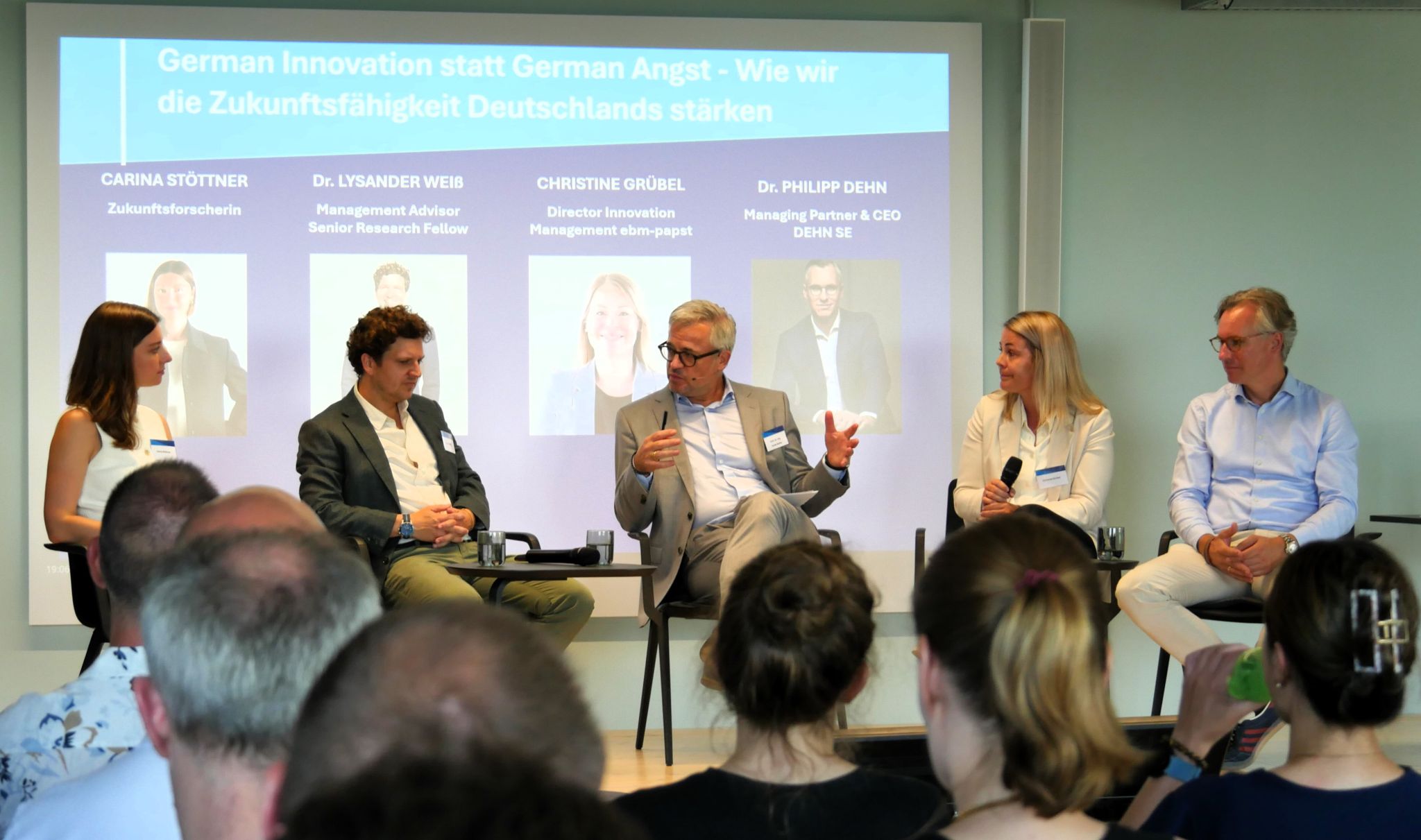
At the launch of Innovation for Growth at IPAI in Heilbronn, I presented four industry scenarios showing how the conditions around us are shifting — and which innovation strategies answer each of them.
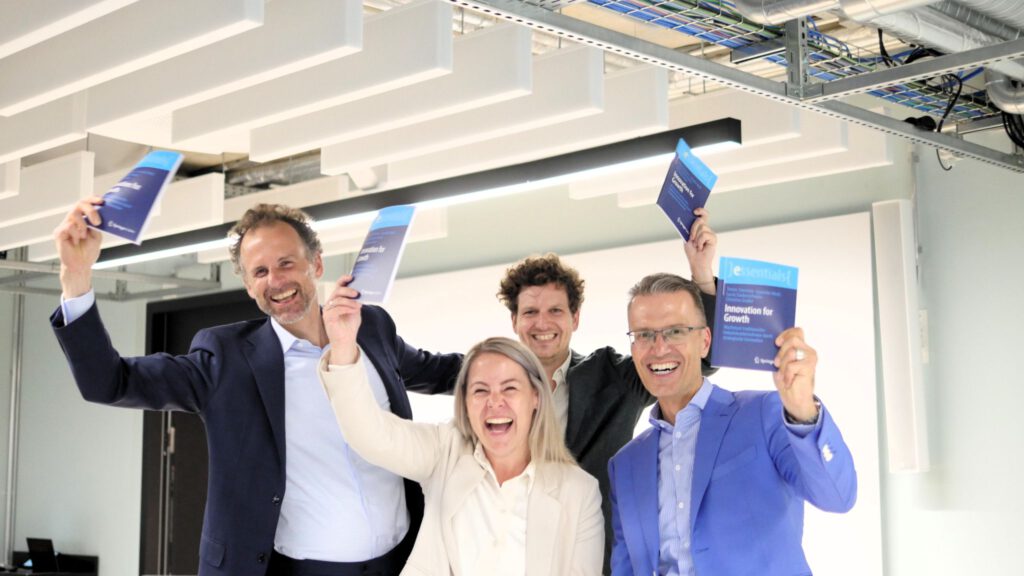
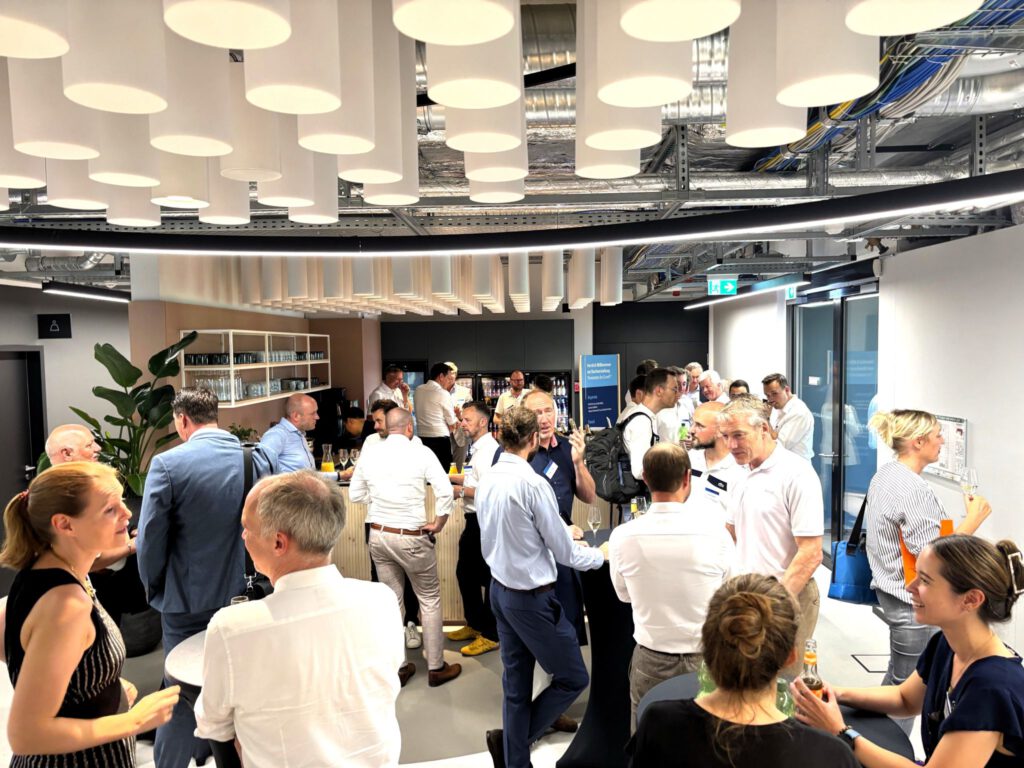
Panel discussion at the launch of Innovation for Growth. Carina Stoettner with Prof. Guido H. Baltes, Christine Grübel, Dr. Lysander Weiß and Philipp Dehn.The authors of Innovation for Growth: Christine Grübel, Dr. Lysander Weiß, Lucas Sauberschwarz and Prof. Tomas Smetana.The discussion that followed with invited guests.
Foresight + innovation = futures literacy
The key lies in connecting foresight with innovation. Building decisions on well-grounded assumptions about the future means deploying resources more precisely, calculating innovation risk more accurately and creating real competitive advantage. That’s what makes a company fit for what’s ahead.
A case in point: ebm-papst and Tomas Smetana
ebm-papst, under Prof. Tomas Smetana, is a striking example of how to restructure not just operationally but structurally. Through strategic innovation the company has managed to question its own field of business and develop it into something built to last — starting from a clear picture of the future and a willingness to leave old patterns behind.
At the event in Heilbronn I was struck by how openly ebm-papst discusses its own business model — and by the nerve it takes to follow new thinking through.
Transformation starts in the mind
The conversations that evening confirmed something again: being ready for the future isn’t a question of technology alone. It starts with the capacity to question yourself, to make bold decisions — and to orient toward the markets that are coming.
My thanks to Tomas Smetana, Lucas Sauberschwarz, Christine Grübel, Dr. Lysander Weiß, Guido H. Baltes and Philipp Dehn for the stimulating conversations and ideas. Innovation for Growth is a real invitation to shift perspective — and a case for thinking in futures.
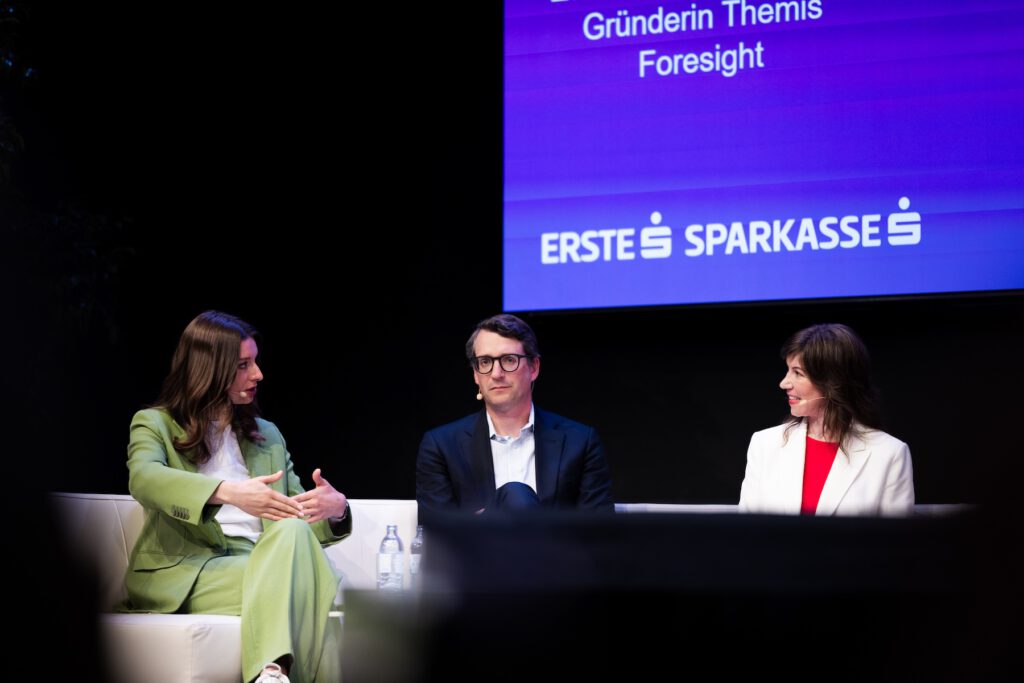
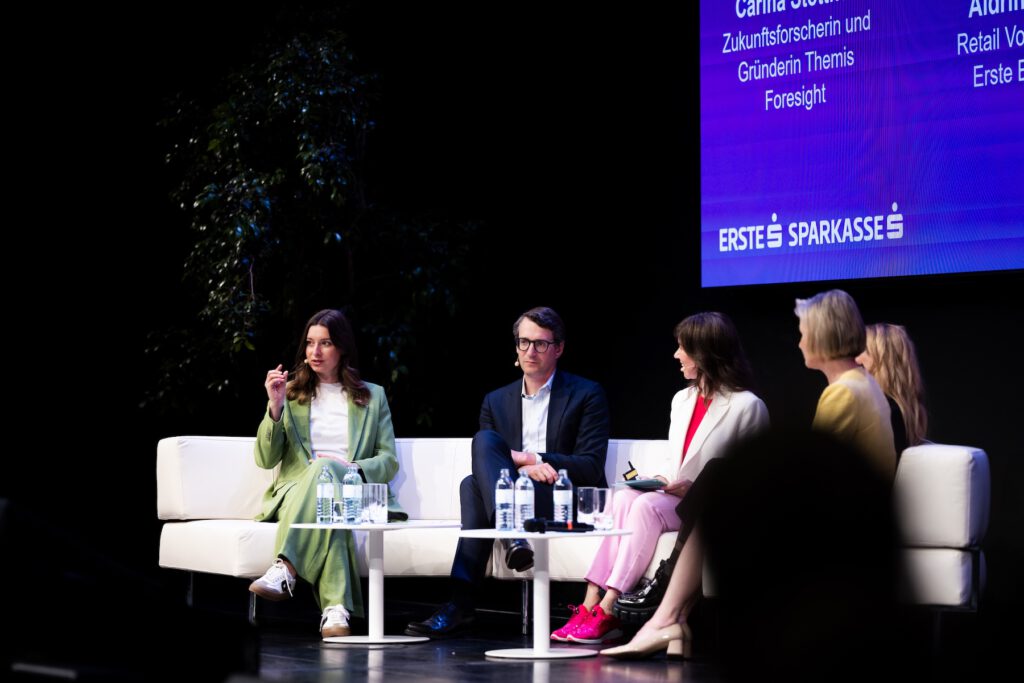
Last week I had the chance to share my perspective at the beautifully organized She Invests event hosted by Erste Group in Vienna — first in a keynote, then on a panel with supervisory board member Caroline Kuhnert, platform specialist Christine Bachler, board member Maximilian Clary and finance expert Olga Miler. A strong line-up, and one that showed just how much thinking about the future and making smart financial decisions matter right now.
Here are my main takeaways:
💶 The past guarantees nothing about the future. Just because an investment performed well in the past doesn’t mean it will keep working. Our biggest thinking error is usually extrapolating from yesterday, or today, to tomorrow. What looked safe yesterday can disappear tomorrow — Kodak being the obvious example. And what’s hyped today may well be irrelevant in twenty or thirty years. My advice: keep the big picture in view instead of chasing short-term trends.
💶 Get past the negativity bias. When everything looks bleak, plenty of people think: “I may as well spend my money now.” But what if things turn out well? Working through several possible futures deliberately leads to better decisions and better long-term security.
💶 More confidence with technology, and fair financial arrangements. Women should be bolder about getting to grips with technological trends. And talk through fair financial arrangements with your partner early. Having provided for yourself means staying calmer in a crisis, having more professional flexibility, and making better decisions over the long run.
💶 People still make the difference. Technology can simplify saving, analyze data and create transparency. But in emotional or critical moments, you still need a real person to talk to. As we discussed on the panel, the data is unambiguous: portfolios belonging to customers who combine digital tools with personal advice perform better. Which is what makes hybrid solutions convincing — Erste Group’s George app, for instance, where you can still reach an actual human in person or by phone when it counts.
A bit of a shame that George is only available in Austria.
The future of steel: three scenarios for the industry of tomorrow
Are you familiar with the normalcy bias? It describes our tendency to believe that things will stay as they are. The bias shows up most starkly in the hours before a natural disaster — a hurricane, say. You may have wondered why people stay in their houses when every forecast says clearly that a hurricane is about to pass directly over them. It’s that lingering in denial: it won’t happen to me. Or: it won’t be that bad.
That attitude is exactly what leads us to underestimate risk — and it shapes what we do about the future.
If you look at who survives times of crisis and upheaval — companies and individuals alike — a clear pattern emerges. Three phases matter.
Phase one is waking up: getting past the normalcy bias. I think we’ve all been through that one by now. After Covid, the energy crisis and the geopolitical turbulence of recent years, we know the world is changing — and that we have to change with it.
Phase two is planning. This is the decisive one. If you only start working out an exit strategy once the hurricane is already hitting your house, your options are poor. The same holds in business.
Phase three is acting — on the basis of a plan you’ve thought through.
I’d like to take you deeper into that second phase: thinking in scenarios. Unlike a hurricane, the industrial world can’t be predicted along a straight line. Which is why the famous what if matters so much. My co-authors and I developed four scenarios for the future of German industry. I’ll present three of them here.
One thing first: the point isn’t to predict exactly which future will arrive. No futurist can do that. The point is to work through possible developments using rigorous methods — in order to be prepared.
So let’s jump to 2045, twenty years ahead.
Scenario 1: Deep Tech Germany
Think of the archetypal brilliant inventor — the tinkerer with vision. That’s the type of person this scenario needs, combined with a hard-nosed commercial instinct: entrepreneurial, visionary, inventive.
In this picture of the future, Germany has become a leading deep tech location. One thing that makes it possible is new investment in security and defense — historically, a great many major innovations have come out of military research.
Today, roughly two-thirds of our industrial revenue comes from three sectors. But what if that changes? What if, by 2045, a third of revenue comes from entirely new industries — robotics, biotechnology, nanotechnology, quantum?
What is deep tech? It isn’t about incremental improvement but about radical breakthroughs. New technologies emerging from fundamental research, with solutions to global challenges like climate change.
That requires genuine partnerships, between equals — with countries like Kenya, for instance, to develop climate-resistant crops and test them together on the ground.
What does it mean for the steel industry? Demand for high-tech steel rises:
for medical technology
for aerospace
for hydrogen technologies
for batteries
Climate neutrality is standard in this scenario. Innovation here doesn’t mean squeezing out more efficiency — it means a revolution in materials. Steel gets rethought: its properties, its applications, how it’s made. The industry develops ultralight, heat-resistant and magnetically optimized alloys. 3D-printed steel is as real as nano-optimized materials with entirely new functionality. But competition is fierce, with new materials and new suppliers pushing into the market.
Scenario 2: Designed in Germany, produced in the world
What does it say on the back of your iPhone or your AirPods? Designed in California, assembled in China. That “Apple model” is the heart of this scenario. Germany stays strong in research, development and design — but production happens globally, and mostly elsewhere.
We’ve seen this before in textiles. Once a strong German sector, it’s now either highly specialized in niches like technical textiles or reduced to the brand — Adidas keeps marketing and design here and produces elsewhere. Other sectors could follow the same path.
For the steel industry, that means many large customers move production closer to their target markets. Keeping up requires an international presence of your own, with your own production sites. Innovation here means targeted optimization above all. Companies either improve their products technologically — highly specialized alloys, lower-carbon production processes — or they develop the business model itself. The industry could shift increasingly toward services: steel-as-a-service, in effect.
Scenario 3: A regional European industry
A protectionist Europe, responding to an increasingly closed world. The US leads, Europe follows. Reshoring and nearshoring become everyday vocabulary. “Make Europe Great Again” is the prevailing mindset.
In this regional European industry, production moves back into the EU or to neighboring countries. But it also means scarcer resources, lower design ambitions and pragmatism winning out.
A different kind of inventor comes into play here — think James Dyson reinventing the hairdryer. This scenario is about clever solutions with limited means. Innovation doesn’t mean rethinking the world from first principles; it means literally reinventing the wheel. In the spirit of: how do you build a bicycle without aluminum?
For the steel industry, that means:
The existing customer base shrinks as export-heavy sectors like automotive come under pressure.
At the same time, new opportunities open up — European semiconductor plants, infrastructure programs.
Raw materials get more expensive and harder to source, but there’s less competition from global suppliers.
In summary: risks and opportunities
Risks:
Losing traditional industrial customers
Falling demand for commodity steel
Raw material scarcity and rising prices
New technological competition, particularly in deep tech
Opportunities:
Growth through specialization and high-tech products
Growth through new business models (“X-as-a-service”)
Green steel as a premium segment
New demand from reshoring and infrastructure
Less international price pressure in the protectionist scenario
So, coming back to where we started: the normalcy bias is deceptive. Nothing stays as it is. But recognizing the risks and actively shaping the opportunities means having a hand in what the future turns out to be.
In that spirit: stay awake, stay bold — and act with foresight.
I’m happy to deliver this keynote at your event too, with the implications drawn out for your own sector.
What happens when two of the biggest players in retail and technology — the Otto Group and Google — host a joint event on digital trends and marketing strategy? It turns out to be about more than technology. Above all, it’s about futures literacy.
The event featured a talk by Carina Stoettner, foresight expert, who set out how companies can think about the future systematically — beyond trends and short-term forecasts.
Five ways to think about the future: foresight in everyday business
Carina Stoettner presented five concrete ways for companies to build foresight methods into their daily work. Not just tools, but new patterns of thinking.
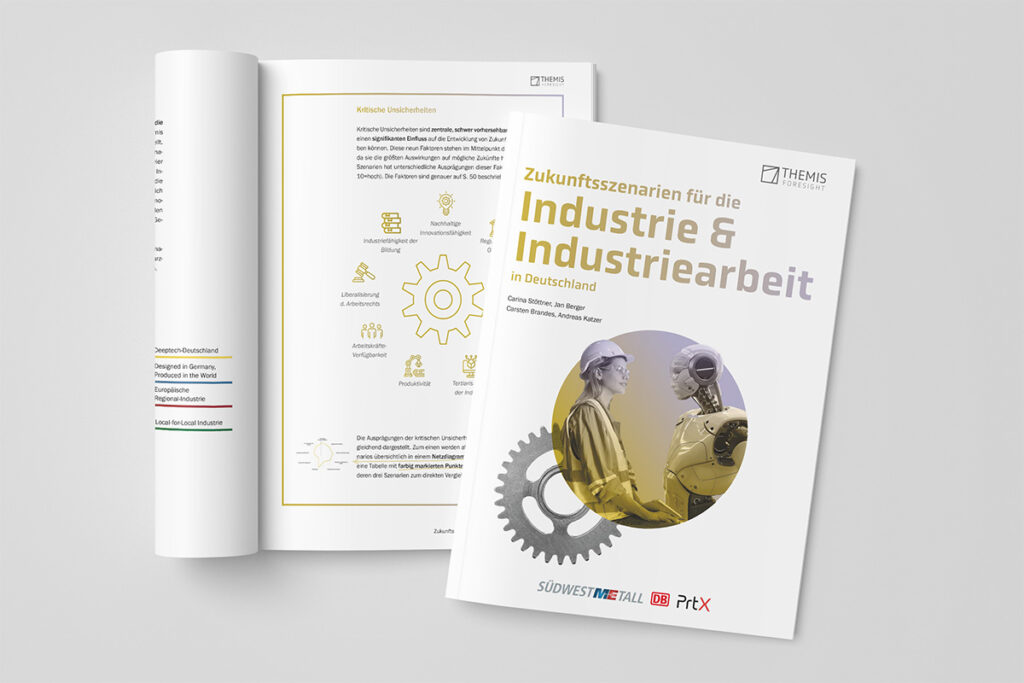
What will German industry look like in 2045 — and what does that mean for industrial work? That question sits at the heart of a new study, “Future Scenarios for Industry and Industrial Work in Germany,” developed by Themis Foresight together with partners Südwestmetall, Deutsche Bahn and Perthex.
The findings were presented at a closing event attended by more than 60 representatives from industry, education, trade unions and government, with discussion focused on what they mean for companies, employees and policymakers.
Four plausible scenarios for Germany’s industrial future
The study sketches four scenarios, each integrating different political, technological and social developments. They offer orientation for making strategic decisions under uncertainty:
1. Deep Tech Germany
Germany becomes a global center for highly specialized technology and deep tech innovation. Research and development boom while automated processes replace simpler tasks. The demand is for “new collar” workers — highly specialized people with both technical know-how and digital skills.
2. Designed in Germany, made in the world
Germany remains an innovation leader, but production capacity moves increasingly abroad. Value is created mainly through design, research and development. The industrial core shrinks while dependence on global supply chains grows — bringing new risks with it.
3. A regional European industry
Industry concentrates on resilient European value chains, with sustainability and regional production taking priority. Skilled manual work regains importance, since not every process can be automated.
4. Local-for-local industry
Industry becomes more decentralized: production happens locally, serving regional markets directly. In Europe this drives heavy automation and rising demand for qualified specialists, while low-skilled work increasingly disappears.
Foresight as a strategic tool
“Scenarios help companies prepare for different possible futures and navigate uncertainty. They aren’t forecasts — they make it possible to set strategic direction early,” says Carina Stoettner, managing director of Themis Foresight and one of the leading speakers on industry, technology and the future.
A panel discussion took the scenarios apart in detail, with representatives from business, industry associations and research — among them Barbara Resch (IG Metall), Dr. Joachim Schulz (Südwestmetall), Hanno Hoehn (MANN+HUMMEL Group) and Prof. Hubertus Bardt (IW Köln). Jan David Ott (Themis Foresight) moderated.
Industrial work in 2045: change needs direction
Automation, location policy, new skill requirements — the world of industrial work faces fundamental change. Foresight-based scenarios don’t just prompt reflection; they are practical instruments for workforce planning, innovation policy and education strategy.
Carina Stoettner — speaker on the future of industry and industrial work Looking for someone to open up new thinking at your conference, strategy meeting or internal training session? 👉 Enquire about booking 👉 Learn more about foresight for industrial companies
On 3 December 2024, her talk “Time Travel to the Future: Opportunities and Risks for the Software Industry” will open the largest embedded systems event in the German-speaking world.
Embedded software in 2040: what’s coming?
Carina Stoettner takes the audience into possible futures for software development. The focus isn’t on technical detail alone but on the bigger picture:
How are global value chains changing?
What role do resilience, digital sovereignty and energy-efficient systems play?
And how are customer needs evolving in industry, in mobility and in medical technology?
Five key drivers for the future of the embedded sector
Among the areas of transformation Stoettner examines in her keynote:
Systemic complexity: embedded software is becoming the backbone of connected, autonomous systems. Modularity and real-time capability turn into strategic success factors.
Energy and resources: energy efficiency and long-lived software architectures become mandatory — regulation included.
Regulation and security: geopolitical tension and new cyber risks call for robust governance.
New ways of working and the talent shortage: the working world is shifting — teams need to operate remotely, in an agile way and across disciplines.
Future markets and customer needs: embedded software has to orient itself more closely around use cases emerging beyond traditional industry — in health, education or climate technology.
Einwilligung verwalten
Um dir ein optimales Erlebnis zu bieten, verwenden wir Technologien wie Cookies, um Geräteinformationen zu speichern und/oder darauf zuzugreifen. Wenn du diesen Technologien zustimmst, können wir Daten wie das Surfverhalten oder eindeutige IDs auf dieser Website verarbeiten. Wenn du deine Einwillligung nicht erteilst oder zurückziehst, können bestimmte Merkmale und Funktionen beeinträchtigt werden.
Funktional
Always active
Die technische Speicherung oder der Zugang ist unbedingt erforderlich für den rechtmäßigen Zweck, die Nutzung eines bestimmten Dienstes zu ermöglichen, der vom Teilnehmer oder Nutzer ausdrücklich gewünscht wird, oder für den alleinigen Zweck, die Übertragung einer Nachricht über ein elektronisches Kommunikationsnetz durchzuführen.
Präferenzen
Die technische Speicherung oder der Zugriff ist für den rechtmäßigen Zweck der Speicherung von Präferenzen erforderlich, die nicht vom Abonnenten oder Benutzer angefordert wurden.
Statistiken
Die technische Speicherung oder der Zugriff, der ausschließlich zu statistischen Zwecken erfolgt.Die technische Speicherung oder der Zugriff, der ausschließlich zu anonymen statistischen Zwecken verwendet wird. Ohne eine Vorladung, die freiwillige Zustimmung deines Internetdienstanbieters oder zusätzliche Aufzeichnungen von Dritten können die zu diesem Zweck gespeicherten oder abgerufenen Informationen allein in der Regel nicht dazu verwendet werden, dich zu identifizieren.
Marketing
Die technische Speicherung oder der Zugriff ist erforderlich, um Nutzerprofile zu erstellen, um Werbung zu versenden oder um den Nutzer auf einer Website oder über mehrere Websites hinweg zu ähnlichen Marketingzwecken zu verfolgen.