The Future of Industry, the Future of the Economy: Why Germany Needs to Bet on Radical Innovation Now
A look back at futurist Carina Stoettner’s closing keynote at LEON 2026 — and what she had to say about the future of industrial work, resilience and the risks of protectionism taken too far.
When the futurist takes the podium
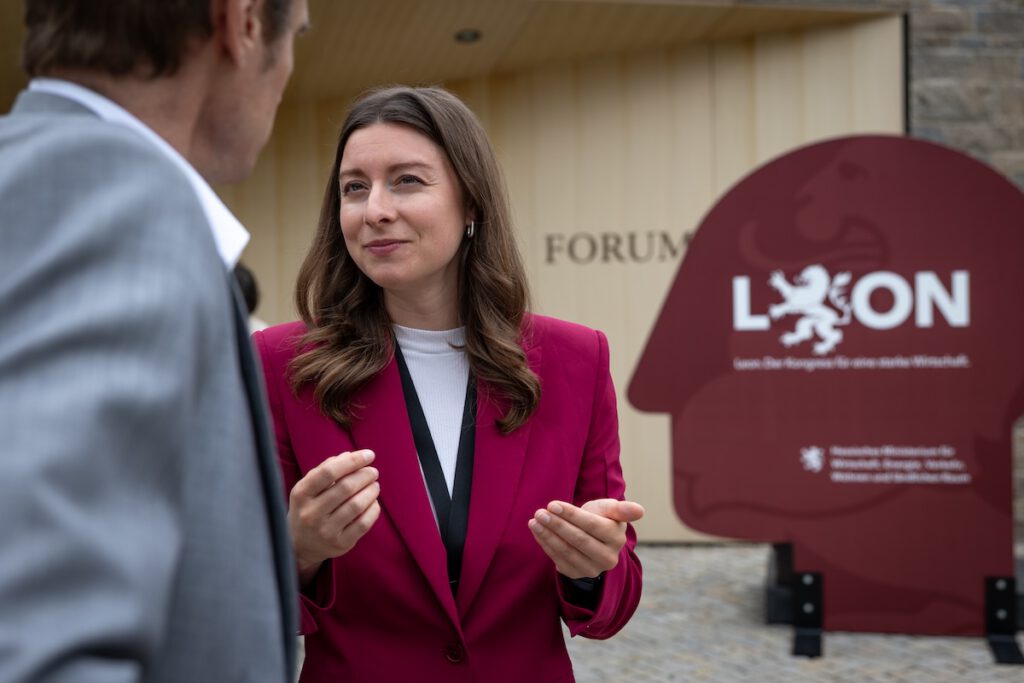
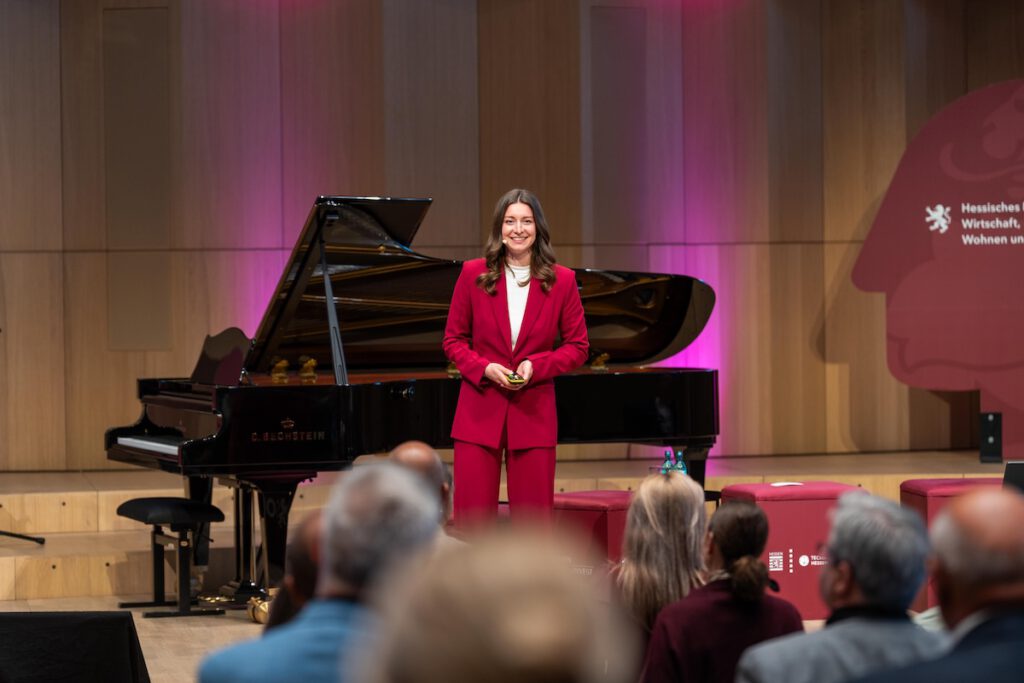
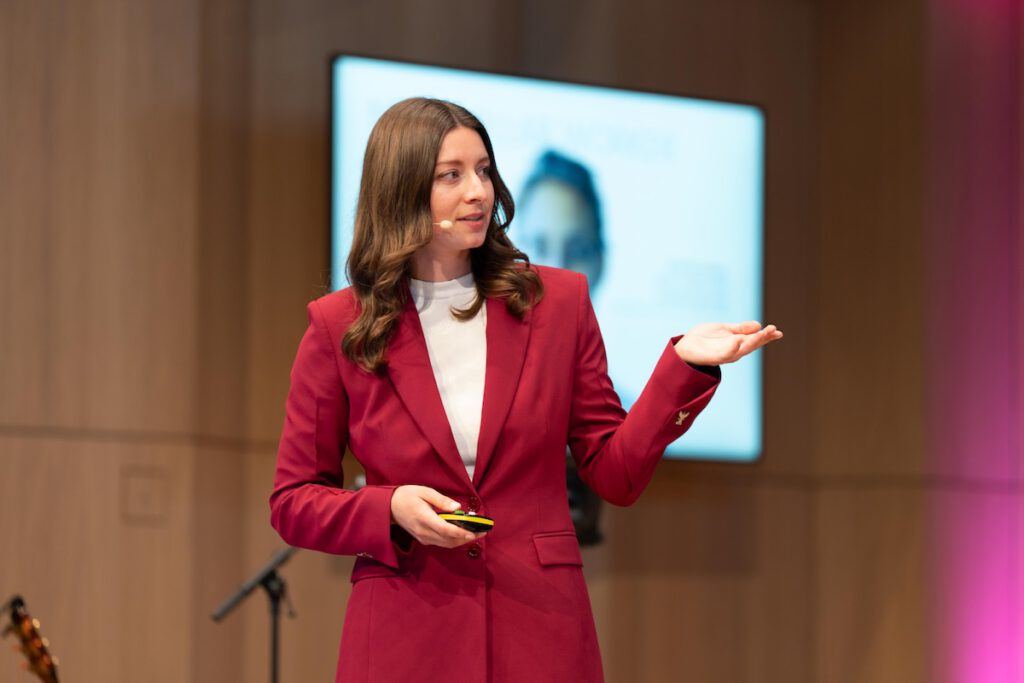
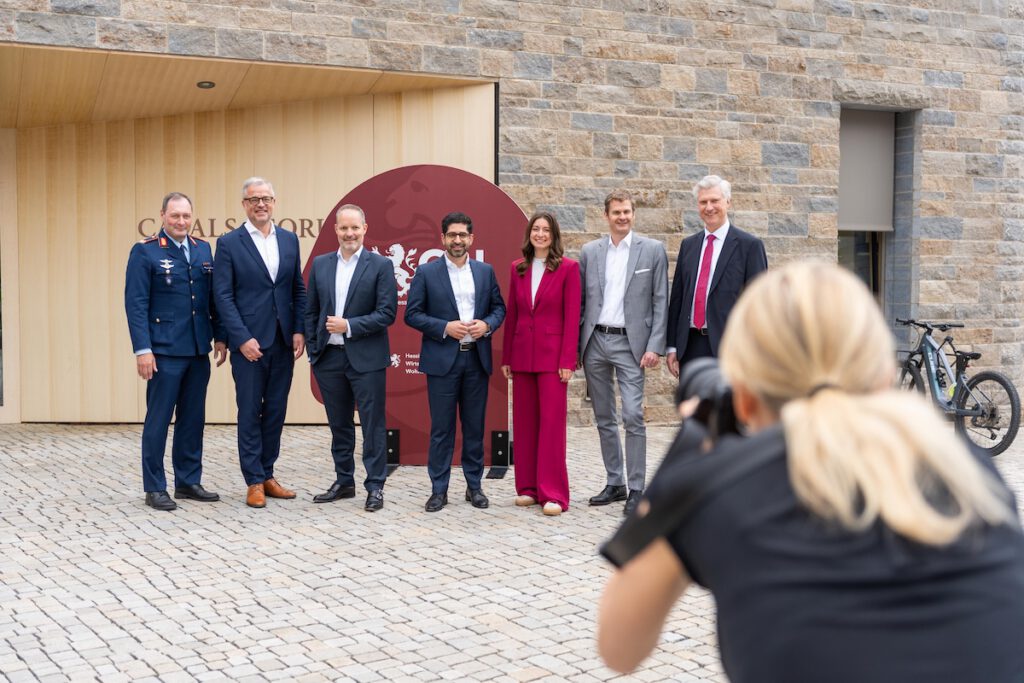
It’s 5:15 p.m. at the Casals Forum in Kronberg. A long day of talks lies behind the hundred or so decision-makers from business, academia, government and the Bundeswehr. The day’s main threads — resilience, security, financing the transition, the Mittelstand as an anchor of stability — have all been drawn. Then Carina Stoettner takes the stage and asks the question: where might German industry and the German economy actually be heading?
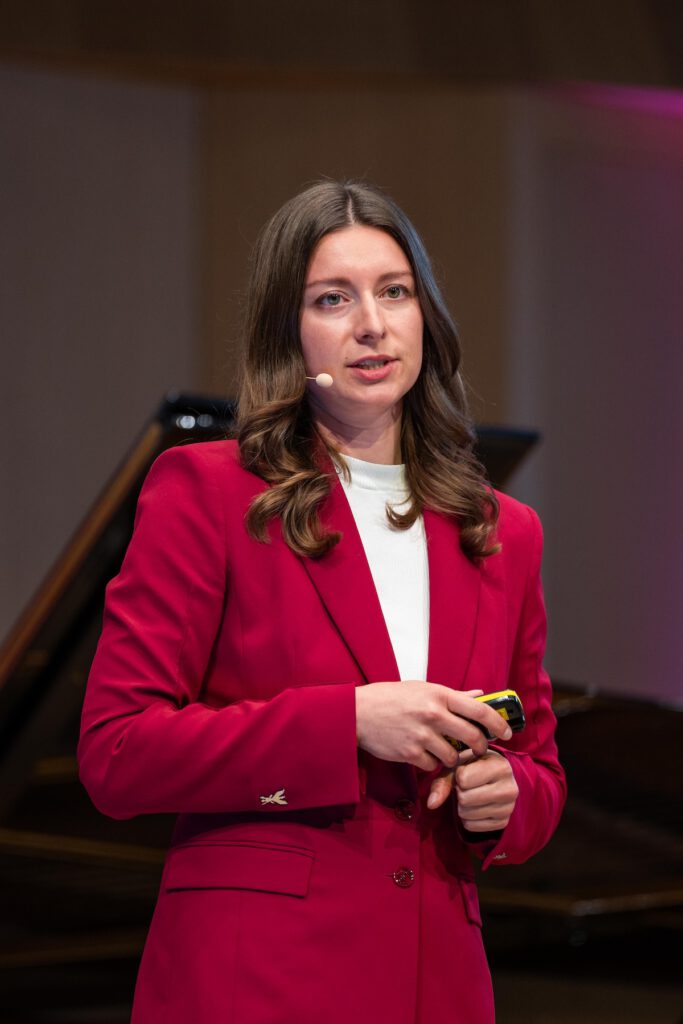
Stoettner is a futurist — not a forecaster extending charts ten years into the future, but someone who works with companies, ministries and education providers to make desirable futures concrete. Her closing keynote, “The Future of Industrial Work,” wasn’t a full stop but a starting gun: for a debate that has been conducted too technocratically in Germany for too long — and now needs a direction.
Resilience isn’t defense — it’s the ability to build a future
All day, resilience had been the leitmotif of LEON 2026. Economics Minister Kaweh Mansoori had called it the decisive precondition for competitiveness. Stoettner picked the term up — and turned it around.
Resilience, as her keynote had it, isn’t an attempt to defend a status quo against an uncertain world. Resilience is the ability to stay capable of acting despite disruptive change — and by means of it — and to shape futures worth having. Treat resilience as a shield and you build bunkers. Understand it as the capacity to shape things and you build platforms.
That set the frame for the keynote’s two main strands: deep tech and radical innovation on one side, education and the future of work on the other.
Deep tech and radical innovation: Germany’s real competitiveness question
Germany has an innovation paradox. Strong in research, strong in patents, strong in its Mittelstand — and still behind the US and China across many key technologies. Stoettner offered a diagnosis that landed in the room: we have perfected incremental innovation and structurally lost the habit of radical innovation.
Deep tech — technologies carrying high scientific risk and long development horizons, from quantum computing to synthetic biology to new energy and materials systems — requires different conditions from the optimizing innovation that German industry grew up on:
- Longer capital horizons than the typical German financing mix currently offers
- Greater tolerance for failure, both inside companies and in the logic of public funding
- Tighter integration of frontier research and industrial scaling, rather than sequential handovers across interfaces that take years
- Talent that thinks across disciplines and can move between the lab, the codebase and the factory floor
The trade-offs of protectionism: when resilience becomes a cage
Stoettner devoted perhaps the most delicate part of her keynote to a question the current industrial-policy debate tends to sail around: what happens when protectionism goes too far?
Resilience and sovereignty are legitimate goals — necessary ones, even. But they have a downside that honest industrial policy has to name:
- Innovation lost to isolation. Reorganizing critical inputs on a purely national basis costs more than higher unit prices — it costs the competitive pressure and knowledge exchange that drive innovation. Closed systems age faster than open ones.
- Capital and talent flight. Researchers, founders and investors choose ecosystems where they can scale. Overdone protectionism sends a signal: this is a place that defends, not one that builds.
- The strategic cost of the subsidy spiral. Every industry kept in the country by subsidy ties up money that would have bought more future elsewhere — in deep tech, education, infrastructure. Industrial policy is always also an allocation decision against alternative futures.
- Reciprocity risk. Protective measures provoke protective measures. In an escalating protectionist spiral, an export nation like Germany loses structurally more than more closed economies do.
- Democratic erosion. When “strategic industries” becomes a permanent category, the entanglements between the state and large corporations grow — and over time they weaken competition and renewal.
Her argument wasn’t a naive call for free trade but a case for proportion: resilience where security genuinely demands it and no other route exists — and openness everywhere else, because openness remains the real source of innovation and prosperity. The future worth aiming for doesn’t lie in maximum self-sufficiency but in intelligent sovereignty built on partnership.
What remains: three imperatives for the coming decade
Three imperatives can be distilled from Stoettner’s keynote — applicable to any industrial economy, and to Hesse in particular:
- Bet on deep tech and radical innovation. Incremental improvement is table stakes now, not an advantage. The real work is financing, organizing and scaling technologies with ten- and fifteen-year horizons — starting now.
- Think about education and work across a whole working life. Not curricula but learning architectures. Not training as a project but learning as infrastructure.
- Balance resilience with openness. Sovereignty where it’s indispensable. Openness everywhere else — as the source of innovation, talent and economic strength.
About the congress: LEON 2026 in Wiesbaden
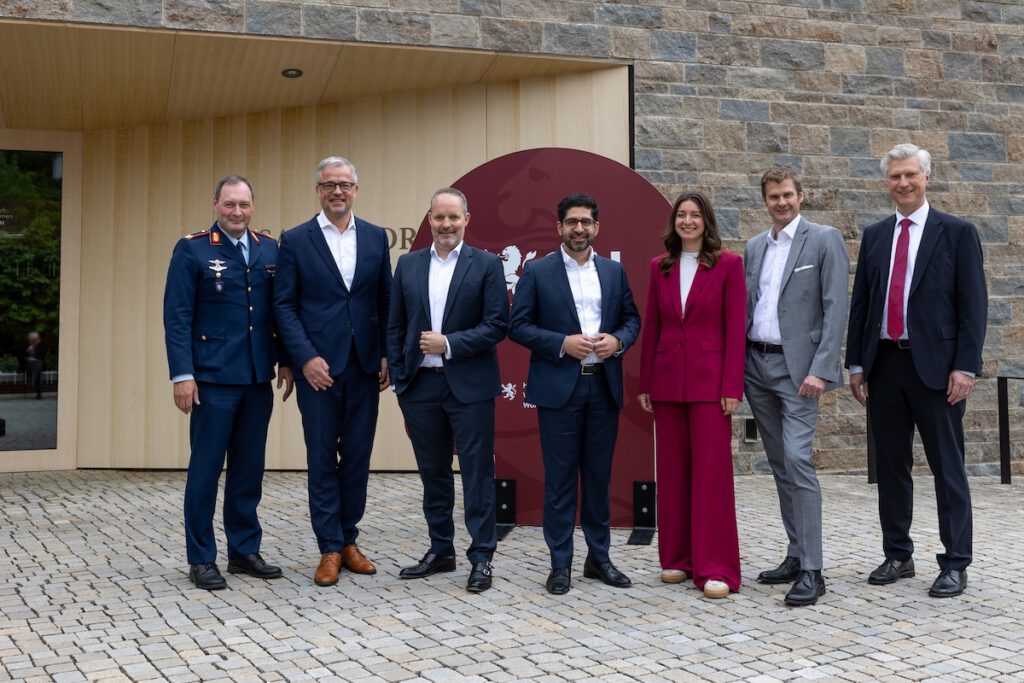
On 6 May 2026, representatives from business, academia, government and security institutions came together at the Casals Forum in Wiesbaden for LEON, the new business and industry congress for the German state of Hesse. The guiding theme: resilience as the decisive competitiveness question of the 21st century.
Three threads held the day together:
- Resilience is becoming a competitiveness question — given fragile supply chains, geopolitical tension and rising energy and security demands.
- Industry, innovation and security can no longer be thought about separately. Key technologies like AI and new materials have civilian and security applications.
- From a knowledge problem to an implementation problem. “We don’t have a knowledge problem, we have an implementation task,” as Economics Minister Kaweh Mansoori put it in his opening remarks.
The keynotes and talks at a glance
- Kaweh Mansoori, Hesse Minister of Economic Affairs — opening remarks
- Prof. Marcel Fratzscher (DIW Berlin) — keynote: “After Us, the Future: A New Generational Contract for Freedom, Security and Opportunity”
- Peter R. Manolopoulos (CEO, Schunk Group) — “What Makes Us Strong: Resilience in Industrial Mid-Sized Companies”
- Hans-Dieter Kemler (Executive Board, Helaba) — “Financing Transformation in Germany — Hesse Leads the Way”
- Dr. Pierre Dominique Prümm (Executive Board, Aviation, Fraport AG) — “Rethinking Resilience: How Aviation Shapes the Future in Turbulent Times”
- Christoph Bernius (Divisional Board, Cyber Risk, Commerzbank AG) — “Cyber Resilience: Europe’s Path to Security and Economic Strength”
- Dr. Kai Beckmann (CEO, Merck KGaA) — video message on the future of Merck
- Defence panel with Major General Wolf-Jürgen Stahl (President, BAKS), Thomas Mailänder (EDAG), Daniel Zittel (Daimler Truck), Prof. Andreas Glas (UniBw Munich), Dr. Hans Christoph Atzpodien (BDSV) and Brigadier General Holger Radmann (Hesse State Command): “Why We Need Strong Cooperation Between the Armed Forces, Industry and Innovation”
- Nathalia Schomerus (Legal Innovation Lead, Legora) — “Security and Resilience in German Industry: The Cybersecurity Dimension”
- Hesse’s industrial front-runners — presentations from six outstanding companies based in the state: JUMO, Energiesysteme Groß, Vacuumschmelze, Ponticon, Stephan Schmidt KG and Alexander Binzel Schweisstechnik / Abicor Group
- Carina Stoettner, futurist — closing keynote: “The Future of Industrial Work”
The main stage program was complemented by 13 breakout sessions on subjects including cutting red tape, cybersecurity, sustainable industry, financing transformation and security cooperation — plus a poetic and musical wrap-up to close the day.
LEON is designed as a long-term platform. In Mansoori’s words, it sees itself as the beginning of a dialogue meant to shape the years ahead: “The future of Hesse as a place for innovation and industry is being decided right now.”


What is a keynote?
Anyone who attends a conference, a trade fair or a corporate congress will sooner or later come across the term keynote. But what does it actually mean — and where does it come from?
The term and its origins
The word keynote comes from vocal music. A cappella groups — doo-wop ensembles, barbershop quartets — sound a single note together before they begin. That note establishes the key the piece will be sung in and brings every singer into alignment. Carried over into public speaking, the idea is the same: the keynote speaker attunes the audience to the central message of an event. They set the note everything else is pitched to.
“The keynote speaker attunes the audience to the central message — they set the note everything else is pitched to.”
The more formal term is plenary lecture — a talk given to all participants at once. In practice, though, “keynote” has largely taken over, even on German-language event programs.
What a keynote does
A keynote is far more than an opening address. It lays the intellectual and emotional foundation for the whole program: it previews the most important themes of the conference or fair, presents standout developments, and frames the message meant to run through every session and discussion that follows. A keynote gives people their bearings. It answers the question: why are we all here today?
DID YOU KNOW?
At large congresses, several keynotes can run in parallel. The term is increasingly used interchangeably with plenary session or invited talk, with an opening keynote, a closing keynote and further keynotes in between.
Where it sits in the program
Keynotes often open an event — but not always. One can sit in the middle as a motivating bridge between sessions, or at the end as an inspiring close. Where it goes depends on how the organizers want the day to build.
Who gives a keynote?
Keynote speakers tend to be either well-known figures or recognized experts: executives, entrepreneurs, politicians, elite athletes, prominent researchers. In academic settings — university graduations, for instance — these talks are usually called commencement speeches and are given by invited public figures or academics.
Choosing the right speaker is a strategic decision. A recognizable name or someone with genuine authority in the field makes the event more attractive and draws the interest of potential attendees well before the doors open.
The keynote speaker’s wider role
The job often extends beyond the talk itself. In some formats the keynote speaker also acts as conference host, guiding the audience through the full program and giving the event a thread that holds it together.
Fees and bookings
Keynote speakers either work independently or are represented by specialist agencies known as speakers bureaus. When a speaker is booked through an agency, a commission of 25 to 30 percent is standard. Industry practice is for the speaker to absorb that commission, so the fee stays transparent and consistent for the client.
Keynote or plenary lecture: is there a difference?
Although plenary lecture describes the same slot, “keynote” now signals more than a format. It carries an expectation about staging, relevance and impact. Thanks in no small part to large tech events — Apple’s legendary presentations among them — the keynote has established itself as a communication format in its own right, well beyond a simple opening address.
Was ist ein Keynote Speaker?
Ein Keynote Speaker ist die zentrale Rednerin oder der zentrale Redner einer Veranstaltung. Eine Keynote eröffnet neue Perspektiven, setzt thematische Impulse und gibt einem Event Orientierung sowie Energie. Anders als ein rein fachlicher Vortrag verbindet eine starke Keynote Inspiration, relevante Inhalte und einen klaren Blick auf die Zukunft.
Carina Stöttner ist als female Keynote Speaker eine gefragte Stimme für Unternehmen, Verbände und Konferenzen, die nach einer modernen, fundierten und inspirierenden Perspektive auf Themen wie Zukunft, Wandel, Künstliche Intelligenz und gesellschaftliche Entwicklungen suchen.
Carina Stoettner founds Futurewise Company
In January 2026, sociologist and futurist Carina Stöttner founded Futurewise Company. The consultancy works across Europe, helping executive boards and leadership teams stay strategically capable of acting in a climate of permanent uncertainty.
Futurewise runs executive offsites, builds futures thinking projects aimed at opening up new growth areas, and carries out strategy reviews. The goal is to give companies orientation in complex situations — without false certainty, but with a clear basis for making decisions.
The starting point was the upheaval of recent years: the pandemic, geopolitical conflict, the energy crisis, inflation and fragile supply chains. In that environment, Stöttner argues, optimizing existing business models is no longer enough. Growth increasingly emerges where uncertainty is greatest — and those are precisely the spaces companies need to open up in a structured way.
Through scenario work and futures thinking, Futurewise creates space for decisions: room to think through possible futures systematically and weigh strategic options against them. The focus is on resilience as a precondition for new growth — not as retreat, but as a deliberate opening toward future markets and business models.
Hope for a Better Future: A Conversation on Stage at the Theater
A conversation about trust, the future and social responsibility at the Markgrafentheater in Erlangen
Can hope be learned again, in a time defined by overlapping crises, political radicalization, technological overload and a sense of powerlessness in the face of ecological breakdown? That question was at the center of the second edition of the talk series Amt 44 at Schauspiel Erlangen, held on 16 December 2025 at the Markgrafentheater.
After a successful first edition in the spring, the format returned to a subject that could hardly be more timely. Hosted by Matthias Köhler, resident director and part of the artistic leadership, the evening wasn’t about quick answers or moral certainties. As the format intends, what mattered was asking the right question.
Four very different perspectives met on the panel:
Peter Dabrock, theologian, ethicist and former chair of the German Ethics Council;
Baro Vicenta Ra Gabbert, author, lawyer and spokesperson for social and ecological justice at Greenpeace;
Vincent C. Müller, philosopher and Humboldt Professor for the Philosophy of Artificial Intelligence;
and Carina Stoettner, futurist and adviser to leadership teams.
Peter Dabrock brought an ethical and theological perspective, understanding hope as a deliberate stance that keeps you able to act even without optimism. Baro Vicenta Ra Gabbert spoke from the practice of activism and showed how hope grows out of everyday commitment — through young people above all, even in the face of political setbacks. Vincent C. Müller opened a philosophical and technological horizon, arguing that thinking worst-case scenarios through properly is a precondition for shaping the future responsibly. Carina Stoettner placed the discussion in the context of futures research, arguing that hope at a societal level rests above all on trust — in the future and in one another — and on the quiet majority finding the courage to speak.
You can read more about the evening in the write-up by Rezensöhnchen or in the Nürnberger Nachrichten (both in German).
The verdict: an absorbing conversation, with plenty of spontaneous contributions and debate.
Would you like to book Carina Stoettner for a panel or a talk? Get in touch. More about the speaker.
Photos: Henrik Stelter


Chancen für die Industrie: Carina Stöttner im Audi-Forum in Neckarsulm
On 1 December 2025, Carina Stoettner was a guest at the Südwestmetall Heilbronn Christmas reception at the Audi Forum in Neckarsulm. Her talk looked at the future of German industry — at the opportunities within the transformation as much as the challenges facing companies and society. Communications consultant Christian Gleichauf wrote up the evening afterwards; his account forms the basis of what follows.
Deep tech is the thing we ought to be paying attention to. Carina Stoettner makes that very clear. And it has a little something to do with Heilbronn.
At the Südwestmetall Christmas reception at the Audi Forum last night, the futurist sketched out several possible futures worth thinking hard about.
In three of four scenarios, the good times in Europe don’t keep rolling. Only if we manage to build on our strengths and set off a few genuine breakthroughs do we get a future to look forward to.
That takes a society-wide willingness to engage with the new. Lifelong learning, a new relationship with science, a new sense of self in industry — in short, transformation.
In the end it will probably be a mix of scenarios. The familiar local-for-local approach will play a role one way or another. But you also have to hope the scenarios that would shrink the German and European economies into insignificance don’t come to pass.
What Stoettner does manage, in the space of a few minutes, is to make the urgency land — in front of an audience that deals with transformation every day of the week.
Christine Grotz, chair of the Heilbronn/Franconia district group at Südwestmetall, asks the fair question: what can we do? Stoettner appeals directly to the employers in the room: industry underestimates the leverage it has. Basic research is one example — and the state won’t be funding all of it. Nor will this happen without partnerships.
Former state secretary Friedlinde Gurr-Hirsch called for new approaches to training and apprenticeships. In front of more than 160 invited guests, Heiko Asum of Fibro Rundtische in Weinsberg put his finger on the sore spot: we’re not fast enough anymore.
Deep tech, collaboration between industry and science, combining Gyro Gearloose’s out-of-the-box thinking with Scrooge McDuck’s commercial instincts, using robotics to keep production in Europe, a clear focus on future technologies like AI, chip production and quantum computing. What’s striking about that list of ingredients: most of it is currently emerging in the Heilbronn ecosystem or out of it (Schwarz Group!).
So we’re watching a blueprint for Europe take shape. And if that’s our one chance of not going under, it sounds like there ought to be a majority prepared to at least pull in the same direction.
Doesn’t that sound like a Christmas message?
Also worth a mention: the inventive welcome video from Senta Woldeck and Güldeniz Acar (where was Jörg Ernstberger? 😉). And not to be forgotten — this year’s Herz der Wirtschaft award went to the Main-Tauber district and Futurelabs gGmbH, an initiative that encourages young people to experiment and gives them a way to put ideas into practice. Fitting, given the theme of the evening.
So — shall we give deep tech a chance?
This piece was originally published by Christian Gleichauf on LinkedIn. Christian is deeply connected in Heilbronn’s fast-growing ecosystem. He advises companies and institutions on communications, drawing on a background in journalism (more at www.wortCraft.de).


Deutschlands Industrie 2045: Vier Zukünfte, die Sie überraschen werden
Warum wir alle am „Normalitätsbias“ leiden
Haben Sie schon einmal vom „Normalitätsbias“ gehört? Es ist die tief in unserem Gehirn verankerte Tendenz zu glauben, dass alles so weiterläuft wie bisher. Dieses Phänomen lässt sich besonders gut bei prognostizierten Hurricanes beobachten: Obwohl die Gefahr klar ist, halten viele Menschen bis zur letzten Minute daran fest, dass es sie schon nicht treffen wird. Wir unterschätzen Risiken und haben enorme Schwierigkeiten damit, tiefgreifende Veränderungen zu antizipieren.
Genau diese menschliche Eigenschaft ist eine strategische Gefahr für die deutsche Industrie. Zu glauben, der Status quo bliebe erhalten, ist in einer sich rasant wandelnden Welt das größte Risiko. Der Schlüssel zur Zukunftsfähigkeit liegt daher nicht in der Vorhersage, sondern im Denken in Szenarien – einem disziplinierten „Was wäre, wenn“-Ansatz. Nur wer sich heute mit möglichen Zukünften auseinandersetzt, kann in der Krise agieren, anstatt von ihr gelähmt zu werden.
Genau das habe ich in der Studie „Zukunftsszenarien für die Industrie und Industriearbeit“ getan. Dabei habe ich zusammen mit meinen Co-Autoren Jan Berger, Carsten Brandes, Andreas Katzer vier plausible, aber radikal unterschiedliche Zukünfte für die deutsche Industrie im Jahr 2045 entworfen. Dieser Artikel stellt Ihnen die vier überraschendsten Erkenntnisse aus diesen Szenarien vor – vier Aussichten, die unser Bild von der Zukunft radikal in Frage stellen.
Die vier überraschendsten Zukunftsaussichten für die deutsche Industrie
1. Deutschlands Apple-Dilemma: Wohlstand für die Elite, Abstieg für den Rest?
Im Szenario „Designed in Germany, Made in the World“ folgt Deutschland dem Vorbild von Apple: Designed by Apple in California, assembled in China. Die deutsche Industrie spezialisiert sich auf ihre Kernkompetenzen in Forschung, Entwicklung und Design. Ergänzt wird dies durch den Ausbau von Plattform- und Servicelösungen („X-as-a-Service“). Die physische Produktion beschränkt sich auf hochqualitative Kleinserien, während die kostenintensive Massenproduktion konsequent in kosteneffizientere Länder verlagert wird.
Die überraschende und potenziell explosive Konsequenz dieses Modells ist nicht wirtschaftlicher, sondern sozialer Natur. Es entsteht eine tiefe gesellschaftliche Kluft. Auf der einen Seite steht eine hochqualifizierte, international vernetzte und sehr gut verdienende „Industrie-Elite“, die in den Entwicklungszentren arbeitet. Auf der anderen Seite stehen die ehemaligen Facharbeiter aus der Produktion, die in andere Sektoren abwandern oder Schwierigkeiten haben, auf dem neuen Arbeitsmarkt Fuß zu fassen. Dieser Strukturwandel erinnert an den Niedergang der deutschen Textilindustrie, der die soziale Sprengkraft einer solchen Entwicklung verdeutlicht.
2. Resilienz hat ihren Preis: Warum ein autarkes Europa uns ärmer machen könnte
Das Szenario „Europäische Regional-Industrie“ beschreibt eine Zukunft, die von Protektionismus und dem Wunsch nach regionaler Stabilität geprägt ist. Getrieben von geopolitischen Spannungen koppelt sich Europa vom Weltmarkt ab, um Abhängigkeiten zu reduzieren und die Versorgungssicherheit zu gewährleisten. Die Produktion wird nach Deutschland und Europa zurückgeholt (Reshoring).
Die kontraintuitive Kernaussage dieses Szenarios lautet: Der verständliche Wunsch nach mehr Sicherheit könnte Deutschland ärmer machen. Die Abkopplung vom Weltmarkt würde die Exportnation hart treffen. Berechnungen der Stiftung Familienunternehmen deuten darauf hin, dass das reale Pro-Kopf-Einkommen kurzfristig um bis zu 20 % sinken könnte, langfristig um 6 %. In dieser Zukunft gäbe es klare Verlierer wie die Automobilindustrie und die Hochtechnologie, während Grundversorger wie Lebensmittel, Energie (Biomasse, Atomkraft) und die Recycling-Wirtschaft zu den Gewinnern zählten. Innovation bedeutet hier nicht, bahnbrechende Technologien zu schaffen, sondern erfordert einen frugalen Ansatz mit begrenzten Mitteln: die kreative Fähigkeit, buchstäblich „das Rad neu zu erfinden“, indem man bestehende Produkte mit den Ressourcen baut, die gerade verfügbar sind.
3. Das Ende deutscher Standards: Wenn die Waschmaschine bald ein „Sari-Programm“ hat
Im Szenario „Local for Local“ reagieren deutsche Unternehmen auf globale Unsicherheiten, indem sie Produktionsstätten in jeder wichtigen Weltregion aufbauen, um die dortigen Märkte direkt zu bedienen. Forschung und Entwicklung (F&E) bleiben zunächst in Deutschland, doch die globale Machtbalance verschiebt sich. Die Produktentwicklung richtet sich zunehmend nicht mehr nach europäischen, sondern nach den bevölkerungsstärkeren und kaufkräftigeren Regionalblöcken wie Indien aus.
Die überraschendste Folge ist der Verlust der globalen Standardsetzungsmacht Deutschlands. Das prägnante Beispiel aus der Studie verdeutlicht dies:
“Das heißt, ich habe vielleicht eine Waschmaschine, die in Zukunft statt einem Feinwaschprogramm ein Sari Waschprogramm hat und wir bekommen dann im Grunde nur noch die Anpassung.”
Deutschland wäre nicht mehr der globale Taktgeber, sondern nur noch ein Markt, für den Produkte angepasst werden. Dieser Machtverlust würde langfristig auch die entscheidende Frage aufwerfen, warum Forschung und Entwicklung überhaupt noch in Deutschland angesiedelt sein sollten, wenn die wichtigsten Kunden und Märkte woanders sitzen.
4. Der neue Industriearbeiter: Mehr Daniel Düsentrieb als klassischer Facharbeiter
Das optimistischste Szenario heißt „Deeptech-Deutschland“. Hier geht es nicht darum, bestehende Produkte nur zu optimieren – ein Auto noch etwas schneller oder effizienter zu machen –, sondern darum, fundamentale Probleme wie den Klimawandel oder Überalterung auf einer grundlegenden Ebene zu lösen. Deutschland entwickelt sich zu einem weltweit führenden Standort für hochinnovative Technologien wie selbstheilende Materialien, klimaresistente Pflanzen oder Lebensmittel aus der Petrischale.
Die überraschendste Anforderung dieser Zukunft betrifft die Arbeitskräfte. Gefragt sind nicht mehr nur klassisch ausgebildete Ingenieure, sondern sogenannte „New Collar Worker“. Dieser neue Typus von Industriearbeiter vereint technische, manuelle und theoretische Kompetenzen. Oft sind es Quereinsteiger aus völlig anderen Disziplinen, die neue Perspektiven einbringen. Die Studie nutzt eine treffende Analogie: Gefragt ist der Geist eines „Daniel Düsentrieb“, also eines genialen Erfinders, kombiniert mit einem „Dagobert Duck Mindset“ – dem unternehmerischen Gespür, aus brillanten Ideen auch wirtschaftlich erfolgreiche Produkte zu machen.
Fazit: Die Zukunft ist, was wir daraus machen
Diese vier Szenarien sind keine Vorhersagen. Sie sind plausible Gedankenexperimente, die uns die Bandbreite möglicher Zukünfte aufzeigen und helfen, den „Normalitätsbias“ zu überwinden. Sie zwingen uns, unbequeme Fragen zu stellen und strategische Optionen für morgen schon heute zu durchdenken. Die Zukunft ist nicht vorbestimmt. Die Weichen werden zwischen einem gespaltenen Eliten-Staat, einem resilienten, aber ärmeren Kontinent, dem Verlust globalen Einflusses oder der anspruchsvollen Neuerfindung unserer Arbeitswelt gestellt.
Wenn Sie Interesse an einer Keynote zu dem Thema haben oder in den Austausch dazu gehen möchten, weil Sie oder Ihre Kunden Teil der europäischen Industrie sind, sprechen Sie mich gerne an.
European Forum Alpbach 2025 — European inspiration between alpine panoramas and geopolitical debate
European Forum Alpbach 2025 – Inspiration zwischen Alpenpanorama und geopolitischen Debatten
Wenn Nobelpreisträger, Kanzlerkandidaten, Außenministerinnen, Ministerpräsidenten, Tech-Leader, EU-Botschafter und führende Wissenschaftlerinnen zusammenkommen und buchstäblich gemeinsam auf Wanderschaft gehen, um miteinander zu sprechen, dann ist man wohl in Alpbach gelandet.
Das European Forum Alpbach (EFA) gilt als eine Art „europäisches Davos“ mit starkem Fokus auf Demokratie, Gesellschaft und die Rolle Europas in der Welt. Seit 1945 ist das kleine Tiroler Alpendorf einmal im Jahr ein Treffpunkt für Menschen, die Zukunft gestalten: Entscheidungsträger:innen, Vordenker:innen, junge Talente. Unter dem Motto „Recharge Europe“ stand 2025 die Frage im Mittelpunkt, wie Europa in Zeiten multipler Krisen wieder Energie und Orientierungskraft entwickeln kann.
Ich war dieses Jahr erstmals dabei und wollte bewusst einmal aus meiner klassischen Wirtschafts-Bubble in die EU- und Zivilgesellschafts-Bubble springen. Denn welche politischen Rahmenbedingungen gerade im Hintergrund verhandelt werden und welche gesellschaftlichen Zukunftsfragen dort diskutiert werden, ist letztlich auch für die Zukunft von Unternehmen und Wirtschaft hochrelevant.
Ein schönes Zitat aus einem Image-Film als Auftakt zu einer der Diskussionsrunden:
„Dieser Kontinent ist nicht auf Selbstzweifel gegründet. Er besteht aus Menschen mit Mut, Solidarität und dem Willen, ihre Stimme zu erheben.“
Othmar Karas, Präsident des Europäischen Forums Alpbach sagt, wir müssen uns in Perspektivenvielfalt üben:
„Jemand anderes kann genauso recht haben wie ich. Der Schlüssel liegt darin, Kompromisse zu finden.“
Meine Sessions & Eindrücke
Mainstreaming von Extremismus: Wo ist die rote Linie für die Demokratie?
Auf einer Wanderung diskutierte ich mit u. a. Armin Laschet, Carl Bildt, Julia Ebner und Peter Neumann über die Gefahren, wenn extremistische Narrative in den gesellschaftlichen Mainstream einsickern. Wie robust sind unsere Demokratien noch und wo verlaufen die roten Linien, die wir schützen müssen? Besonders eindrücklich war, wie nah politische Praxis und wissenschaftliche Analyse hier zusammengebracht wurden und das nicht im Konferenzsaal, sondern beim Gehen durch die Berge.
“Changing democracy is a hidden process. We need to secure our democratic structures davor, von Rechtspopulisten niedergeschlagen zu werden.” – Armin Laschet, former Minister President of North Rhine-Westphalia & Member of the German Bundestag
Vereint oder losgelöst? Der Kampf um Europas Identität und Zukunft
Mit Martin Selmayr, Helmut Brandstätter, Edit Inotai und Josephine van Zeben ging es um die zentrale Frage: Wie definiert sich Europa in einer Welt, die immer fragmentierter wirkt? Spannend war vor allem, wie unterschiedlich politische, mediale und akademische Perspektiven die Herausforderungen, aber auch die Chancen für die europäische Identität beleuchteten.
„Externe Kräfte, China, Russland, die USA, tragen zur Anheizung von Extremismus bei. Doch damit er verfängt, müssen in der Gesellschaft bereits Bruchlinien vorhanden sein: eine Bankenkrise, Migrationsdruck oder ähnliche Schwachstellen.“ – Carl Bildt, ehemaliger Ministerpräsident von Schweden
In einem Gespräch während der Wanderung mit Martin Selmayr, EU-Botschafter Rom; ehemaliger Generalsekretär der Europäischen Kommission, über die Ukraine sagte er folgendes:
„Die Herausforderung für eine Gesellschaft und ein System besteht nicht nur darin, von Frieden zu Krieg zu gehen, sondern auch darin, als Nation vom Krieg wieder in den Frieden zurückzukehren.“
Auch sagt er:
„Ich bin fest überzeugt: In nur wenigen Jahren werden wir mehr als 30 Mitgliedstaaten haben.“ und bezieht sich dabei auch auf die Ukraine als neues Mitglied.
Dr. Julia Ebner, Senior Research Fellow & Leiterin des Violent Extremism Lab am Institute for Strategic Dialogue (ISD), University of Oxford, die lange tief in die extremistische Szene eingetaucht ist, meinte:
„Vertrauen verlagert sich von Institutionen hin zu einzelnen Personen, häufig zu Influencern, anstatt in etablierte Organisationen.“ Diese Dynamik sollten wir uns zu Nutze machen.
Josephine van Zeben, Professorin für transnationales Recht; Prorektor für Bildung und akademische Personalentwicklung, European University Institute sagt:
„Wir sprechen ständig über die Probleme, die die EU lösen muss. Aber wir fragen uns selten: Wie sieht Erfolg für die EU eigentlich aus?“
Der strategische Aufbruch Europas: Sicherheit in einer fragmentierten Welt
In einer Zeit, in der geopolitische Risiken zunehmen, wurde hier diskutiert, wie Europa seine Sicherheitspolitik neu denken muss. Mit Katarzyna Pisarska, Sarah Wheaton, Peter Wagner, Robert Brieger und Meredith Whittaker wurde klar: Sicherheit bedeutet heute nicht mehr nur militärische Stärke, sondern auch digitale Souveränität, Resilienz gegen Desinformation und strategische Handlungsfähigkeit im globalen Kontext. Meredith Whittaker, Präsidentin der Signal Foundation sagt:
„Wir müssen in Technologien investieren, die Unabhängigkeit von anderen Staaten ermöglichen und die Monopole der großen Tech-Konzerne herausfordern.“
Sunrise Hike auf die Gratlspitze
Eines meiner „Off topic“ Highlights: Um 4 Uhr morgens startete die Wanderung hinauf auf die Gratlspitze. Inmitten des Sonnenaufgangs über den Alpen entstanden Gespräche, die man in einem Konferenzsaal wohl nie so führen könnte. Für mich ein Format, das inspiriert – Lernen und Austauschen in Bewegung.
Europe in the World – Abschlussdebatte
Zum Abschluss der Europe in the World Days beim European Forum Alpbach 2025 wurde klar: Die alte regelbasierte Ordnung, in der Europa florierte, existiert nicht mehr. „The order in which Europe was thriving is a thing of the past, and it will not come back. Nostalgia is not a strategy,“ betonte Sabine Weyand (Europäische Kommission). Während die USA sich zunehmend aus multilateralen Strukturen zurückziehen, sieht Arancha González Laya (Sciences Po) die Gefahr, dass Europa in eine „vierte Phase“ abrutscht: „The fourth stage of Europe’s evolution could be that we… become somebody else’s colony.“
Die Panelist:innen waren sich einig, dass Europa nur durch tiefere Integration und neue Partnerschaften Stärke gewinnen kann. Shashi Tharoor (Indisches Parlament) fragte provokant: „Can Europe and India be a pole to ourselves and constitute an alternative to both the US and China?“ Andreas Treichl (ERSTE Foundation) warnte hingegen vor Europas Wehrlosigkeit: „We don’t fight with each other, but we let others kill us. This is a major change and we have no means to counter it.“ Für Nobelpreisträger Joseph Stiglitz liegt die Chance Europas in Regulierung und Wettbewerbspolitik: „If Trump says to Europe: Give up your competition policy or face 50% tariffs – what will Europe do?“ Klar wurde: Europa muss seinen Binnenmarkt vollenden, Innovation skalierbar machen und Allianzen ausbauen, sonst bleibt es Spielball einer härteren, multipolaren Welt.
-

Carina Stöttner – European Forum Alpbach6
-

Carina Stöttner – European Forum Alpbach4
-

Carina Stöttner – European Forum Alpbach1
-

Carina Stöttner – European Forum Alpbach2
-

Carina Stöttner – European Forum Alpbach7
-

Carina Stöttner – European Forum Alpbach10
-

Carina Stöttner – European Forum Alpbach11
-

Carina Stöttner – European Forum Alpbach16
-

Carina Stöttner – European Forum Alpbach12
-

Carina Stöttner – European Forum Alpbach9
-

Carina Stöttner – European Forum Alpbach14
-

Carina Stöttner – European Forum Alpbach23
-

Carina Stöttner – European Forum Alpbach21
Was bedeutet das für europäische Unternehmen und ihre Zukunftsstrategie?
- Resilienz stärken: Lieferketten diversifizieren, Abhängigkeiten von USA/China reduzieren und neue Partnerschaften suchen.
- Binnenmarkt nutzen: Europa als größten Heimatmarkt für Skalierung begreifen.
- Tech-Souveränität: weniger Abhängigkeit von US-Plattformen, europäische Alternativen einsetzen. Auch bei Software-Lösungen!
- Partnerschaften erweitern: Kooperationen mit dem globalen Süden als strategische Zukunftsoption, auch, um langfristig neue, junge Märkte zu erschließen.
Warum Futures Thinking zur Kernkompetenz wird
Foresight ist kein Denkmodell für Akademien oder Thinktanks, sondern ein strategisches Werkzeug für Unternehmen, die im Wandel Orientierung suchen. Ob in der Industrie, Verwaltung oder im Mittelstand: Wer mit Unsicherheit produktiv umgehen will, braucht Strukturen, Methoden und eine Kultur, die Zukunft mitdenkt.
Dieser Beitrag beantwortet fünf praxisnahe Fragen: Wie lässt sich Foresight im Unternehmen verankern? Was bringt es der Strategiearbeit? Und wie baut man dafür Kompetenzen auf?
Wie kann Foresight in Unternehmen integriert werden?
Foresight lässt sich auf verschiedenen Ebenen im Unternehmen verankern:
- Strategisch: Als Impulsgeber für die Unternehmensstrategie, z. B. über Zukunftsszenarien oder Zielbilder.
- Innovativ: Als Ergänzung zu Innovationsmethoden (Design Thinking, Agile) zur frühzeitigen Erkennung von Bedürfnissen, Technologien und Geschäftsmodellen.
- Kulturell: Als Haltung, die Offenheit für Unsicherheit, alternative Denkmodelle und langfristiges Denken fördert.
- Strukturell: Über dedizierte Rollen, Foresight-Units oder integrierte Teams in Strategie-, Innovations- oder Entwicklungsabteilungen.
Der Einstieg kann klein sein: ein erster Szenarienworkshop, ein Trendradar oder ein internes Foresight-Pilotprojekt.
Welche Vorteile bringt Foresight für die strategische Planung?
Strategisches Foresight erweitert den Planungshorizont – von der kurzfristigen Reaktion zur langfristigen Antizipation. Es ermöglicht:
- Frühzeitige Orientierung in dynamischen Umfeldern
- Identifikation von Chancen und Risiken, die klassisch-strategisch übersehen würden
- Bessere Entscheidungsqualität durch systemische Sicht und alternative Perspektiven
- Strategien mit mehr Resilienz – also Anpassungsfähigkeit bei unvorhersehbaren Entwicklungen
Foresight macht Strategien robuster, weil es Unsicherheiten nicht ausblendet, sondern einplant.
Wie hilft Foresight in Transformationsprozessen oder bei Unsicherheit?
Foresight ist besonders wertvoll, wenn „lineares Denken“ nicht mehr ausreicht:
- In Transformationsprozessen öffnet es neue Möglichkeitsräume: Welche Zukunft wollen wir als Organisation? Was verändert sich strukturell?
- In unsicheren Kontexten schafft es psychologische und strategische Sicherheit: Nicht die eine Lösung, sondern Orientierung im Möglichkeitsraum.
- Es hilft, komplexe Zusammenhänge zu strukturieren und dabei unterschiedliche Sichtweisen zusammenzubringen (interdisziplinär, interhierarchisch, partizipativ).
Foresight unterstützt also nicht nur inhaltlich, sondern wirkt auch als kulturelles Veränderungsinstrument.
Welche Branchen profitieren besonders von Foresight?
Grundsätzlich gilt: Je höher die Unsicherheit, Dynamik und Komplexität, desto wertvoller ist Foresight. Besonders profitieren:
- Industrie & Energie: zur Vorbereitung auf technologische Umbrüche, neue Wertschöpfungsketten oder geopolitische Risiken.
- Militär: ursprünglich kommt Foresight aus diesem Bereich. Risikoplanung ist in der Verteidigung das A und O.
- Gesundheits- & Bildungssektor: zur Mitgestaltung gesellschaftlicher und regulatorischer Veränderungen.
- Mobilität & Logistik: zur Entwicklung robuster und nachhaltiger Geschäftsmodelle.
- Öffentliche Verwaltung & Politik: für strategische Vorausschau, Standortentwicklung, Krisenvorbereitung.
- Technologie & IT: als Innovationsmotor und Ethik-Reflexionsraum zugleich.
Wichtig: Es geht nicht nur um technologische Disruption – auch kulturelle, soziale oder ökologische Wandelprozesse sind Foresight-relevant.
Wie baut man eine interne Foresight-Einheit auf?
Ein unternehmensinternes Foresight-Team braucht mehr als ein Toolset – es braucht Raum, Mandat und Vernetzung. Wichtige Schritte:
- Verankerung auf Führungsebene: Foresight muss Teil der strategischen Diskussion sein.
- Start mit einem Pilotprojekt: z. B. Trendanalyse, Szenarienprozess oder Visionsentwicklung.
- Aufbau interner Kompetenzen: durch Schulungen, Sparrings, externe Begleitung.
- Netzwerke schaffen: zwischen Strategie, Innovation, HR, Technologie, Nachhaltigkeit etc.
- Zukunft als Dialog etablieren: partizipativ, iterativ, nicht nur Top-down.
Je nach Größe und Reifegrad kann Foresight als dedizierte Einheit, Stabsstelle oder integrierter Prozess angelegt werden.