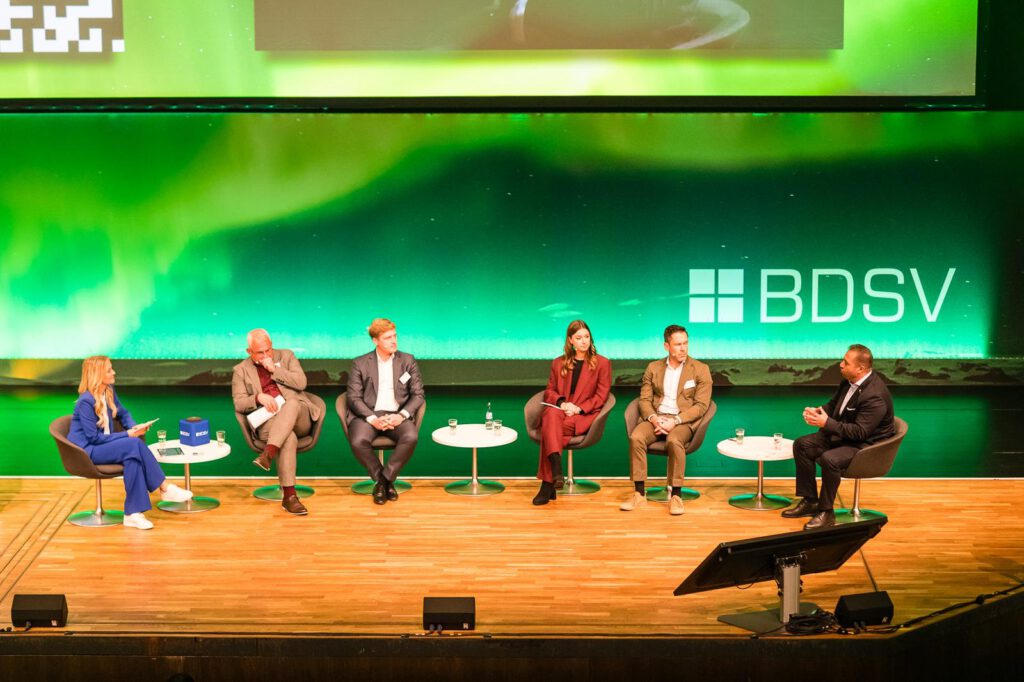
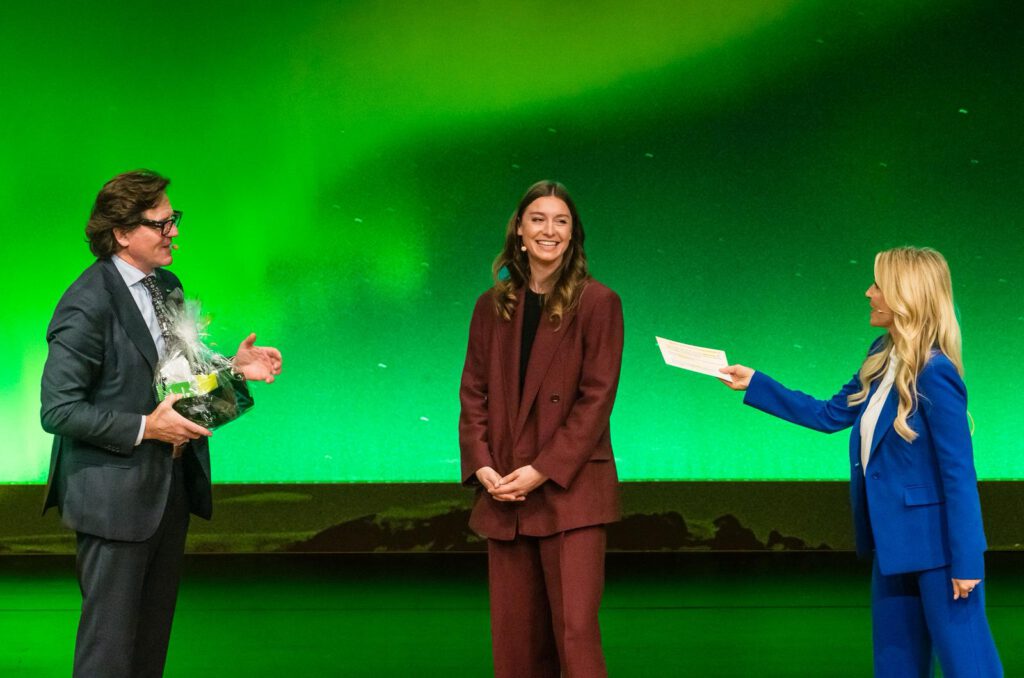
What does the future of industry look like? On 15 and 16 October 2025, the German steel recycling sector gathered in Osnabrück for the annual BDSV industry meeting, held under the banner “Global, Future-Ready, Indispensable.” The event is one of the sector’s most important platforms for exchange and strategy in a period of industrial transformation.
Against a backdrop of geopolitical uncertainty, high energy prices and sluggish permitting, one question stood at the center:
how can industry — and steel recycling in particular — secure Europe’s ability to compete in the future?
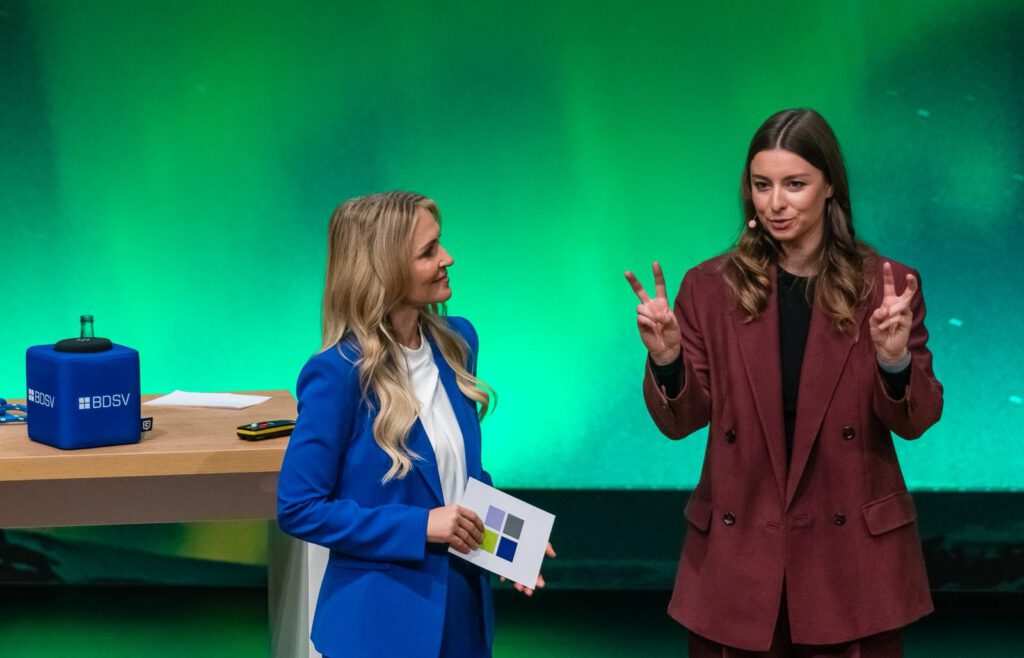
Speaking as a futurist, Carina Stoettner used her talk “Four Scenarios for the Industry of Tomorrow — and What They Mean for Steel Recycling” to examine the technological, geopolitical and economic developments that will shape Europe’s industrial landscape through 2040.
Four scenarios for the industry of tomorrow
Stoettner set out how each possible future could play out for the steel and recycling sector:
- Deep Tech Germany: new materials and high-tech steels turn recycling into a driver of innovation.
- Designed in Germany, produced in the world: as production chains move abroad, recycling and material loops have to be thought about globally.
- A regional European industry: protectionist tendencies create new competitive conditions — and recycling becomes a strategic resource.
- Local for local: regional loops and resilient value chains provide stability in a fragmented world.
“Steel recycling is a precondition for Europe’s resilience”
Stoettner underlined the sector’s strategic importance for Europe’s future:
“Steel recycling is a precondition for Europe’s resilience. It contributes substantially to the continent’s infrastructure and its economic capacity. If the sector is to stay capable of innovating, it has to stay competitive even in a more protectionist environment.”
She made clear that industry can only secure its future if companies and policymakers think in terms of a shared picture of it, rather than short-term conflicts of interest:
“The local for local scenario is probably both the most realistic and the most constructive way forward. From the outside, it currently looks as though steel producers, traders and recyclers are blocking one another — while other parts of the world are already creating strategic facts on the ground.
Now is the moment to get past the fragmentation and recognize that this isn’t me against you. It’s Europe in global competition.”
Thinking ahead as a competitive factor
Stoettner’s contribution made a compelling case that futures thinking and strategic foresight are increasingly a competitive factor for industry. In the transformation of the European economy, integrating long-term developments — from energy and raw material markets to new technologies — systematically into strategic planning is decisive.
The message: if you want to shape the future, you have to think it through first — with clear scenarios, interdisciplinary thinking and the nerve to take on new perspectives.