Tag: Foresight

Scenarios beat forecasts: Carina Stöttner in Konstanz

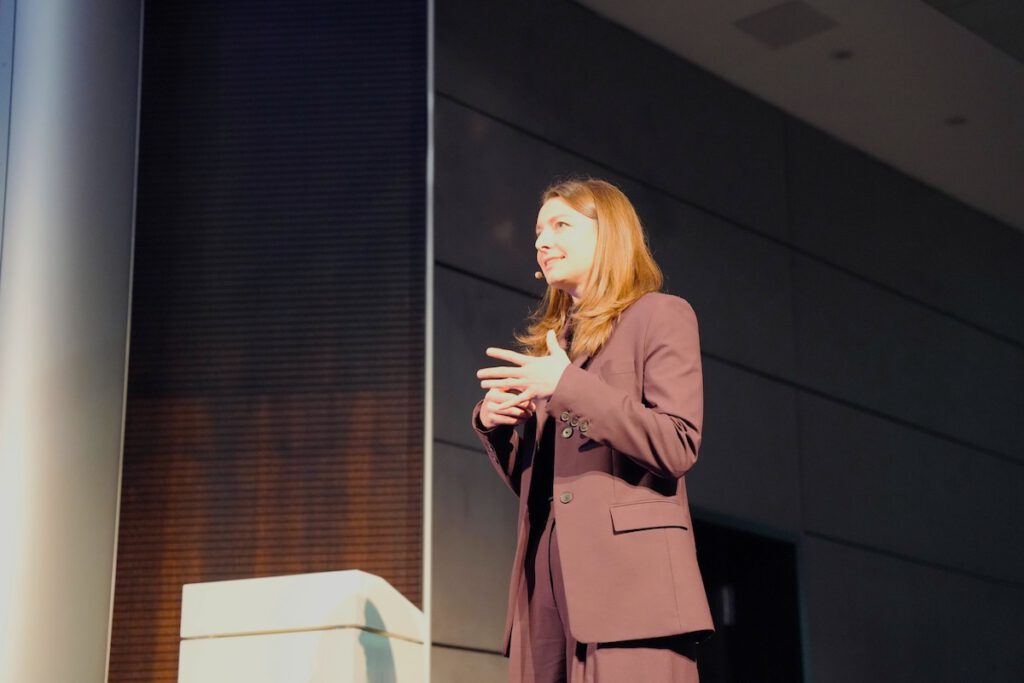
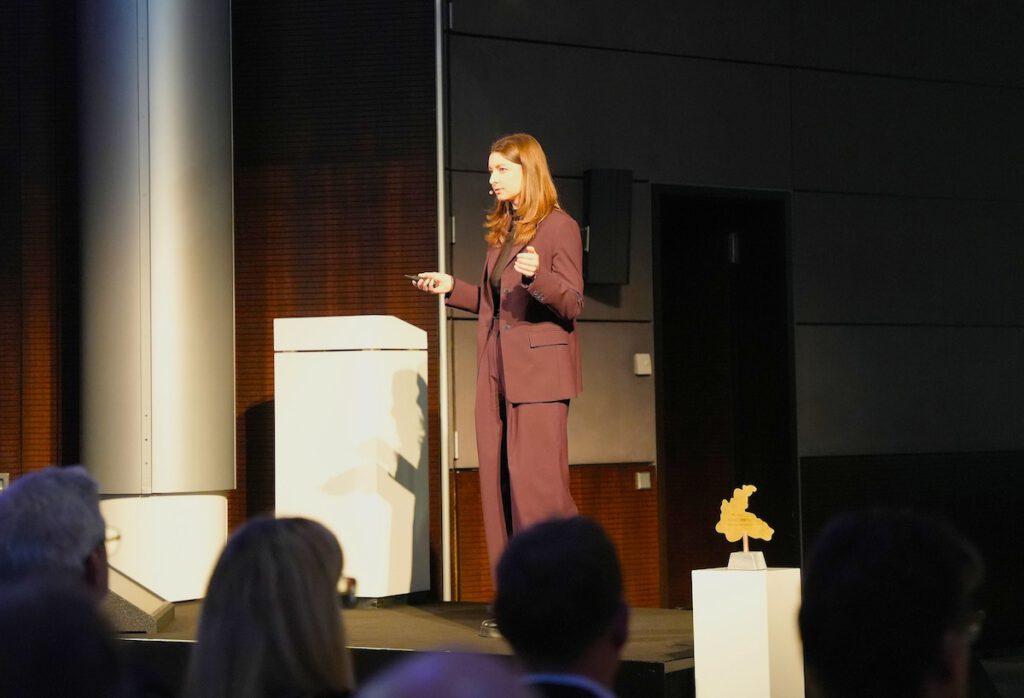
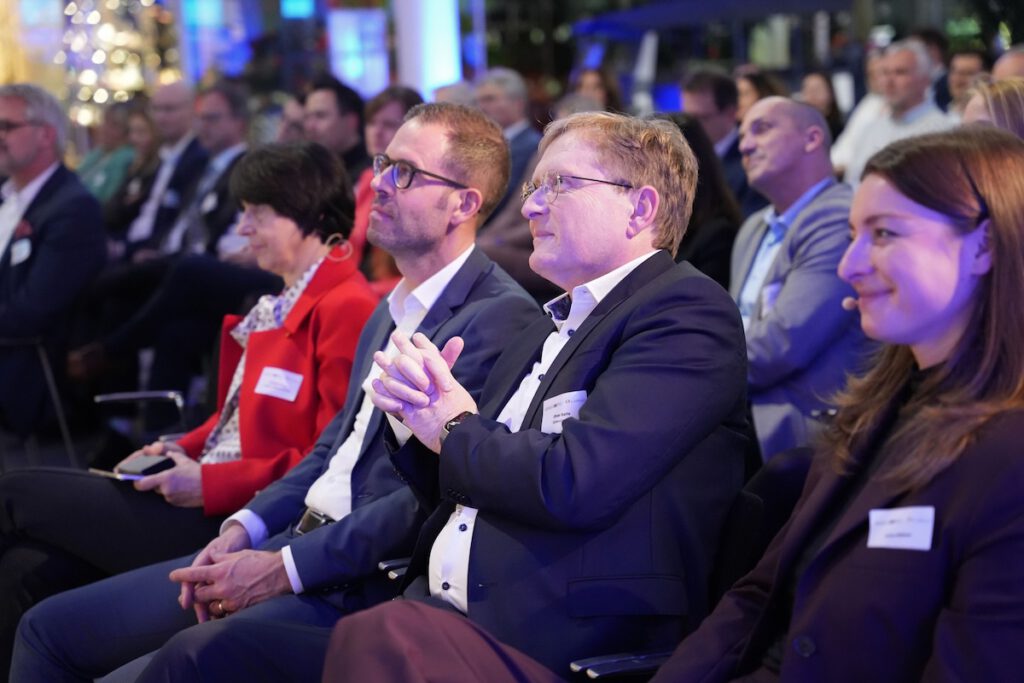
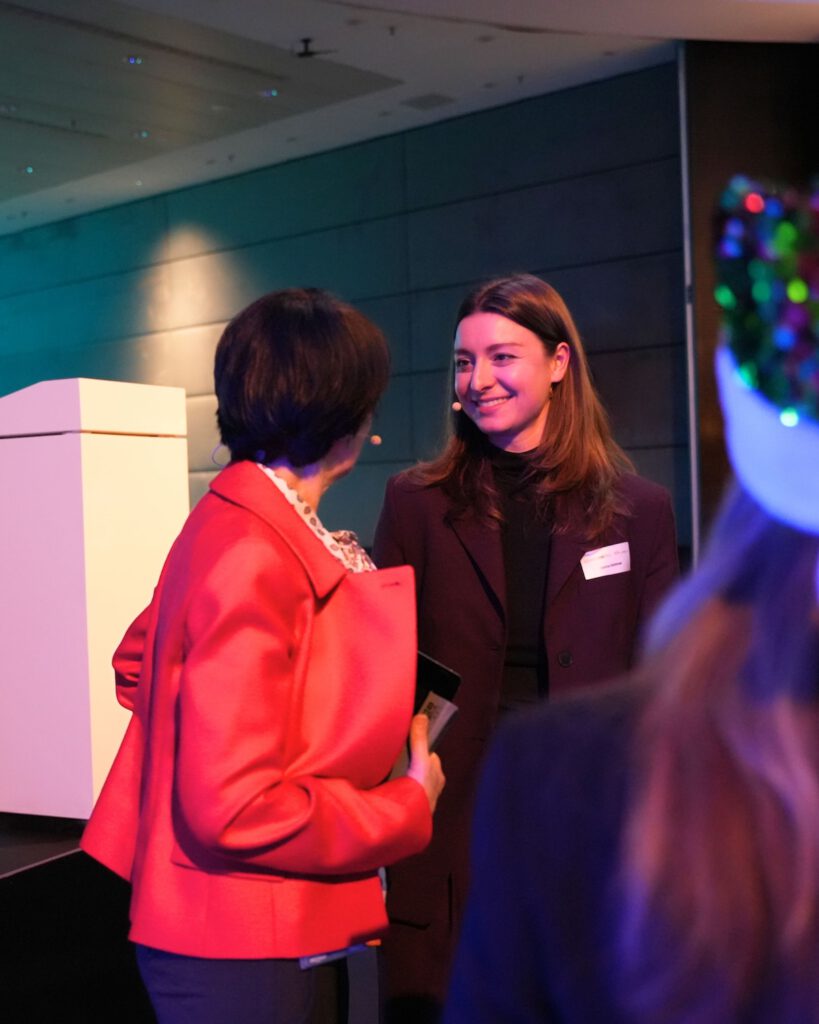
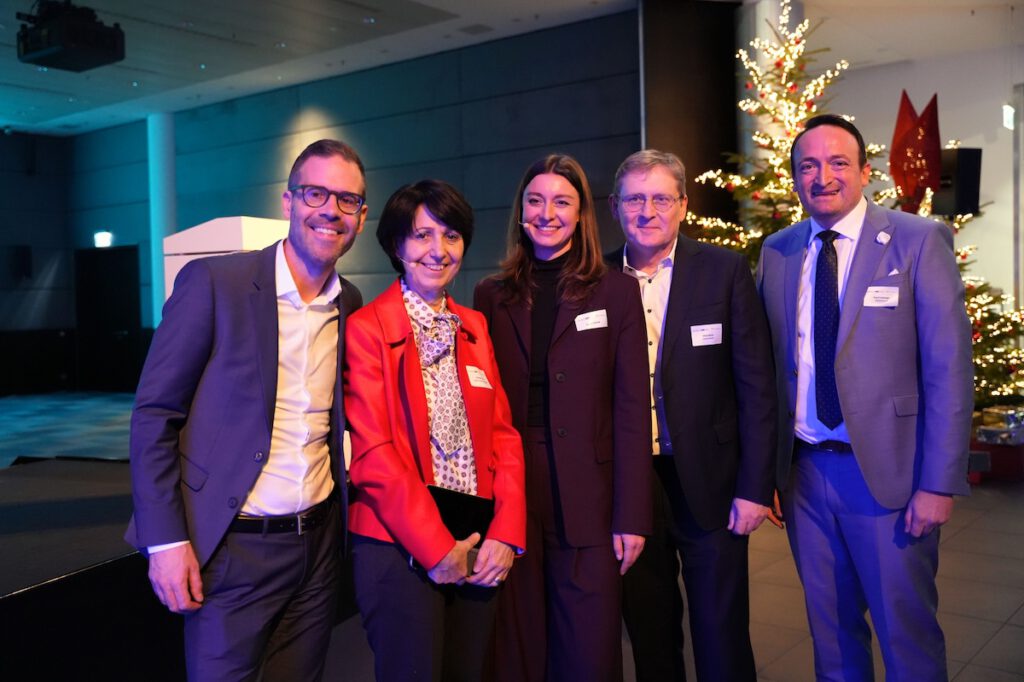
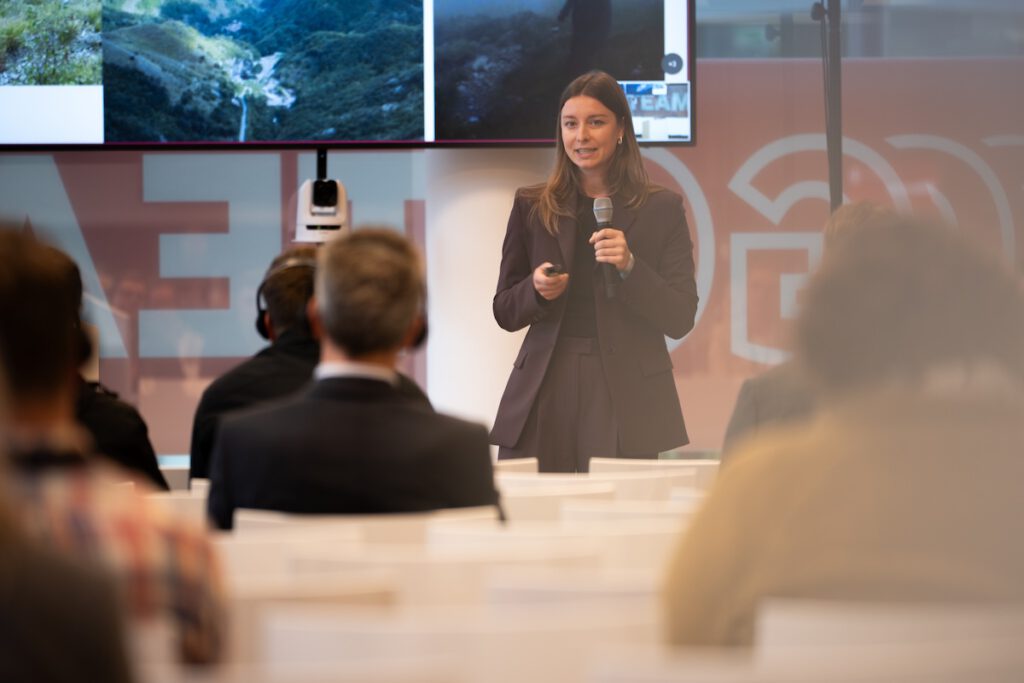
Some places make it easier to think about the future. Konstanz on Lake Constance is one of them. On 9 and 10 July, the IST hosted its Friends & Family Day — two days with entrepreneurs, alumni, project partners and long-standing friends of the institute. It opened with a get-together at the Hochrhein-Bodensee Chamber of Commerce, led by Lucas Sauberschwarz, Sebastian Strohmaier, Lukas Dieterle and futurist Carina Stoettner. The theme running through it: resilience, and what it takes to build it.

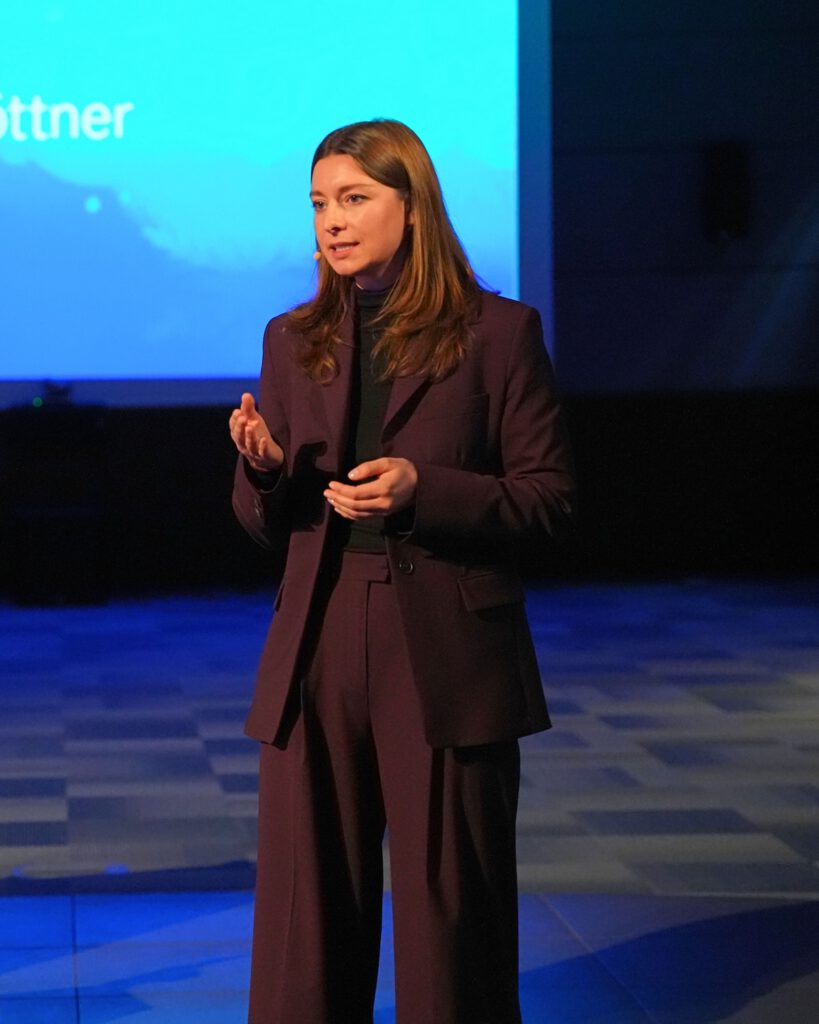
Carina Stoettner’s contribution centered on scenario thinking — and on why a method developed in the 1970s has become so relevant again.

The forecasting trap

Most companies plan for exactly one future: the present, extended. Revenue up X percent, costs down Y, market share holding steady. Buried in that logic is a quiet assumption — that tomorrow will be a slightly modified version of today. In stable times, Stoettner noted, this works remarkably well. In complex times it becomes a liability.

That’s where scenario thinking comes in. Scenarios are not forecasts. The point isn’t to be right. The point is to be ready for more than one possibility.

What Shell learned in the 1970s

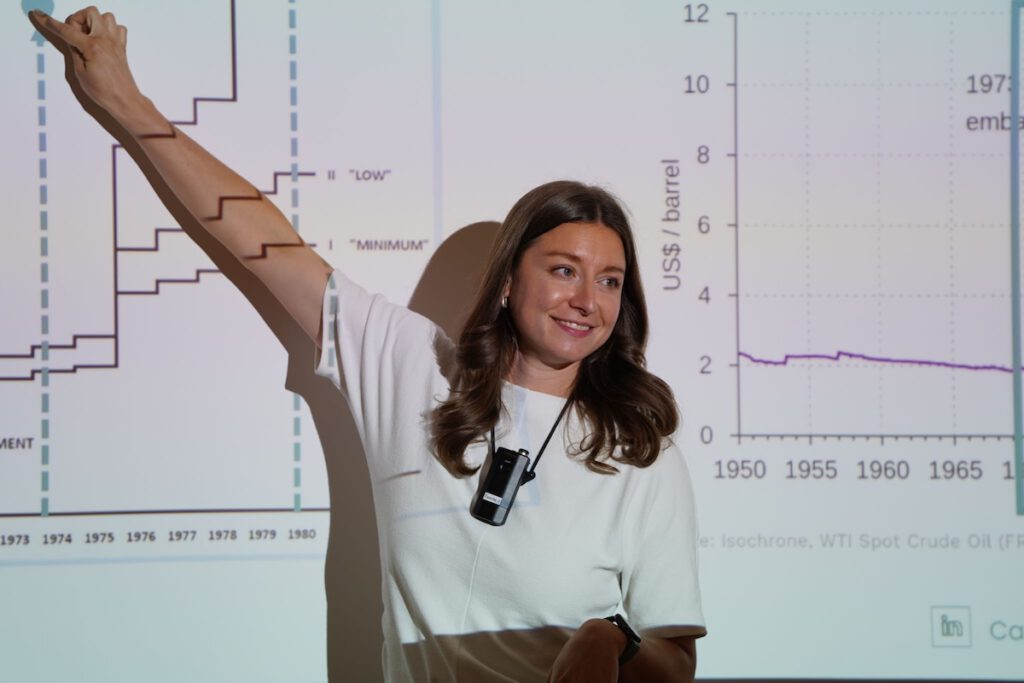
The best-known story in scenario planning, and the one Stoettner returned to, begins in the late 1960s in the planning department at Royal Dutch Shell. A handful of pioneers were asked to examine the possibility that oil prices might rise.

Nobody at Shell predicted the 1973 crisis in its full severity. That’s the crucial part. But when it arrived, it wasn’t unfamiliar terrain to the company’s leadership. They had already walked through that world in their minds. They didn’t need months of stunned paralysis before they could act. While competitors were still trying to make sense of what had happened, Shell was already making decisions — and came out of the crisis considerably stronger than it went in.

For Stoettner, that remains the most important lesson of the whole method: scenarios don’t change the world. They change the map decision-makers carry in their heads. The real output of scenario work isn’t the document that ends up on a shelf — it’s the changed thinking of the people who did the work. Which is also why buying scenarios in from outside and having them presented to you doesn’t work. If you haven’t been through the process, you won’t find the way.

Why our brains make poor futurists

If scenario work is so effective, why do we find it so hard? Much of the answer, Stoettner explained, is in our own heads. The brain isn’t built for thinking about open futures. It’s built for reaching decisions quickly and cheaply. Three biases get in the way again and again.

We think in straight lines. Exponential growth, tipping points and saturation curves are things we systematically underestimate — too little for too long, then too much too late.

We cling to normality. When a situation shifts, we hold on to the assumption that everything will stay as it was, often for a remarkably long time. That isn’t stupidity; it’s the default setting of human perception under uncertainty.

We fixate on the negative. Bad news carries disproportionate weight — what we read recently, what’s emotionally charged, what everyone in the industry happens to be discussing right now.

None of these are defects. They made evolutionary sense: fast judgments in a largely stable environment. In a complex one they become a vulnerability. And you don’t get rid of them by knowing about them — only through method, through a process that forces you to take several futures seriously at once.

What scenarios actually change

What organizations take away from good scenario work is rarely a finished plan. It’s closer to this:

  • Language. Teams gain vocabulary for developments that aren’t visible yet. You can only discuss what you have words for.
  • Early indicators. Knowing the scenarios means knowing what to watch for — and spotting movement before the competition does.
  • Robust decisions. Which moves pay off in every future? These no-regret moves are often the most valuable output of the entire process.
  • Separating probability from relevance. An event can be unlikely and still existential. Prioritize by likelihood alone and those are exactly the cases you filter out.
  • Permission to disagree. Scenarios make it socially acceptable to voice a different future in a meeting without being written off as a pessimist or a crank. Underrated, and possibly the biggest cultural lever of all.

And then: cast off

After the talks came the water. A trip out on Lake Constance, good conversation, a relaxed toast in a setting you couldn’t easily invent. On Friday, the Friends & Family Day wound down at the institute.

What stays with you from days like these: the willingness to think together about uncomfortable futures is there — and it’s growing. That willingness is where resilience begins. Not the ability to predict the future, but the ability to be ready for more than one.

Warm thanks to the IST team for the invitation and the hospitality — and to everyone who thought, argued and celebrated along the way.

Shaping the Future Instead of Managing It — Spotting Opportunities and Acting on Them

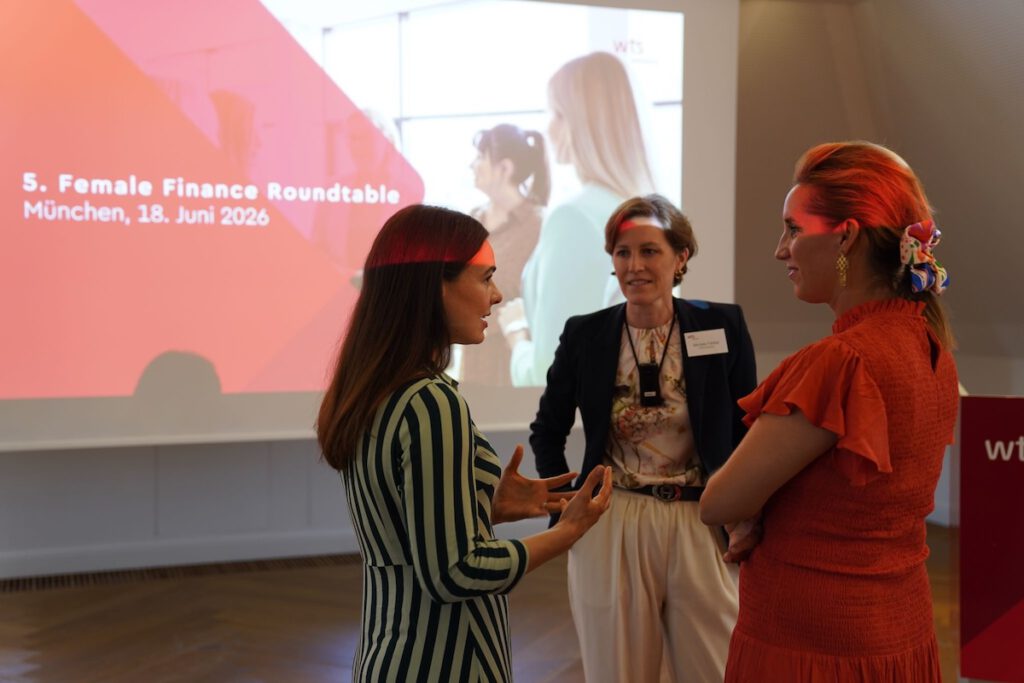
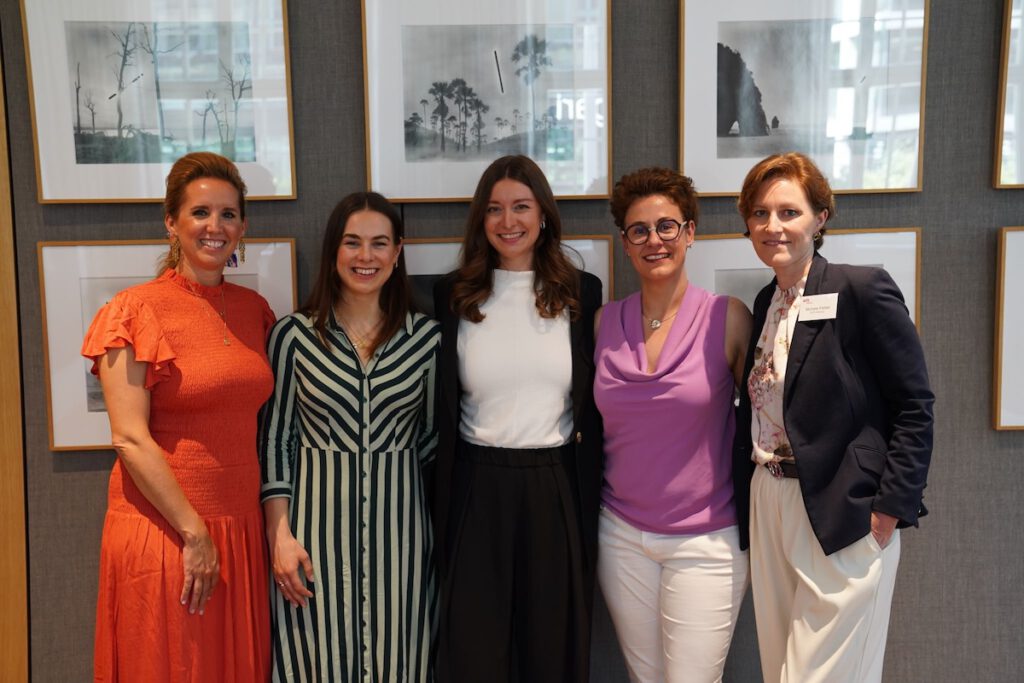
That was the theme of the fifth Female Finance Roundtable, held in mid-June 2026 and hosted by WTS Advisory. As in previous years, the event was full of thought-provoking talks, lively discussion and open exchange among the many women taking part.

One thing came through especially clearly: in challenging times above all, what matters is focusing on possibilities rather than risks, identifying where you actually have room to act, and treating change as an opportunity.

The future as a space full of opportunity

In her talk, Carina Stoettner made a compelling case for questioning established ways of thinking and seeing the future not as a threat but as something to be shaped.

Anyone who wants to shape the future actively has to get past their own patterns of perception first — above all the negativity bias and the normalcy bias, which lead us to overestimate risk and underestimate change.

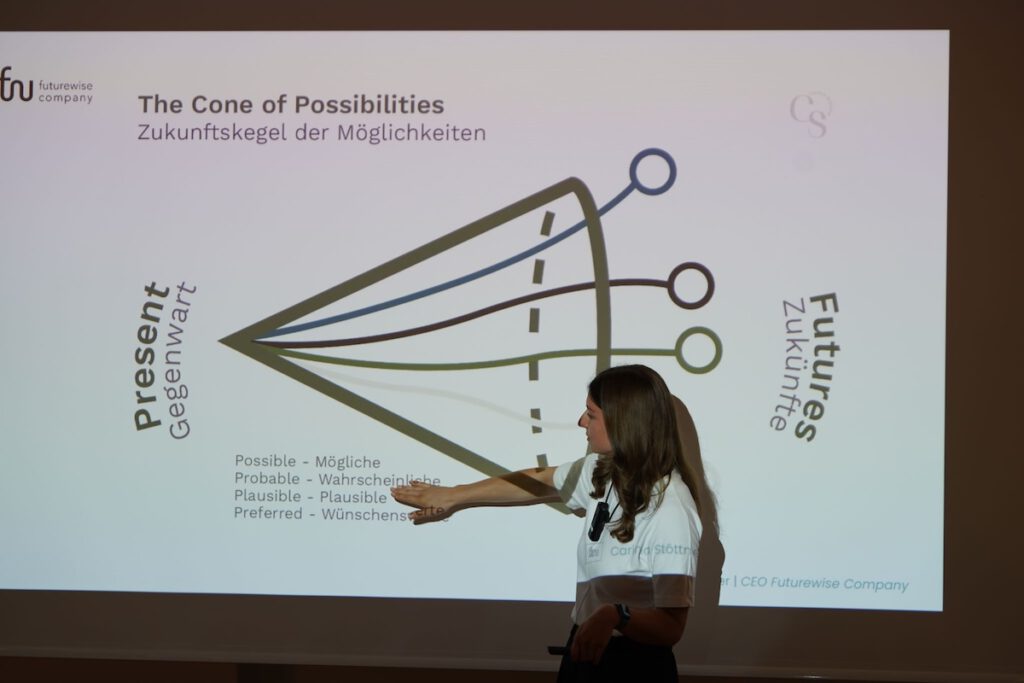
The key is not to think in terms of the future but in terms of futures. Letting individual trends steer you less, and thinking in scenarios instead, expands your capacity to act considerably. And the distinction matters: scenarios aren’t forecasts. They don’t predict anything — they open up room to think.

Which requires one thing above all: time and space for new perspectives to emerge in the first place.

Sustainability as a strategic factor

Gyri Reiersen offered valuable insight into what sustainability and forward-looking action mean for companies and the people making decisions in them.

She showed vividly what a volcanic eruption in Iceland has to do with the emergence of democracy — a striking example of how profoundly ecological events can shape the course of societies.

She pointed to research suggesting that the share of uninhabitable land could rise from 1% to 19% by 2070, with roughly 3.5 billion people having to relocate as a result.

Artificial intelligence and sustainability, in her view, stand in a double relationship: in tension with one another on one hand, and on the other with real potential to complement each other — for instance where AI can bring sustainability data up to the standard of financial data far faster. Her conclusion: both AI and sustainability will be needed to stay competitive.

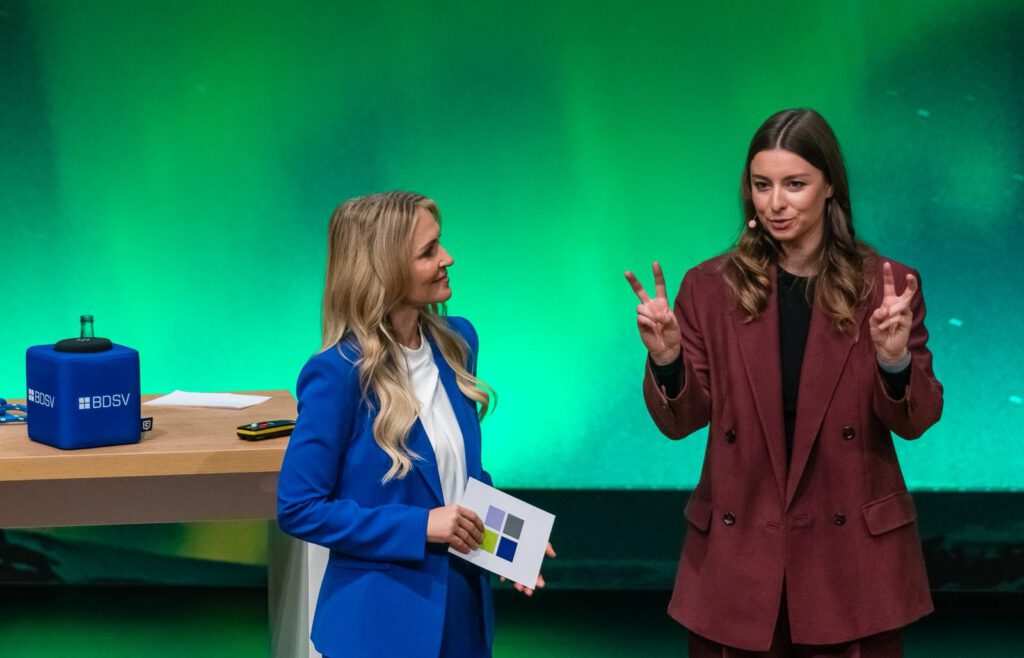
The future of the circular economy: Carina Stöttner speaks at IFAT for the steel and metal recycling industry

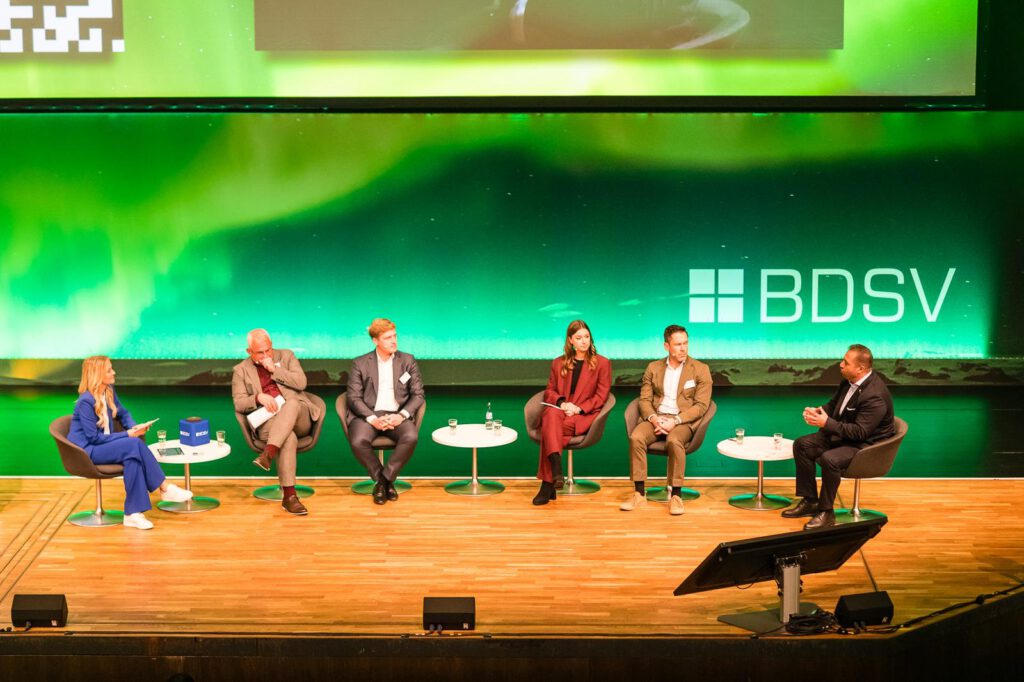
Munich, IFAT 2026 — the world’s leading trade fair for environmental technology. Four people share a stage to work through a question that could hardly matter more to Europe’s industrial future: where is the circular economy heading — toward a high-tech, globally integrated system? Or will protectionism and geopolitical fragmentation pull it back from the international stage?

The session was hosted by BDSV, the German association of steel recycling and waste management companies, and VDM, the German association of metal traders and recyclers — two bodies currently merging into the future Circular Metal Association. On the panel: Murat Bayram, Andreas Schwenter, Prof. Frank Pothen — and futurist Carina Stöttner, whose short keynote set the frame for the discussion.

What emerged reaches well beyond the sector itself: steel and metal recycling is one of the places where it will be decided whether Europe stays industrially sovereign — and whether it does so in a way that holds up over time.

The underestimated industry: what already exists

Before talking about the future, it’s worth looking at the present. In Germany alone, roughly 10,000 circular economy companies account for some 300,000 jobs. Across Europe, the figure runs into several million. Family-run mid-sized firms, specialist plant builders, highly automated sorting operations — over the past decades they have invested billions in shredding plants, modern processing technology and AI-assisted sorting.

Murat Bayram’s message on the panel was accordingly blunt: this industry needs to stop talking itself down. Recycling operations aren’t a burden on the environment — they are, in Andreas Schwenter’s words, environmental protection facilities. They secure raw materials, avoid CO₂, make green steel possible and lay the foundation for industrial value creation in Europe.

Prof. Frank Pothen supplied the economic backing: every ton of recycled steel scrap avoids substantial CO₂ emissions. The circular economy isn’t a footnote to climate policy — it’s the practical core of it.

It was into this picture that Carina Stöttner delivered her talk — and opened up the view forward.

Stöttner’s scenarios: possible futures for the circular economy

Her opening question was deliberately pointed: where is our industrial economy heading? And what does that mean for the steel, metal and recycling sector?

  • Scenario A — the high-tech circular economy. A globally integrated circular economy in which AI sorting, robotics, new materials science, digital material passports and international cooperation reinforce one another. Recycling rates climb sharply, secondary raw materials reach primary-grade quality, and Europe becomes the technology leader in a growth market.
  • Scenario B — the customers leave. Production shifts largely overseas, and with it goes both the raw material in the form of production scrap and the demand for recycled material.
  • Scenario C — the fragmented protectionist economy. Rising protectionism, new export bans, regional walls. The industry loses economies of scale, investment capacity and the pressure to innovate. The circular economy remains necessary, but never becomes a global growth market.

Her point: which scenario arrives isn’t a forecast. It’s a decision. And that decision is being made right now — in Brussels, in Berlin, in supervisory boards, in investment committees.

Deep tech as the formula for the circular economy’s future

What Stöttner made particularly clear at IFAT: the next stage of the circular economy is a deep tech stage.

In practice, that means:

  • AI-assisted sorting and material identification, delivering secondary raw materials at grades only primary materials reach today
  • Robotics in the disassembly of complex products — from electric vehicles to wind turbines to electronics
  • New materials and processes that build recyclability into product design from the outset
  • International cooperation in research, standards and trade, because no single market is large enough to carry these investments alone

The trade-off: when protection weakens the industry it’s meant to protect

This is exactly where Stöttner’s keynote met the associations’ pointed position on the panel. Andreas Schwenter and Murat Bayram were unambiguous on one point: protectionism, export bans and additional trade barriers are not a strategy for the future.

The reasoning isn’t ideological — it’s industrial:

  • Close off markets and you drain the industry’s investment capacity. Recycling technology scales with global sales markets, not with domestic leftovers.
  • Restrict scrap exports and you slow innovation. International competition is precisely what built the German recycling industry into the leader it is today.
  • Bet on self-sufficiency and you lose quality. Secondary raw materials require specialization, material purity and international flows. Closed systems produce lower grades at higher cost.
  • Bury mid-sized firms in bureaucracy and you weaken the backbone of the whole system. The ten thousand companies carrying it need conditions that enable rather than obstruct.

None of which argues against sovereignty. It argues for intelligent sovereignty rather than a reflex to build walls. Strategic reserves, diversified flows of critical materials, European standards — yes. Blanket long-term export bans and new barriers — no.

Stöttner’s contribution: an industry that pulls up the drawbridge buys short-term security and loses its long-term future. The circular economy worth aiming for is open, cooperative and technologically ambitious — not defensive.

What the industry needs now: less nostalgia, more nerve

Four imperatives for the years ahead emerged from the panel and Stöttner’s keynote — not as finished answers, but as the right questions:

  1. Confidence, not justification. For decades this industry has been solving in practice what others demand in theory. That record belongs in the public story about climate protection and industrial sovereignty.
  2. Deep tech investment now. AI, robotics, new materials and digital traceability are past the pilot stage. They are the sector’s base technologies for the next twenty years.
  3. Conditions that enable. Less bureaucracy, faster permitting, reliable energy and trade policy — so that investment happens in Europe rather than elsewhere.
  4. International cooperation as strategy. European strength won’t come from going it alone, but from alliances with global partners, shared standards and open markets — while retaining sovereignty in genuinely critical areas.

The announced merger of BDSV and VDM into the Circular Metal Association fits that line exactly: more clout, more common ground, more future — and an industry finally positioning itself the way it has long since been built.

The takeaway: the future of the circular economy can be shaped

Stöttner’s central message at IFAT: the future isn’t written. It can be shaped.

Whether Europe builds a global high-tech circular economy or retreats into a fragmented protectionist one won’t be settled by forecasts. It will be settled in the next rounds of investment, in the next wave of European regulation, in whether the industry takes its own strength seriously — and whether policymakers have the nerve to open up room for possibility rather than close it down.

About the event

 IFAT Munich is the world’s leading trade fair for water, wastewater, waste and raw materials management. The joint stage session hosted by BDSV and VDM — the German steel and metal recycling associations now merging into the Circular Metal Association — brought together:

  • Carina Stöttner, futurist and CEO, Futurewise Company
  • Murat Bayram, President, VDM
  • Andreas Schwenter, President, BDSV
  • Prof. Frank Pothen, Professor of Economics, Ernst-Abbe-Hochschule Jena

Carina Stoettner founds Futurewise Company

In January 2026, sociologist and futurist Carina Stöttner founded Futurewise Company. The consultancy works across Europe, helping executive boards and leadership teams stay strategically capable of acting in a climate of permanent uncertainty.

Futurewise runs executive offsites, builds futures thinking projects aimed at opening up new growth areas, and carries out strategy reviews. The goal is to give companies orientation in complex situations — without false certainty, but with a clear basis for making decisions.

The starting point was the upheaval of recent years: the pandemic, geopolitical conflict, the energy crisis, inflation and fragile supply chains. In that environment, Stöttner argues, optimizing existing business models is no longer enough. Growth increasingly emerges where uncertainty is greatest — and those are precisely the spaces companies need to open up in a structured way.

Through scenario work and futures thinking, Futurewise creates space for decisions: room to think through possible futures systematically and weigh strategic options against them. The focus is on resilience as a precondition for new growth — not as retreat, but as a deliberate opening toward future markets and business models.

Hope for a Better Future: A Conversation on Stage at the Theater

A conversation about trust, the future and social responsibility at the Markgrafentheater in Erlangen

Can hope be learned again, in a time defined by overlapping crises, political radicalization, technological overload and a sense of powerlessness in the face of ecological breakdown? That question was at the center of the second edition of the talk series Amt 44 at Schauspiel Erlangen, held on 16 December 2025 at the Markgrafentheater.

After a successful first edition in the spring, the format returned to a subject that could hardly be more timely. Hosted by Matthias Köhler, resident director and part of the artistic leadership, the evening wasn’t about quick answers or moral certainties. As the format intends, what mattered was asking the right question.

Four very different perspectives met on the panel:
Peter Dabrock, theologian, ethicist and former chair of the German Ethics Council;
Baro Vicenta Ra Gabbert, author, lawyer and spokesperson for social and ecological justice at Greenpeace;
Vincent C. Müller, philosopher and Humboldt Professor for the Philosophy of Artificial Intelligence;
and Carina Stoettner, futurist and adviser to leadership teams.

Peter Dabrock brought an ethical and theological perspective, understanding hope as a deliberate stance that keeps you able to act even without optimism. Baro Vicenta Ra Gabbert spoke from the practice of activism and showed how hope grows out of everyday commitment — through young people above all, even in the face of political setbacks. Vincent C. Müller opened a philosophical and technological horizon, arguing that thinking worst-case scenarios through properly is a precondition for shaping the future responsibly. Carina Stoettner placed the discussion in the context of futures research, arguing that hope at a societal level rests above all on trust — in the future and in one another — and on the quiet majority finding the courage to speak.

You can read more about the evening in the write-up by Rezensöhnchen or in the Nürnberger Nachrichten (both in German).

The verdict: an absorbing conversation, with plenty of spontaneous contributions and debate.

Would you like to book Carina Stoettner for a panel or a talk? Get in touch. More about the speaker.

Photos: Henrik Stelter

Chancen für die Industrie: Carina Stöttner im Audi-Forum in Neckarsulm

On 1 December 2025, Carina Stoettner was a guest at the Südwestmetall Heilbronn Christmas reception at the Audi Forum in Neckarsulm. Her talk looked at the future of German industry — at the opportunities within the transformation as much as the challenges facing companies and society. Communications consultant Christian Gleichauf wrote up the evening afterwards; his account forms the basis of what follows.


Deep tech is the thing we ought to be paying attention to. Carina Stoettner makes that very clear. And it has a little something to do with Heilbronn.

At the Südwestmetall Christmas reception at the Audi Forum last night, the futurist sketched out several possible futures worth thinking hard about.

In three of four scenarios, the good times in Europe don’t keep rolling. Only if we manage to build on our strengths and set off a few genuine breakthroughs do we get a future to look forward to.

That takes a society-wide willingness to engage with the new. Lifelong learning, a new relationship with science, a new sense of self in industry — in short, transformation.

In the end it will probably be a mix of scenarios. The familiar local-for-local approach will play a role one way or another. But you also have to hope the scenarios that would shrink the German and European economies into insignificance don’t come to pass.

What Stoettner does manage, in the space of a few minutes, is to make the urgency land — in front of an audience that deals with transformation every day of the week.

Christine Grotz, chair of the Heilbronn/Franconia district group at Südwestmetall, asks the fair question: what can we do? Stoettner appeals directly to the employers in the room: industry underestimates the leverage it has. Basic research is one example — and the state won’t be funding all of it. Nor will this happen without partnerships.

Former state secretary Friedlinde Gurr-Hirsch called for new approaches to training and apprenticeships. In front of more than 160 invited guests, Heiko Asum of Fibro Rundtische in Weinsberg put his finger on the sore spot: we’re not fast enough anymore.

Deep tech, collaboration between industry and science, combining Gyro Gearloose’s out-of-the-box thinking with Scrooge McDuck’s commercial instincts, using robotics to keep production in Europe, a clear focus on future technologies like AI, chip production and quantum computing. What’s striking about that list of ingredients: most of it is currently emerging in the Heilbronn ecosystem or out of it (Schwarz Group!).

So we’re watching a blueprint for Europe take shape. And if that’s our one chance of not going under, it sounds like there ought to be a majority prepared to at least pull in the same direction.

Doesn’t that sound like a Christmas message?

Also worth a mention: the inventive welcome video from Senta Woldeck and Güldeniz Acar (where was Jörg Ernstberger? 😉). And not to be forgotten — this year’s Herz der Wirtschaft award went to the Main-Tauber district and Futurelabs gGmbH, an initiative that encourages young people to experiment and gives them a way to put ideas into practice. Fitting, given the theme of the evening.

So — shall we give deep tech a chance?


This piece was originally published by Christian Gleichauf on LinkedIn. Christian is deeply connected in Heilbronn’s fast-growing ecosystem. He advises companies and institutions on communications, drawing on a background in journalism (more at www.wortCraft.de).


Zukunft der Industrie: Keynote zum Stahlrecycling beim BDSV-Branchentreff 2025

Wie sieht die Zukunft der Industrie aus? Am 15. und 16. Oktober 2025 traf sich in Osnabrück die deutsche Stahlrecyclingbranche zum jährlichen BDSV-Branchentreff unter dem Motto „Global, Zukunftsstark, Unverzichtbar“. Die Veranstaltung gilt als eine der wichtigsten Plattformen für Austausch und Strategie in der industriellen Transformation.

In Zeiten geopolitischer Unsicherheiten, hoher Energiepreise und einer schleppenden Genehmigungspolitik stand eine zentrale Frage im Mittelpunkt:
Wie kann die Industrie – und insbesondere das Stahlrecycling – Europas Zukunftsfähigkeit sichern?

Als Zukunftsforscherin und Speakerin sprach Carina Stöttner in ihrem Vortrag „Vier Szenarien für die Industrie von morgen – und ihre Bedeutung für das Stahlrecycling“ über technologische, geopolitische und wirtschaftliche Entwicklungen, die die industrielle Landschaft Europas bis 2040 prägen werden.

Vier Szenarien für die Industrie von morgen

In ihrer Keynote zeigte Stöttner, wie sich mögliche Zukunftsbilder auf die Stahl- und Recyclingbranche auswirken könnten:

  • Deeptech-Deutschland: Neue Materialien und Hightech-Stähle machen Recycling zu einem Innovationstreiber.
  • Designed in Germany, Produced in the World: Wenn Produktionsketten abwandern, müssen Recycling und Kreisläufe global gedacht werden.
  • Europäische Regionalindustrie: Protektionistische Tendenzen stellen die Branche vor neue Wettbewerbsbedingungen – Recycling wird zur strategischen Ressource.
  • Local for Local: Regionale Kreisläufe und resiliente Wertschöpfungssysteme schaffen Stabilität in einer fragmentierten Welt.

„Stahlrecycling ist Grundvoraussetzung für die Resilienz Europas“

In ihrem Impuls betonte Stöttner die strategische Bedeutung der Branche für die Zukunftsfähigkeit Europas:

„Stahlrecycling ist Grundvoraussetzung für die Resilienz Europas. Es trägt wesentlich zur Infrastruktur und Wirtschaftsfähigkeit des Kontinents bei. Um innovationsfähig zu bleiben, muss die Branche auch in einem protektionistischeren Umfeld wettbewerbsfähig bleiben.“

Sie machte deutlich, dass die Zukunftsfähigkeit der Industrie nur gelingt, wenn Unternehmen und Politik in gemeinsamen Zukunftsbildern denken – anstatt in kurzfristigen Interessenkonflikten:

„Das Local for Local-Szenario ist vermutlich der realistischste und zugleich konstruktivste Weg nach vorn. Aus der Außenperspektive wirkt es derzeit, als würden sich Stahlproduzenten, Händler und Recycler gegenseitig blockieren – während andere Weltregionen längst strategische Fakten schaffen.
Jetzt ist der Moment, die Fragmentierung zu überwinden und zu verstehen: Es geht nicht um ich gegen dich, sondern um Europa im globalen Wettbewerb.

Zukunftsdenken als Wettbewerbsfaktor

Carina Stöttners Beitrag zeigte eindrücklich, dass Futures Thinking und strategische Vorausschau für Industrien zunehmend zum Wettbewerbsfaktor werden. In der Transformation der europäischen Wirtschaft ist es entscheidend, langfristige Entwicklungen – von Energie- und Rohstoffmärkten bis hin zu neuen Technologien – systematisch in die strategische Planung zu integrieren.

Ihr Vortrag unterstrich: Wer Zukunft gestalten will, muss sie zuerst durchdenken – mit klaren Szenarien, interdisziplinärem Denken und dem Mut, neue Perspektiven einzunehmen.

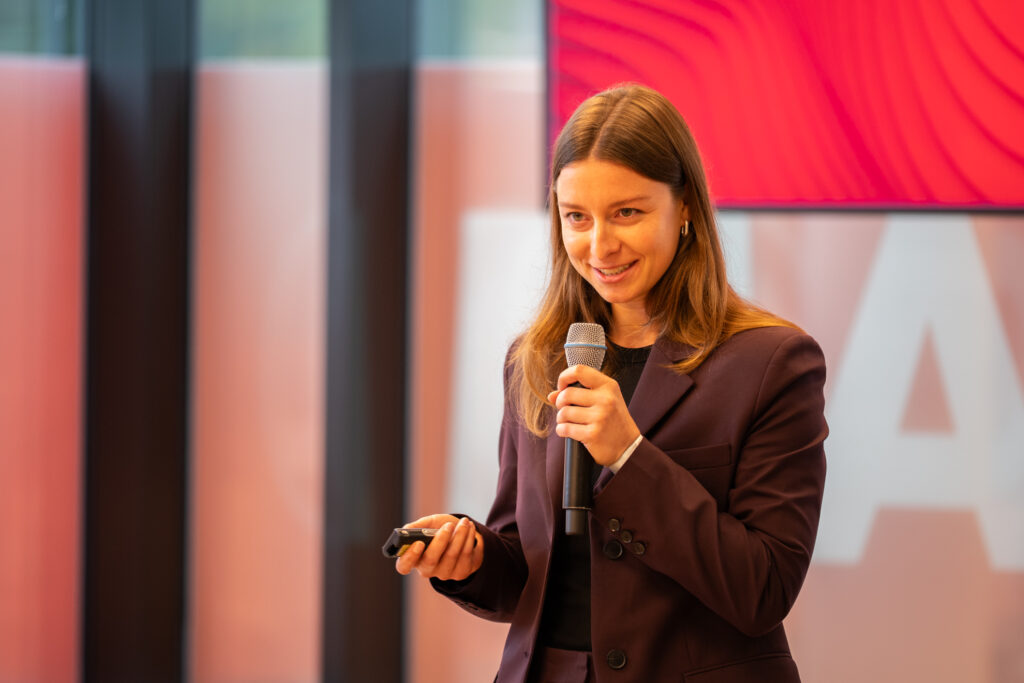
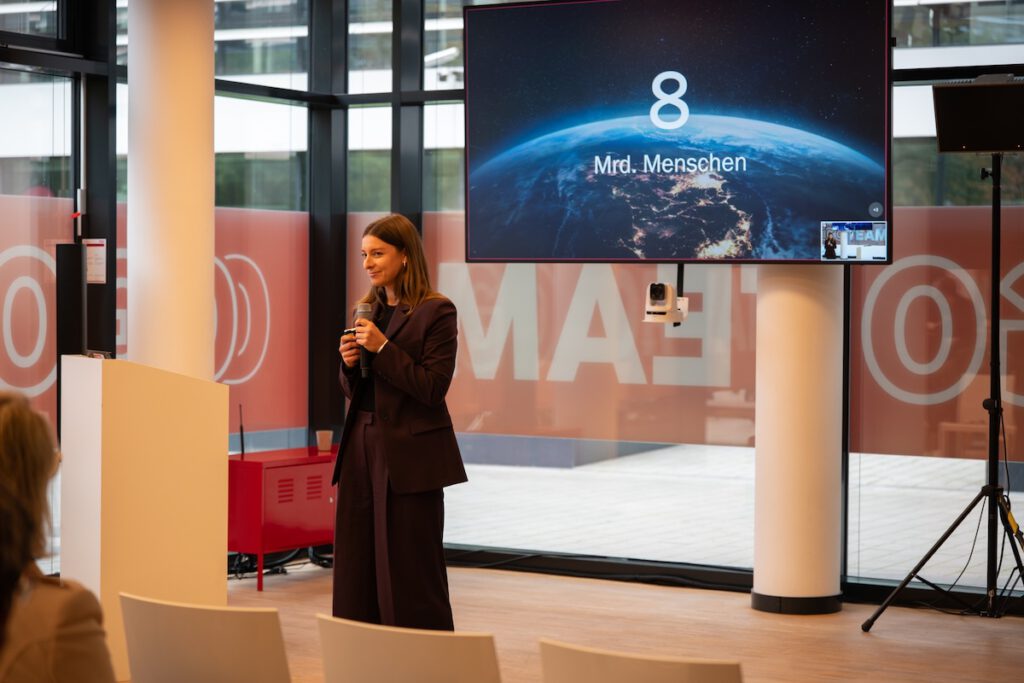
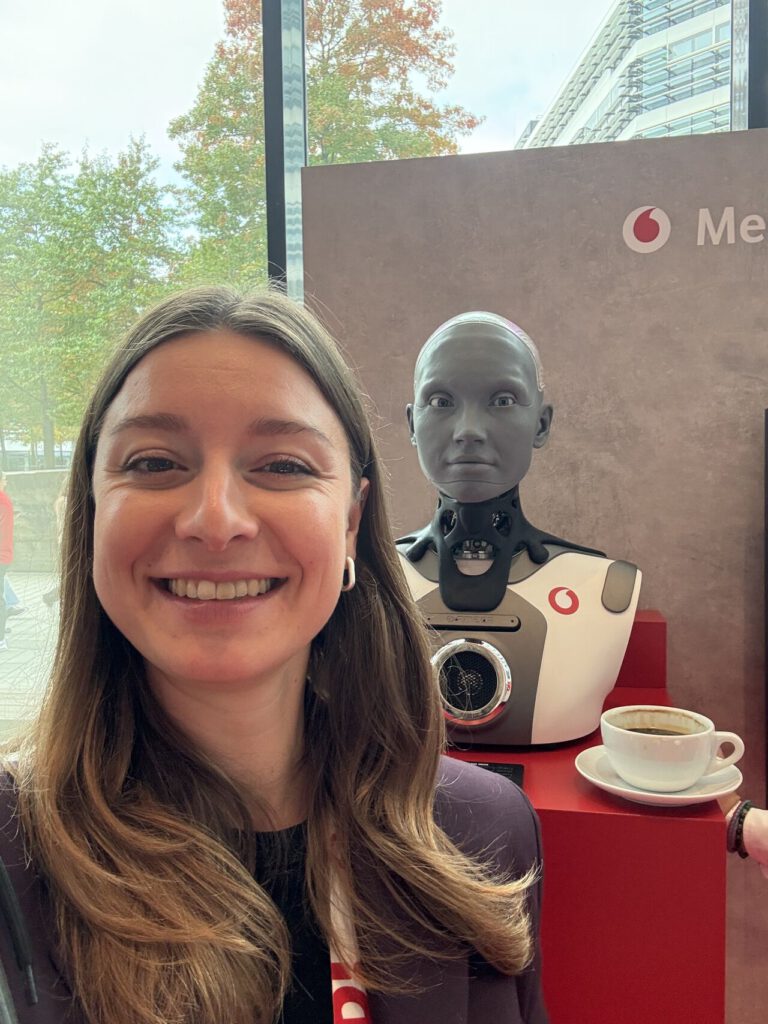
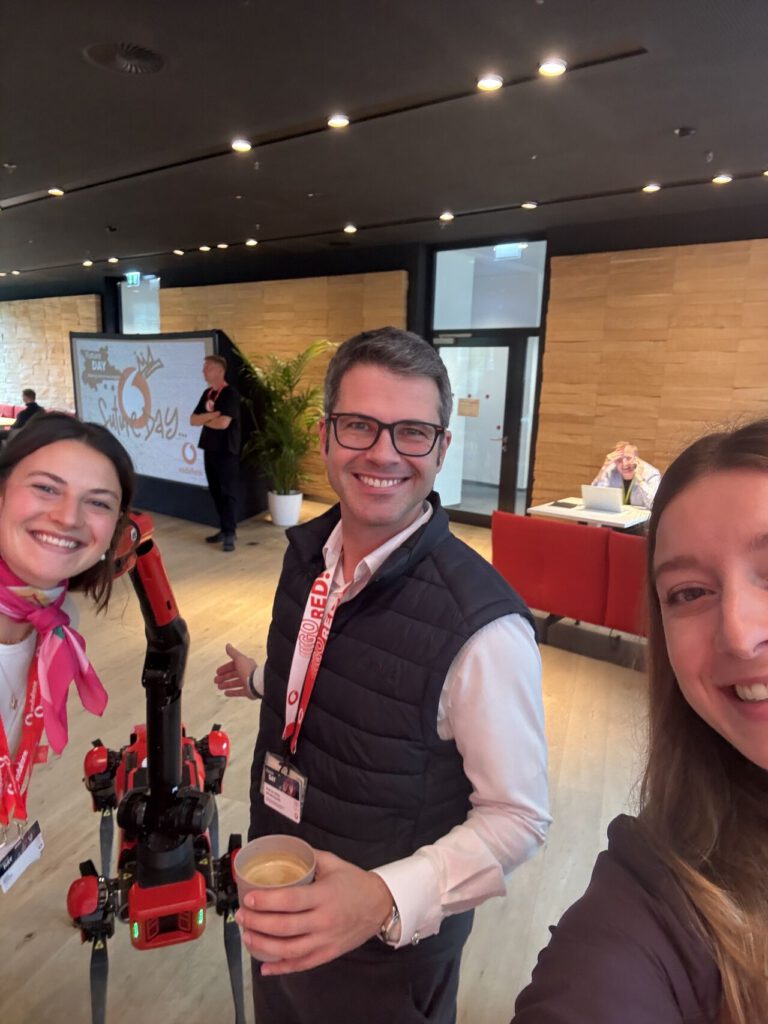
Futures Thinking — Stoettner at the Vodafone Future Day

At the Vodafone Future DayCarina Stoettner spoke about why thinking about the future has become a core leadership discipline — and what so often stands in the way. The brain, she explained, tends to think short-term and to register risks more strongly than opportunities — a mechanism that makes strategic action difficult in uncertain times.

Her work with leadership teams, she said, isn’t about predicting the future but about learning to work with uncertainty — because the uncertainty isn’t going anywhere. She showed which cognitive tendencies (the negativity bias among them) shape how we think about what’s ahead, how far out it makes sense to look, and why scenario thinking is such an effective tool for making complexity manageable.

The future, in Stoettner’s framing, isn’t a fixed point but a space to think in: sketch out several possible futures instead of clinging to a single truth, and you get your ability to act back.

Earlier in the day, Prof. Heiko von der Gracht offered a look at the scientific side of foresight work. He made clear that futures research isn’t fortune-telling: it rests on systematic observation, scenarios and the interpretation of signals. The future doesn’t arrive by accident, he argued — it can be explored methodically, by analyzing trends, wildcards and possible ruptures in a structured way.

Warum brauchen Unternehmen eine Strategie und wie hilft Foresight dabei?

Strategiearbeit ist kein Selbstzweck. Sie liefert Orientierung in einer Welt, die sich immer schneller und unvorhersehbarer verändert.

Als Foresight-Strategin begleite ich Unternehmen dabei, ihre Strategie nicht nur aus der Vergangenheit, sondern aus möglichen Zukünften heraus zu entwickeln – und so resilienter, fokussierter und wirksamer zu agieren.

Warum Strategieplanung unverzichtbar ist

Der Zweck von Strategieplanung und -entwicklung besteht darin, eine klare, langfristige Ausrichtung für das Unternehmen zu schaffen – als verbindliches Zielbild, aber auch als flexibler Handlungsrahmen in unsicheren Zeiten.

Eine gute Strategie ermöglicht es:

  • den Kurs bei Veränderungen nicht zu verlieren,
  • Chancen rechtzeitig zu erkennen und zu nutzen,
  • Risiken frühzeitig zu identifizieren,
  • interne Ressourcen gezielt einzusetzen,
  • und die Organisation um eine gemeinsame Vision herum zu koordinieren.

Doch in komplexen Umfeldern reicht klassische Planung oft nicht mehr aus. Hier kommt Corporate Foresight ins Spiel.

Wie Corporate Foresight Strategiearbeit erweitert

Foresight-Methoden helfen, über das Offensichtliche hinauszudenken:
Sie machen Trends, Unsicherheiten und mögliche Wendepunkte frühzeitig sichtbar – und erlauben es, daraus robuste, zukunftsorientierte Strategien zu entwickeln.

Ich arbeite mit Unternehmen an genau dieser Schnittstelle: Wo aus Szenarien Strategie wird.

Dazu nutze ich u. a. Methoden wie:

  • Szenarioentwicklung
  • Backcasting
  • Causal Layered Analysis
  • Delphi-Befragungen

Ziel ist es, realistische, wünschenswerte Zukunftsbilder zu entwickeln – und den Weg dorthin systematisch rückwärts zu planen.

Überblick: Strategieansätze und ihre Erweiterung durch Foresight

Foresight-basierte Strategieplanung

In einem mehrstufigen Prozess erarbeiten wir:

  1. Relevante Trends, Treiber und Unsicherheiten (z. B. mittels Delphi oder STEEP-Analyse)
  2. Szenarien, die verschiedene mögliche Entwicklungen durchspielen
  3. Ein Zukunftsbild, das als Nordstern dient
  4. Eine Strategie rückwärts aus der Zukunft (Backcasting) – mit konkreten Handlungsoptionen für heute

Diese Methode hilft Unternehmen, Zukunft aktiv zu gestalten, statt nur zu reagieren.

Hoshin Planning

Der aus Japan stammende Ansatz verbindet Vision, Strategie und operative Umsetzung durch klare Zielkaskaden.

Ich unterstütze Unternehmen dabei, ihr langfristiges Zukunftsbild – entwickelt auf Basis von Foresight – in strategische Initiativen zu übersetzen und diese in der Organisation zu verankern.

Mintzberg-Strategiebrücke

Diese Methode betrachtet Strategie aus sieben Blickwinkeln (Vergangenheit, Gegenwart, Mitbewerber, Systemumfeld, Zukunft, Unbekanntes, Umsetzung).

Corporate Foresight wirkt hier vor allem auf den Blick nach vorn und darüber hinaus – mit Szenarien, die unerwartete Entwicklungen einbeziehen und neue Denk- und Handlungsräume öffnen.

Strategisches Dreieck

Hier geht es um die Balance zwischen UnternehmensmehrwertMarktpositionierung und Kund:innenbedürfnissen.

Foresight erweitert dieses Modell, indem es zeigt, wie sich Märkte und Zielgruppen langfristig verändern könnten– etwa durch technologische oder gesellschaftliche Entwicklungen.

Blue Ocean Strategy

Statt im Wettbewerb zu bestehen, zielt dieser Ansatz auf die Erschließung neuer Märkte („blaue Ozeane“).

Foresight hilft, diese zukünftigen Räume frühzeitig zu erkennen: Mit Zukunftsbildern, Kundenanalysen und systematischer Szenarioentwicklung unterstütze ich Unternehmen dabei, heute in die Innovationsräume von morgen zu investieren.

Porter-Wettbewerbsstrategie

Ob Kostenführerschaft, Differenzierung oder Nische – Porters Matrix ist ein Klassiker.

Foresight ergänzt diesen Ansatz um eine zukunftsgerichtete Komponente: Wie entwickeln sich Wettbewerb und Kundennutzen in den nächsten 10 Jahren?
So wird aus kurzfristiger Wettbewerbsvorteil nachhaltige strategische Relevanz.

EKS-Strategie (Engpasskonzentriert)

Die Fokussierung auf einen klar definierten Engpass – wie ihn die EKS-Strategie empfiehlt – wird durch Foresight zukunftsfähig erweitert:

In Delphi-Studien und Szenarien analysieren wir, welche Engpässe, Bedürfnisse und Nutzenerwartungen die Kund:innen von morgen haben – und wie Ihr Unternehmen diese frühzeitig adressieren kann.

Strategie aus der Zukunft heraus denken

Alle genannten Ansätze haben ihre Stärken. Doch gerade in einer komplexen, unsicheren Welt reicht es nicht, nur nach Effizienz und Marktlogik zu handeln.

Zukunftsorientierte Strategie entsteht dort, wo Unternehmen bereit sind, systematisch über den Tellerrand hinauszudenken.

Die Verbindung von Foresight und Strategieentwicklung eröffnet neue Möglichkeitsräume – und macht Organisationen widerstandsfähiger, mutiger und klarer ausgerichtet.

Möchten Sie Foresight in Ihre Strategiearbeit integrieren?

Ich begleite Unternehmen, Führungsteams und Entscheider:innen dabei, Strategie nicht aus der Vergangenheit, sondern aus der Zukunft heraus zu denken – strukturiert, wirksam und emotional verankert.

Zukunftskommunikation scheitert nicht an Inhalten – sondern an Emotionen

Warum Foresight ohne emotionale Resonanz wirkungslos bleibt

Wenn es um die strategische Auseinandersetzung mit der Zukunft geht, begegnet uns häufig dieselbe Annahme:
„Wenn wir nur die richtigen Szenarien, Trends und Daten präsentieren, dann verstehen die Menschen schon, worum es geht.“

Doch genau das ist ein Irrtum.

In der Foresight-Arbeit sehe ich immer wieder:
Menschen lassen sich nicht allein durch rationale Argumente für Zukunft begeistern.
Sie müssen dort abgeholt werden, wo sie emotional stehen – mit all ihren Ängsten, Überzeugungen und Widerständen.

Studien zeigen: Mehr Argumente bringen nicht mehr Überzeugung

Die Psychologie kennt diesen Effekt seit Langem – unter dem Begriff „biased assimilation“:

  • Menschen nehmen bevorzugt Informationen auf, die ihre bestehenden Überzeugungen bestätigen.
  • Studien, die das Gegenteil belegen, werden entweder abgelehnt – oder paradoxerweise sogar so interpretiert, dass sie die eigene Sicht noch mehr bestätigen.

Das nennt sich Backfire-Effekt: Je mehr man versucht, eine gegenteilige Meinung rational zu widerlegen, desto stärker wird der Widerstand.

Was bedeutet das für die Foresight-Praxis?

Zukunftsszenarien allein reichen nicht – wenn der emotionale Zugang fehlt

Wer Foresight-Strategien entwickelt und kommuniziert, steht vor einer zentralen Herausforderung:
Zukunftsszenarien greifen tief in bestehende Denkmuster und Identitäten ein.

  • Sie hinterfragen den Status quo.
  • Sie fordern alte Gewissheiten heraus.
  • Und sie entwerfen Möglichkeiten, die Unsicherheit auslösen – oder sogar Angst.

Wenn wir das ignorieren und rein mit Daten, Prognosen oder logischen Argumenten arbeiten, erreichen wir oft nur die ohnehin Überzeugten.
Alle anderen fühlen sich entweder überfordert, nicht gehört – oder blockieren innerlich vollständig.

Das Ergebnis: keine Wirkung, keine Veränderung.

Zukunftskompetenz bedeutet auch: emotionale Resonanz erzeugen

Foresight-Arbeit ist kein reines Analyse-Instrument – sie ist ein kultureller, kommunikativer und psychologischer Prozess.

Wer Menschen wirklich für Zukunft gewinnen will, muss:

  • Verstehen, wo sie emotional stehen.
    Welche Sorgen, Hoffnungen oder Verlustängste sind mit bestimmten Entwicklungen verknüpft?
  • Zukunft nicht „verkaufen“, sondern gemeinsam erarbeiten.
    Beteiligung erzeugt nicht nur Akzeptanz, sondern auch emotionale Verbindung.
  • Raum für Ambivalenz und Widerspruch lassen.
    Zukunft ist nicht eindeutig. Und nicht jede:r ist sofort bereit, alte Überzeugungen aufzugeben.

Ohne emotionalen Zugang bleibt Zukunftsstrategie wirkungslos

Zukunft lässt sich nicht durchsetzen.
Sie muss gemeinsam gedacht, gefühlt und verhandelt werden.

Wenn wir in Unternehmen und Organisationen echte Zukunftskompetenz aufbauen wollen, reicht es nicht, gute Szenarien zu haben.
Wir brauchen Menschen, die bereit sind, sich auf Veränderung einzulassen – und das beginnt nicht im Kopf, sondern im Bauch.


Sie möchten Foresight wirksam in Ihrer Organisation verankern?

Ich unterstütze Führungskräfte, Teams und Unternehmen dabei, Zukunft nicht nur zu analysieren – sondern auch emotional zu verankern und wirkungsvoll zu kommunizieren.