The Future of Industry, the Future of the Economy: Why Germany Needs to Bet on Radical Innovation Now
A look back at futurist Carina Stoettner’s closing keynote at LEON 2026 — and what she had to say about the future of industrial work, resilience and the risks of protectionism taken too far.
When the futurist takes the podium
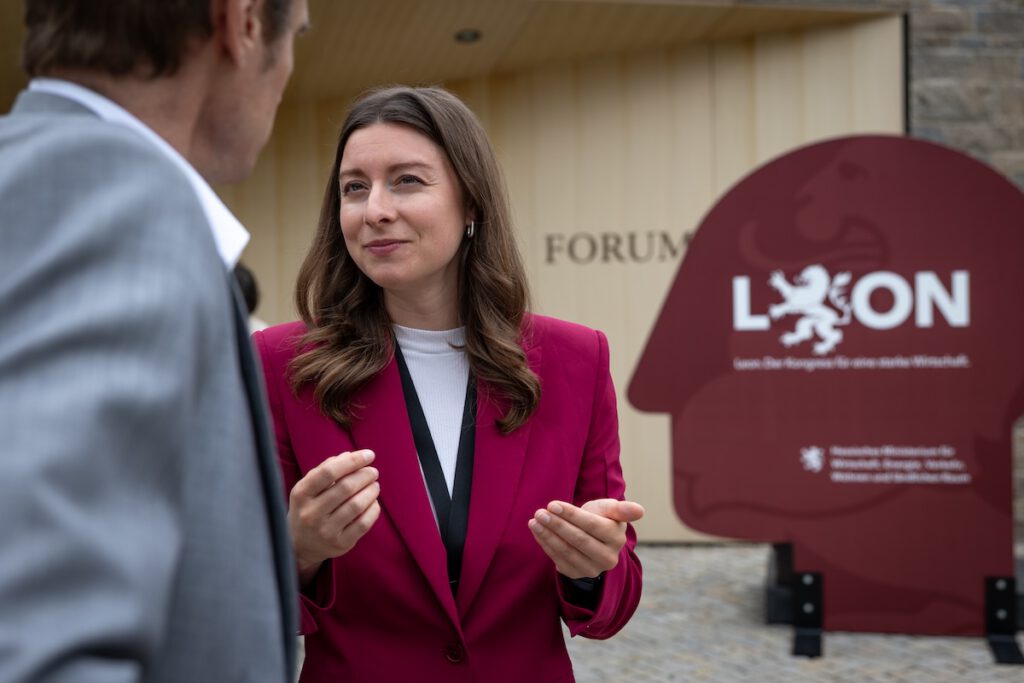
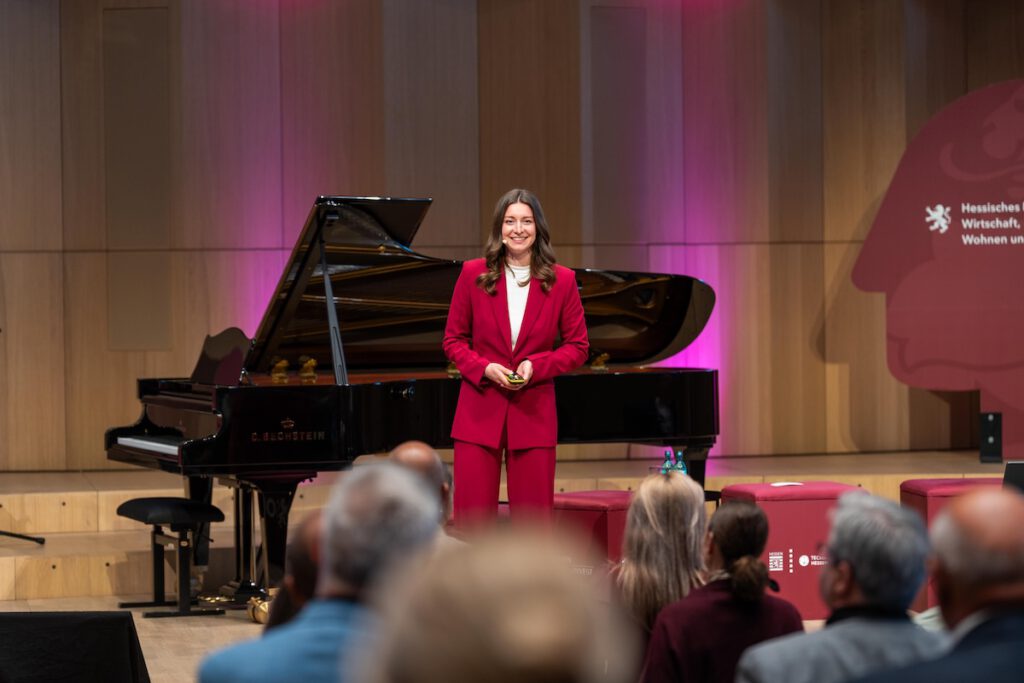
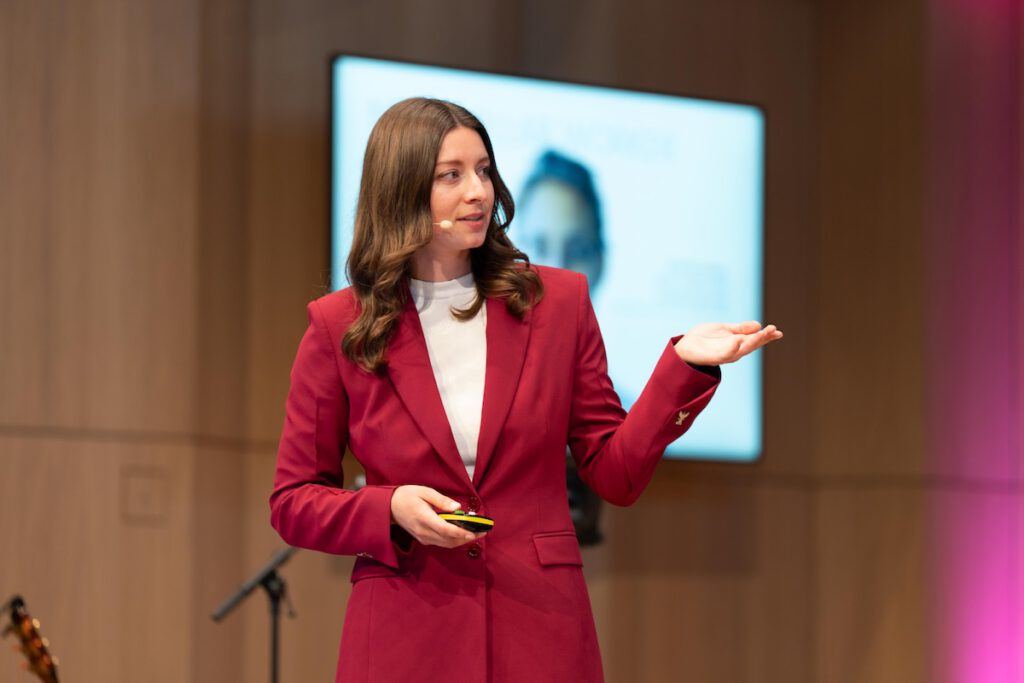
It’s 5:15 p.m. at the Casals Forum in Kronberg. A long day of talks lies behind the hundred or so decision-makers from business, academia, government and the Bundeswehr. The day’s main threads — resilience, security, financing the transition, the Mittelstand as an anchor of stability — have all been drawn. Then Carina Stoettner takes the stage and asks the question: where might German industry and the German economy actually be heading?
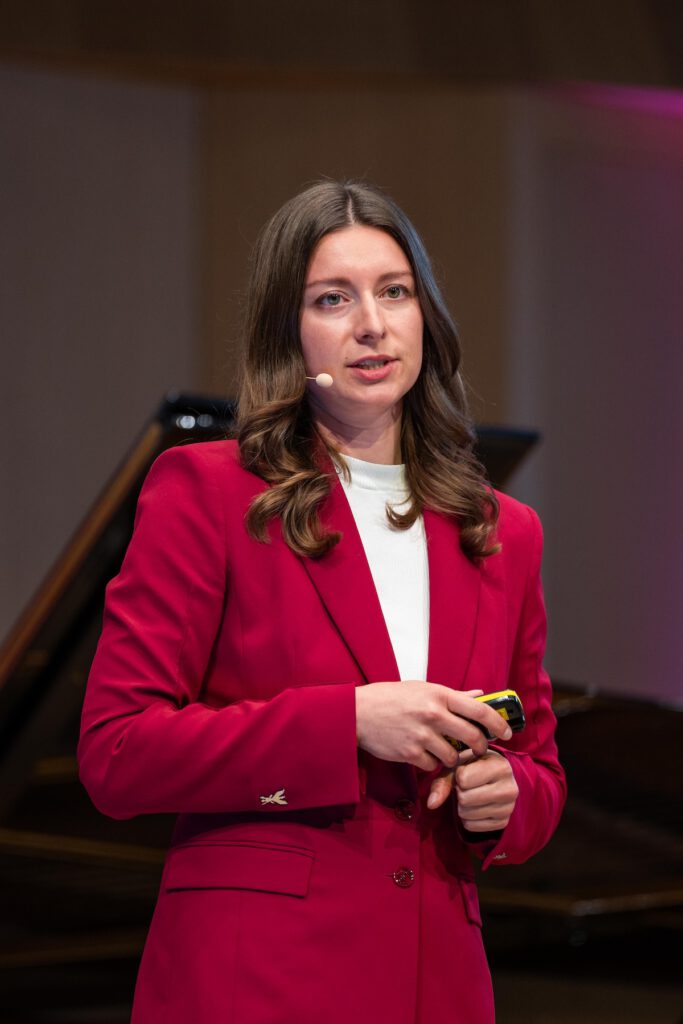
Stoettner is a futurist — not a forecaster extending charts ten years into the future, but someone who works with companies, ministries and education providers to make desirable futures concrete. Her closing keynote, “The Future of Industrial Work,” wasn’t a full stop but a starting gun: for a debate that has been conducted too technocratically in Germany for too long — and now needs a direction.
Resilience isn’t defense — it’s the ability to build a future
All day, resilience had been the leitmotif of LEON 2026. Economics Minister Kaweh Mansoori had called it the decisive precondition for competitiveness. Stoettner picked the term up — and turned it around.
Resilience, as her keynote had it, isn’t an attempt to defend a status quo against an uncertain world. Resilience is the ability to stay capable of acting despite disruptive change — and by means of it — and to shape futures worth having. Treat resilience as a shield and you build bunkers. Understand it as the capacity to shape things and you build platforms.
That set the frame for the keynote’s two main strands: deep tech and radical innovation on one side, education and the future of work on the other.
Deep tech and radical innovation: Germany’s real competitiveness question
Germany has an innovation paradox. Strong in research, strong in patents, strong in its Mittelstand — and still behind the US and China across many key technologies. Stoettner offered a diagnosis that landed in the room: we have perfected incremental innovation and structurally lost the habit of radical innovation.
Deep tech — technologies carrying high scientific risk and long development horizons, from quantum computing to synthetic biology to new energy and materials systems — requires different conditions from the optimizing innovation that German industry grew up on:
- Longer capital horizons than the typical German financing mix currently offers
- Greater tolerance for failure, both inside companies and in the logic of public funding
- Tighter integration of frontier research and industrial scaling, rather than sequential handovers across interfaces that take years
- Talent that thinks across disciplines and can move between the lab, the codebase and the factory floor
The trade-offs of protectionism: when resilience becomes a cage
Stoettner devoted perhaps the most delicate part of her keynote to a question the current industrial-policy debate tends to sail around: what happens when protectionism goes too far?
Resilience and sovereignty are legitimate goals — necessary ones, even. But they have a downside that honest industrial policy has to name:
- Innovation lost to isolation. Reorganizing critical inputs on a purely national basis costs more than higher unit prices — it costs the competitive pressure and knowledge exchange that drive innovation. Closed systems age faster than open ones.
- Capital and talent flight. Researchers, founders and investors choose ecosystems where they can scale. Overdone protectionism sends a signal: this is a place that defends, not one that builds.
- The strategic cost of the subsidy spiral. Every industry kept in the country by subsidy ties up money that would have bought more future elsewhere — in deep tech, education, infrastructure. Industrial policy is always also an allocation decision against alternative futures.
- Reciprocity risk. Protective measures provoke protective measures. In an escalating protectionist spiral, an export nation like Germany loses structurally more than more closed economies do.
- Democratic erosion. When “strategic industries” becomes a permanent category, the entanglements between the state and large corporations grow — and over time they weaken competition and renewal.
Her argument wasn’t a naive call for free trade but a case for proportion: resilience where security genuinely demands it and no other route exists — and openness everywhere else, because openness remains the real source of innovation and prosperity. The future worth aiming for doesn’t lie in maximum self-sufficiency but in intelligent sovereignty built on partnership.
What remains: three imperatives for the coming decade
Three imperatives can be distilled from Stoettner’s keynote — applicable to any industrial economy, and to Hesse in particular:
- Bet on deep tech and radical innovation. Incremental improvement is table stakes now, not an advantage. The real work is financing, organizing and scaling technologies with ten- and fifteen-year horizons — starting now.
- Think about education and work across a whole working life. Not curricula but learning architectures. Not training as a project but learning as infrastructure.
- Balance resilience with openness. Sovereignty where it’s indispensable. Openness everywhere else — as the source of innovation, talent and economic strength.
About the congress: LEON 2026 in Wiesbaden
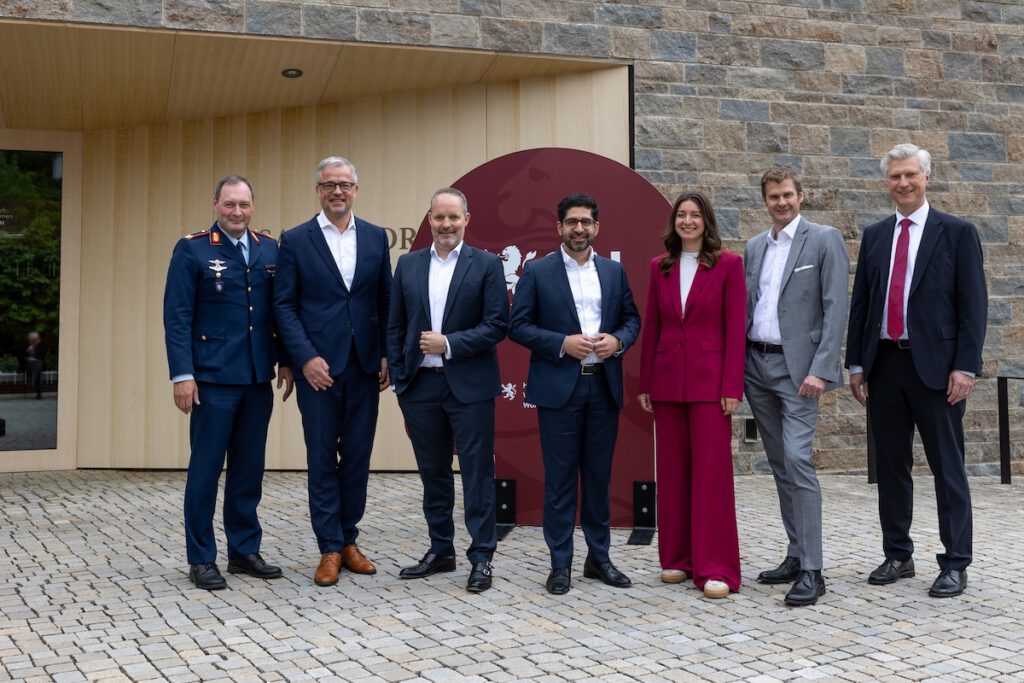
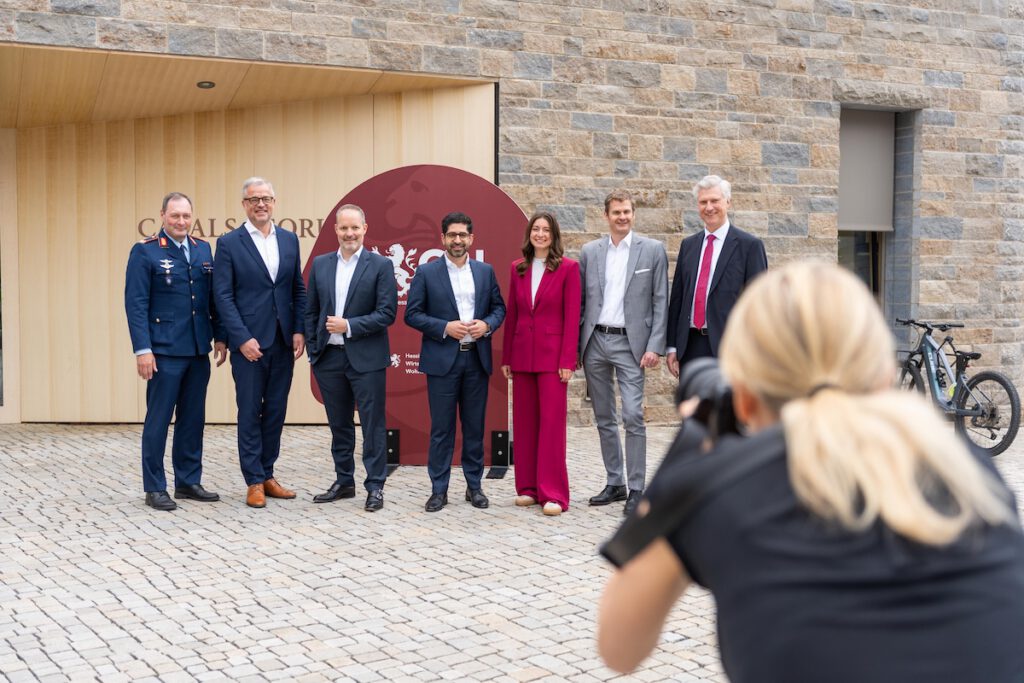
On 6 May 2026, representatives from business, academia, government and security institutions came together at the Casals Forum in Wiesbaden for LEON, the new business and industry congress for the German state of Hesse. The guiding theme: resilience as the decisive competitiveness question of the 21st century.
Three threads held the day together:
- Resilience is becoming a competitiveness question — given fragile supply chains, geopolitical tension and rising energy and security demands.
- Industry, innovation and security can no longer be thought about separately. Key technologies like AI and new materials have civilian and security applications.
- From a knowledge problem to an implementation problem. “We don’t have a knowledge problem, we have an implementation task,” as Economics Minister Kaweh Mansoori put it in his opening remarks.
The keynotes and talks at a glance
- Kaweh Mansoori, Hesse Minister of Economic Affairs — opening remarks
- Prof. Marcel Fratzscher (DIW Berlin) — keynote: “After Us, the Future: A New Generational Contract for Freedom, Security and Opportunity”
- Peter R. Manolopoulos (CEO, Schunk Group) — “What Makes Us Strong: Resilience in Industrial Mid-Sized Companies”
- Hans-Dieter Kemler (Executive Board, Helaba) — “Financing Transformation in Germany — Hesse Leads the Way”
- Dr. Pierre Dominique Prümm (Executive Board, Aviation, Fraport AG) — “Rethinking Resilience: How Aviation Shapes the Future in Turbulent Times”
- Christoph Bernius (Divisional Board, Cyber Risk, Commerzbank AG) — “Cyber Resilience: Europe’s Path to Security and Economic Strength”
- Dr. Kai Beckmann (CEO, Merck KGaA) — video message on the future of Merck
- Defence panel with Major General Wolf-Jürgen Stahl (President, BAKS), Thomas Mailänder (EDAG), Daniel Zittel (Daimler Truck), Prof. Andreas Glas (UniBw Munich), Dr. Hans Christoph Atzpodien (BDSV) and Brigadier General Holger Radmann (Hesse State Command): “Why We Need Strong Cooperation Between the Armed Forces, Industry and Innovation”
- Nathalia Schomerus (Legal Innovation Lead, Legora) — “Security and Resilience in German Industry: The Cybersecurity Dimension”
- Hesse’s industrial front-runners — presentations from six outstanding companies based in the state: JUMO, Energiesysteme Groß, Vacuumschmelze, Ponticon, Stephan Schmidt KG and Alexander Binzel Schweisstechnik / Abicor Group
- Carina Stoettner, futurist — closing keynote: “The Future of Industrial Work”
The main stage program was complemented by 13 breakout sessions on subjects including cutting red tape, cybersecurity, sustainable industry, financing transformation and security cooperation — plus a poetic and musical wrap-up to close the day.
LEON is designed as a long-term platform. In Mansoori’s words, it sees itself as the beginning of a dialogue meant to shape the years ahead: “The future of Hesse as a place for innovation and industry is being decided right now.”