Tag: KI

Carina Stöttner über KI in der Rai Tagesschau

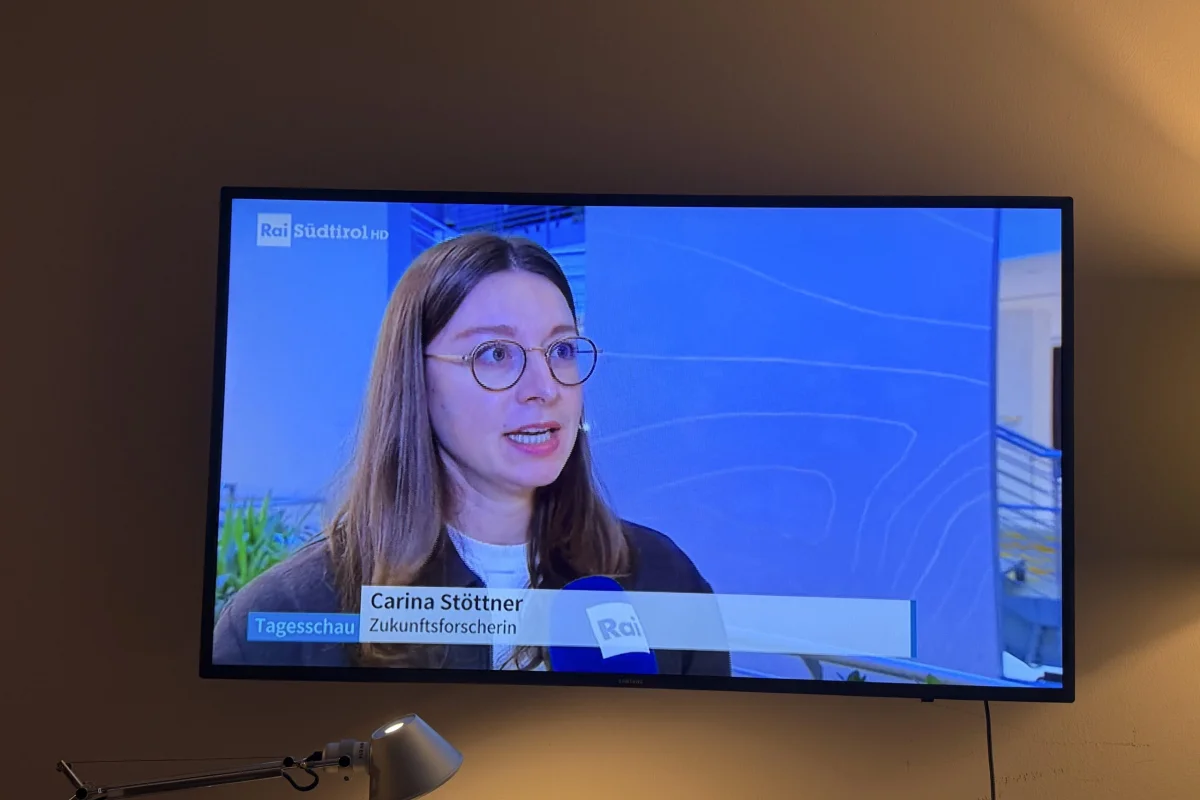
Die größten Risiken von KI liegen nicht in einer Maschine, die sich verselbstständigt – sondern darin, wie wir sie einsetzen. Das ist die Kernbotschaft von Zukunftsforscherin und Soziologin Carina Stöttner. Im Rahmen der Digital ConnecT in Bozen sprach sie darüber im Morgengespräch bei Rai Radio und in der Tagesschau von Rai Südtirol.

Moralische Panik statt Weltuntergang

Ein düsteres KI-Szenario hält Stöttner für weit weniger wahrscheinlich als oft dargestellt. Die Debatte sei von einer „moralischen Panik“ geprägt, wie sie neue Technologien regelmäßig begleitet. Schon bei der Eisenbahn fürchtete man, hohe Geschwindigkeiten führten zu Blindheit.

Manche Warnungen haben laut Stöttner auch strategische Gründe: Wer vor den Gefahren warnt, inszeniert sich zugleich als der, der die Zügel in der Hand hält.

KI ist nur so mächtig, wie wir sie lassen

Moderne KI-Systeme können in gewissem Umfang selbstständig handeln – das bringt neue Risiken. Doch sie brauchen Server, Energie und Rechenzentren und können nicht unbegrenzt Macht anhäufen. „Eine KI ist nur so mächtig, inwiefern wir ihr auch Zugang und Zugriff zu dieser Welt geben“, sagt Stöttner.

Kritische Entscheidungen oder ganze Infrastrukturen sollten deshalb nicht ungeprüft an KI übergeben werden. Nötig sind klare gesetzliche Vorgaben und ethische Leitplanken.

Was Unternehmen jetzt tun sollten

Südtiroler Betrieben rät Stöttner, nicht aus „Fear of Missing Out“ in KI-Tools zu investieren. Zuerst sollte klar sein, welches Problem gelöst werden soll. Für Handwerk, Hotellerie und Handel sieht sie viel Potenzial in der Verwaltung: Terminvergabe, Rechnungen, Anfragen.

Was Menschen gerne tun und worauf sie stolz sind, sollte dagegen bleiben. „Wenn ich den Teil wegnehme, die Kernkompetenz, dann nehme ich den Menschen auch ein Stück weit das weg, worauf sie sich jeden Tag freuen in der Arbeit“, so Stöttner.

Auch Vertrauen bleibt menschlich. KI erkennt Muster in großen Datenmengen, etwa in der Brustkrebs-Diagnostik, oft früher als der Mensch. Eine schwere Diagnose will aber niemand von einer Computerstimme hören. Gerade in familiengeführten Betrieben in Gastronomie und Tourismus ist der persönliche Kontakt oft entscheidend.

Nicht Mensch oder Maschine

Stöttners Fazit: Entscheidend ist nicht die Frage „Mensch oder Maschine“, sondern wo Menschen den größeren Mehrwert schaffen – und wo KI sinnvoll unterstützen kann.

Zum Nachhören und Nachsehen:

Carina Stöttner at Digital ConnecT: Thinking AI from a human perspective

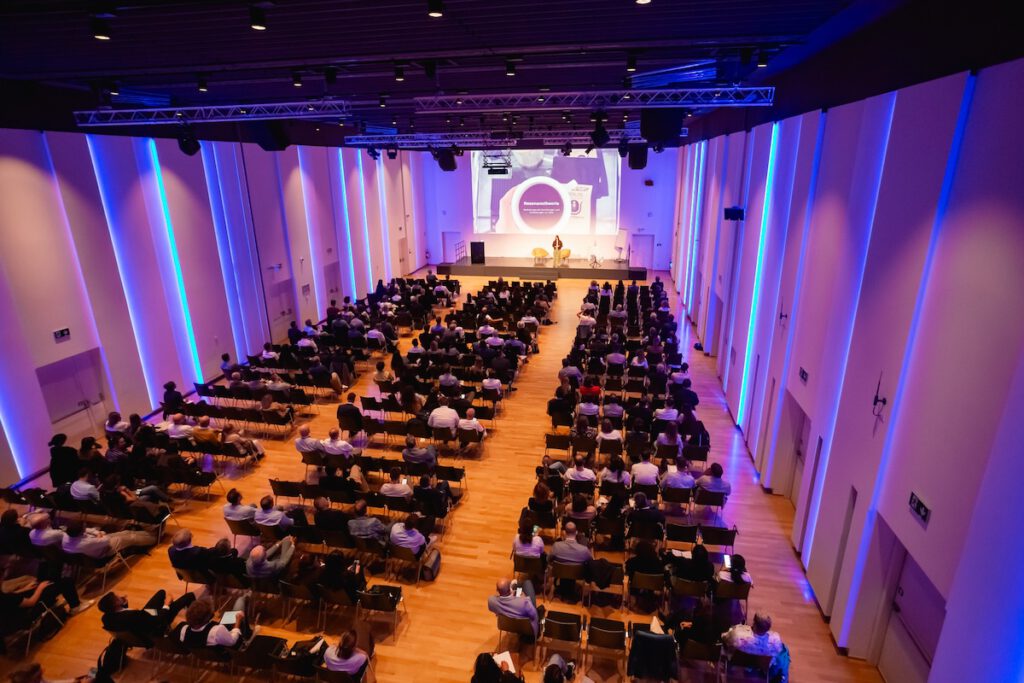
The future of work will not be shaped by technology alone, but by the interplay between people, creativity and artificial intelligence. With this thought, futurist Carina Stöttner, CEO and founder of Futurewise Company, closed the third edition of Digital ConnecT at the Four Points by Sheraton in Bolzano on 7 October.

The motto of the day: concrete methods only, from promises to results. Raffaele Gaito opened the event with his concept of the “AI Mindset”: successful use of AI is first a question of attitude, and only then a question of technology. Stöttner picked up on this idea in the evening. Throughout the day, the focus was on AI strategy, marketing, automation and cybersecurity, with hands-on experience and transferable methods from international experts.

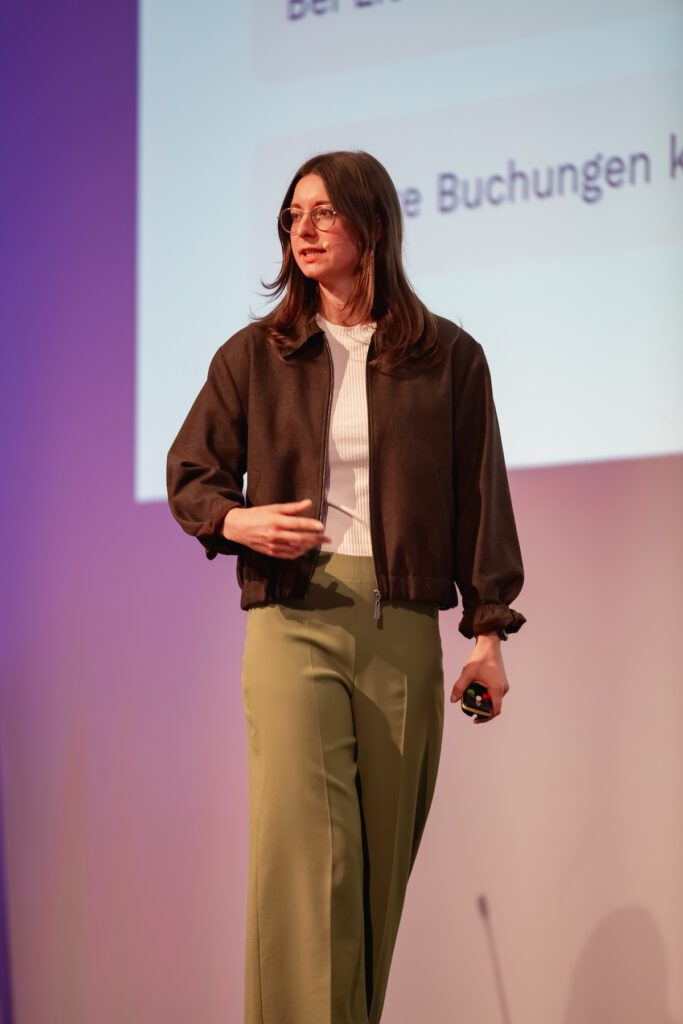
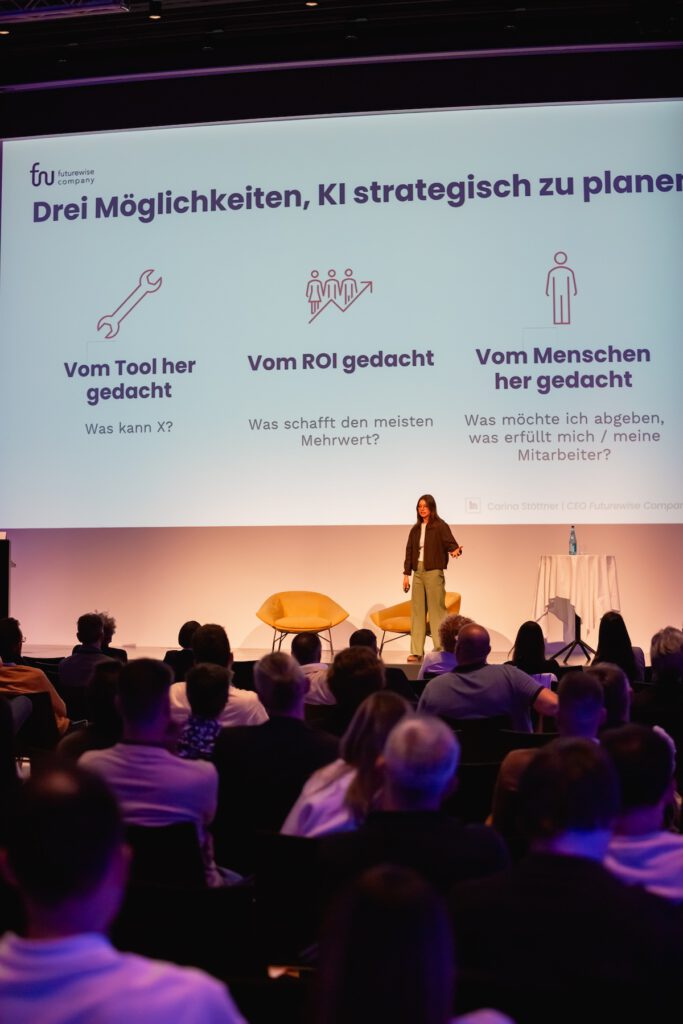
In her keynote, Stöttner looked ahead. Which AI tools are available to companies today, and which will be in the near future? And which human skills remain irreplaceable, despite all the progress? Her talk centred on three key learnings.

1. Start with people and their work, then ask where the greatest value lies

When companies introduce AI, there are roughly three ways to approach it. You can start with the tool, with the greatest value for the business, or with people and the work they do. Most companies begin with one of the first two.

Stöttner cited entrepreneur Lukas Dieterle as an example. He looked at people and their tasks first. Only then did he ask where AI could create the most value.

She shared his guiding questions with the audience as food for thought for their own organisations:

  • What are people proud of?
  • What fits our values and the way we want to be seen?
  • What do people actually enjoy doing?

The answers show which tasks should stay with people, and where AI can genuinely lighten the load.

Key takeaway: A strategic approach to AI that starts with people maximises both satisfaction and the value of the technology.

2. Time freed up needs space for human connection, not even more tasks

AI doesn’t necessarily save time, Stöttner stressed. Above all, it produces more output in less time. What happens with the time gained is a conscious choice.

If companies fill it with even more tasks, a spiral begins. AI then amplifies exactly the acceleration described by sociologist Hartmut Rosa. We get faster, but not necessarily better.

Stöttner’s recommendation: deliberately set aside part of the time gained for genuine human interaction. That is where something emerges that no machine can deliver: new thinking, creativity and new areas of growth. And people stay at the centre of the workplace.

Key takeaway: Productivity needs to be balanced with spaces for resonance.

3. AI is never neutral, so companies need to feed in their values

“AI only knows our world as far as we feed it,” says Stöttner. Data and training determine the outcome. Ignore that, and you adopt the biases hidden in the data without question.

From this, she derived three tasks for companies:

  1. Recognise bias. Understand which data and training sit behind a model.
  2. Clarify goals. What does the company want to achieve with AI? And how do its goals, convictions and values flow into the model?
  3. Avoid risks. Otherwise AI may run counter to employment law or the company’s own guidelines, and squander customers’ trust.

Key takeaway: Become aware of the values and biases in our decisions, and deliberately build them into the models.

Conclusion: The future emerges from the interplay

The tools are becoming ever more powerful, and that’s a good thing. But according to Stöttner, what makes the difference is how they are used: with people at the centre, with room for human connection, and with clear values. That is exactly where the irreplaceable skills lie.

Digital ConnecT is a joint initiative of IDM South Tyrol, the South Tyrol Trade and Services Association (hds), CNA-SHV South Tyrol, the South Tyrol Business Association (UVS), the Hotel and Restaurant Association (HGV), the South Tyrolean Farmers’ Association (SBB), the Crafts and Services Association (lvh.apa), Confesercenti South Tyrol and NOI Techpark.

The question Stöttner left the audience with: in your own company, is AI approached from the tool, from the value, or from people?

The event was held in German and Italian, and the presentation was designed to be bilingual.