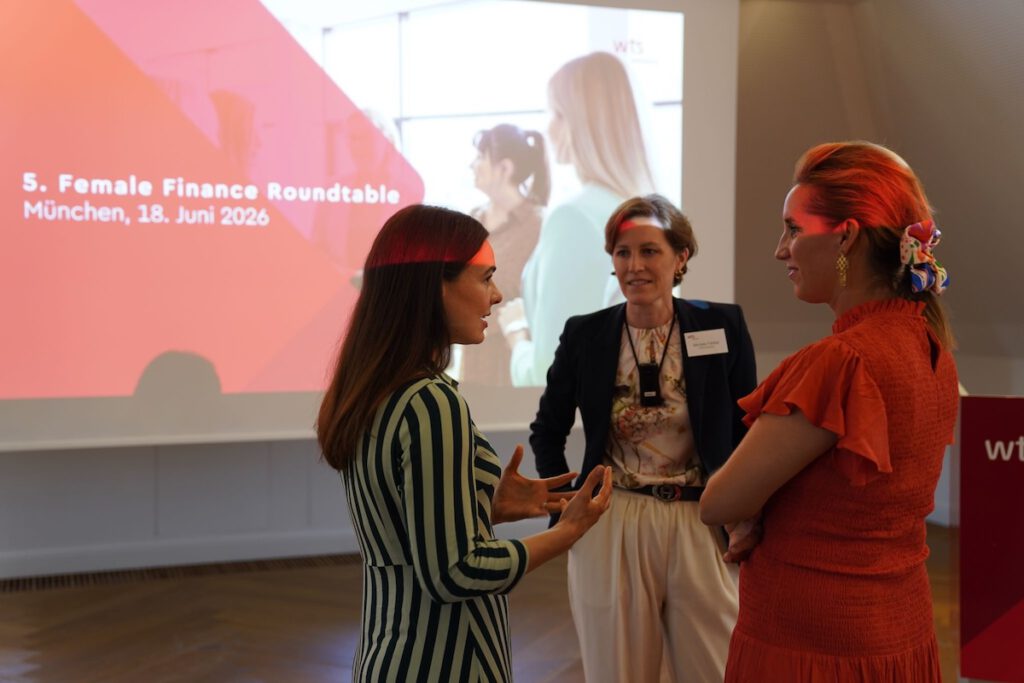
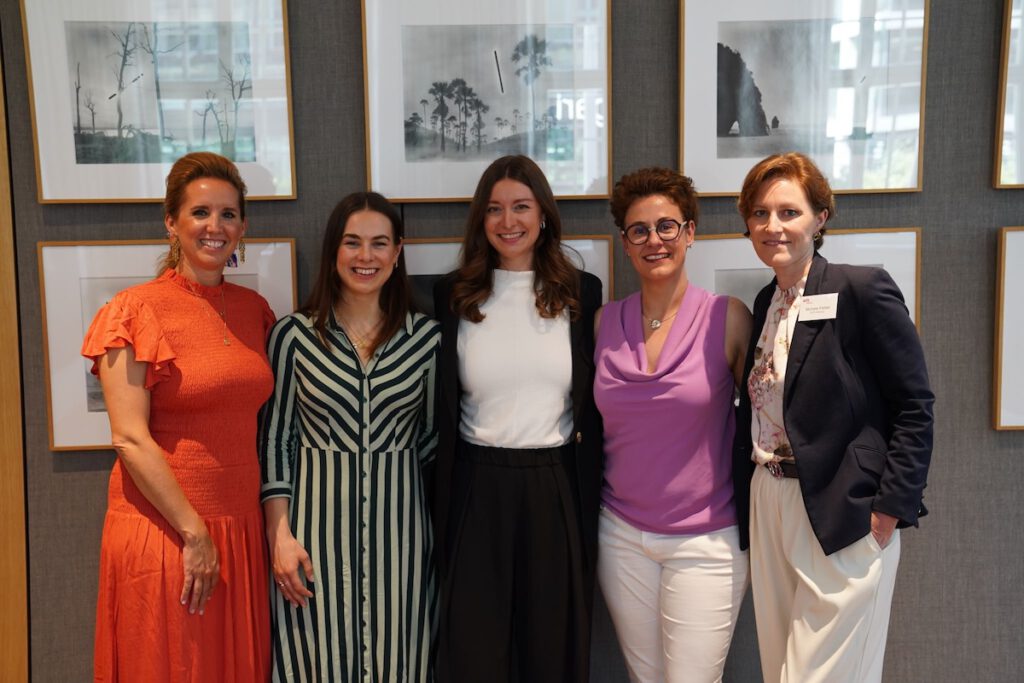
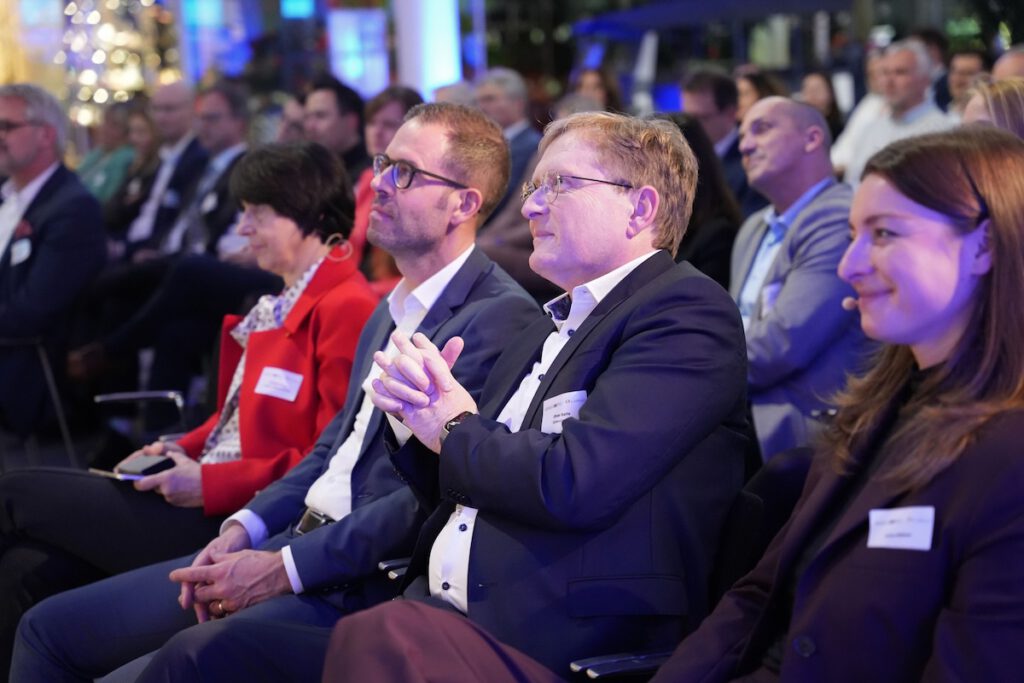
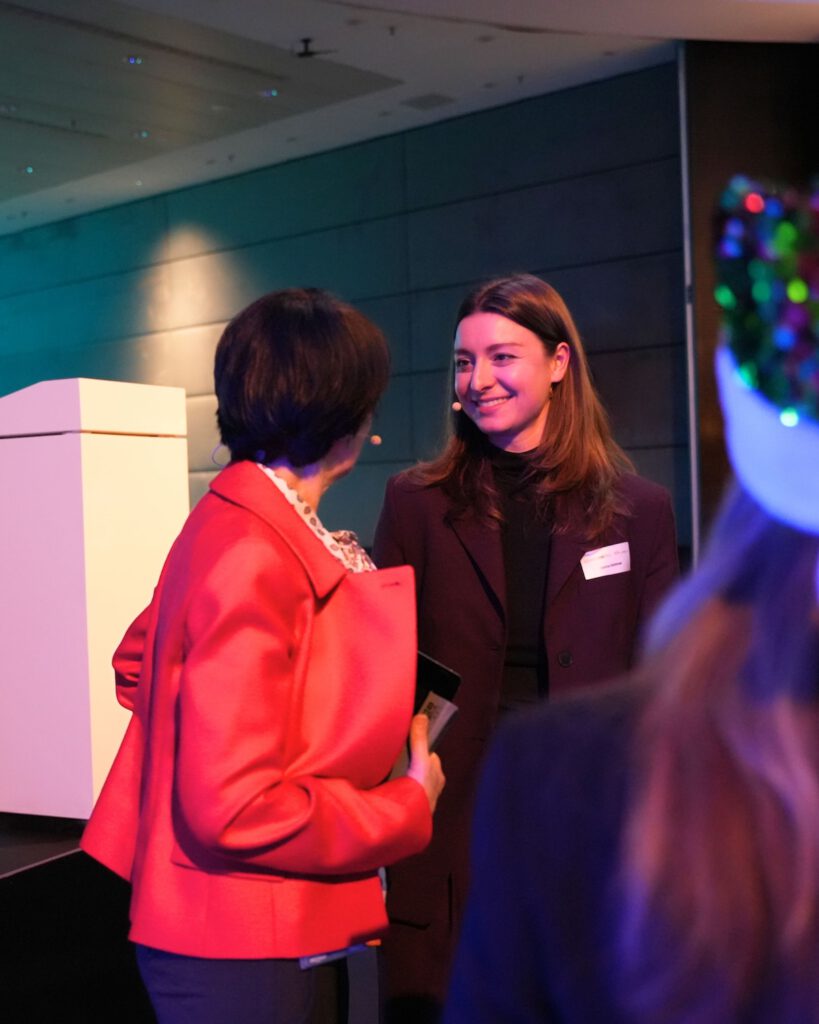
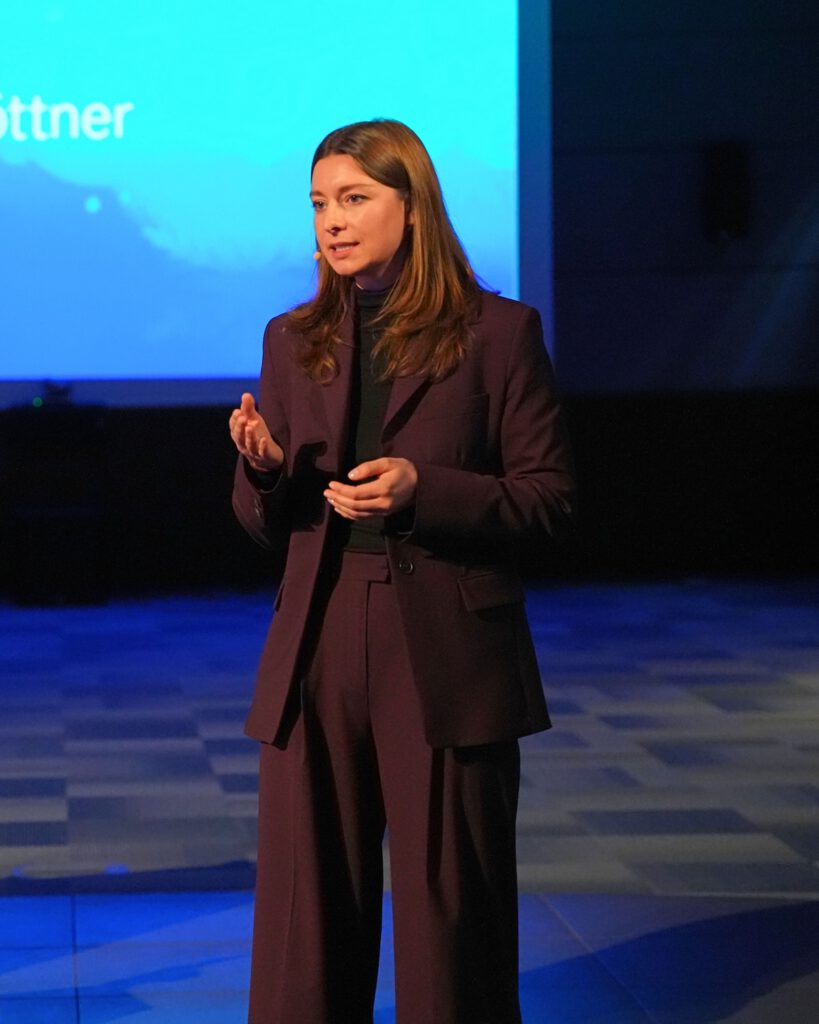
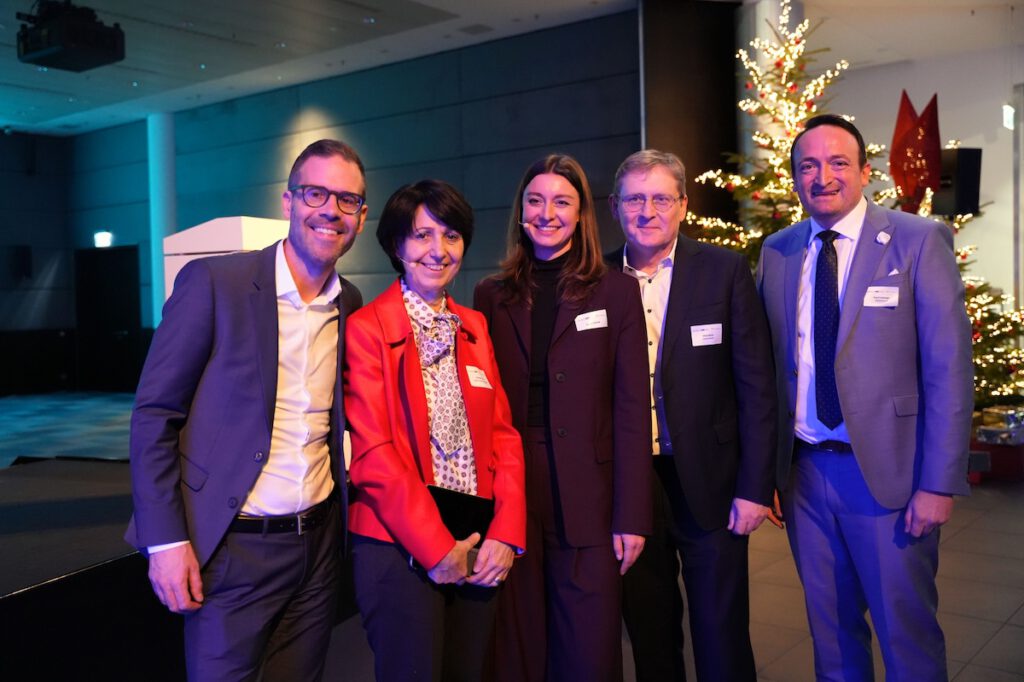
That was the theme of the fifth Female Finance Roundtable, held in mid-June 2026 and hosted by WTS Advisory. As in previous years, the event was full of thought-provoking talks, lively discussion and open exchange among the many women taking part.
One thing came through especially clearly: in challenging times above all, what matters is focusing on possibilities rather than risks, identifying where you actually have room to act, and treating change as an opportunity.
The future as a space full of opportunity
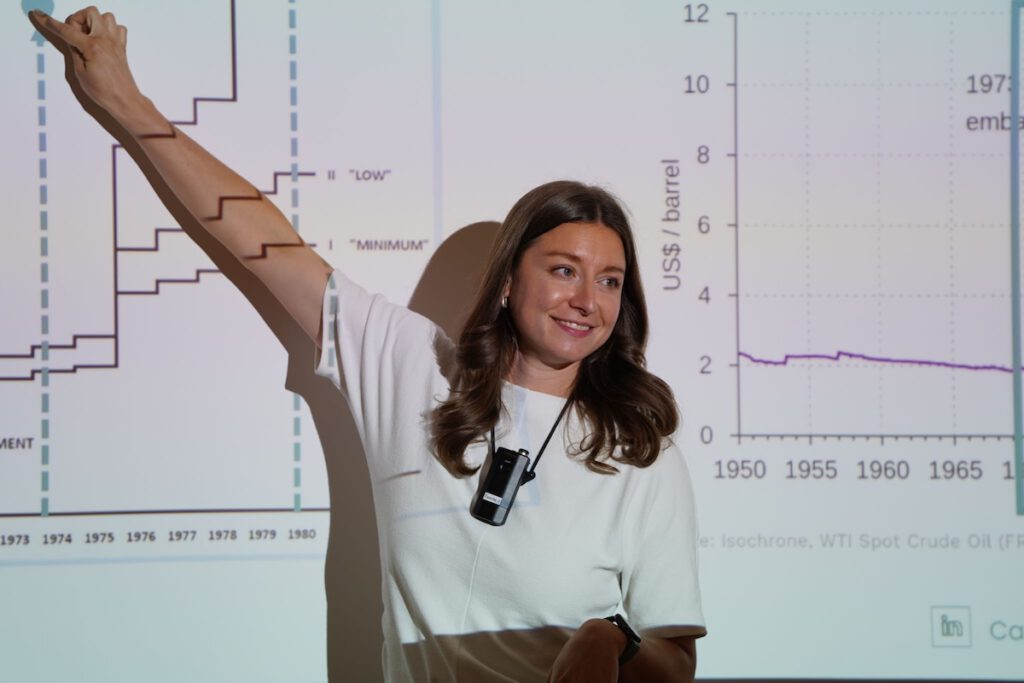
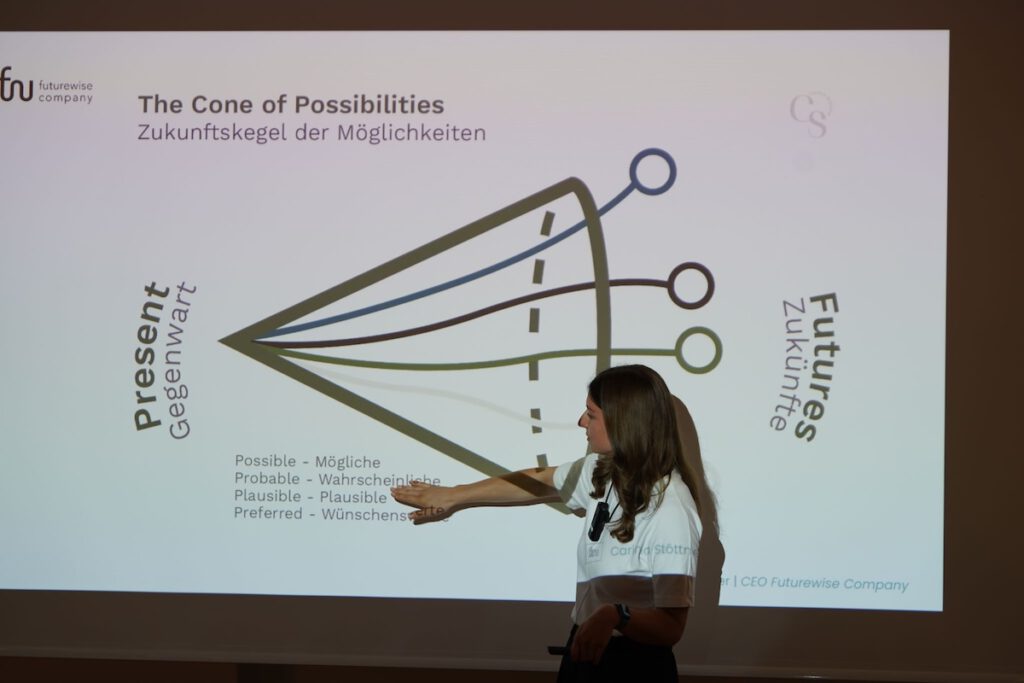
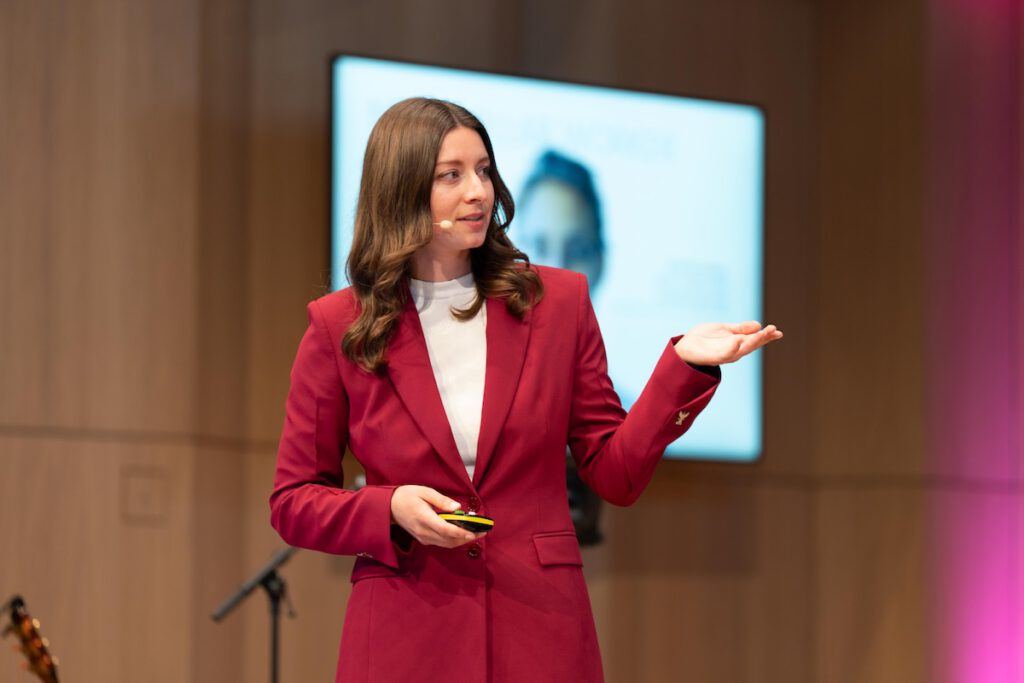
In her talk, Carina Stoettner made a compelling case for questioning established ways of thinking and seeing the future not as a threat but as something to be shaped.
Anyone who wants to shape the future actively has to get past their own patterns of perception first — above all the negativity bias and the normalcy bias, which lead us to overestimate risk and underestimate change.
The key is not to think in terms of the future but in terms of futures. Letting individual trends steer you less, and thinking in scenarios instead, expands your capacity to act considerably. And the distinction matters: scenarios aren’t forecasts. They don’t predict anything — they open up room to think.
Which requires one thing above all: time and space for new perspectives to emerge in the first place.
Sustainability as a strategic factor
Gyri Reiersen offered valuable insight into what sustainability and forward-looking action mean for companies and the people making decisions in them.
She showed vividly what a volcanic eruption in Iceland has to do with the emergence of democracy — a striking example of how profoundly ecological events can shape the course of societies.
She pointed to research suggesting that the share of uninhabitable land could rise from 1% to 19% by 2070, with roughly 3.5 billion people having to relocate as a result.
Artificial intelligence and sustainability, in her view, stand in a double relationship: in tension with one another on one hand, and on the other with real potential to complement each other — for instance where AI can bring sustainability data up to the standard of financial data far faster. Her conclusion: both AI and sustainability will be needed to stay competitive.
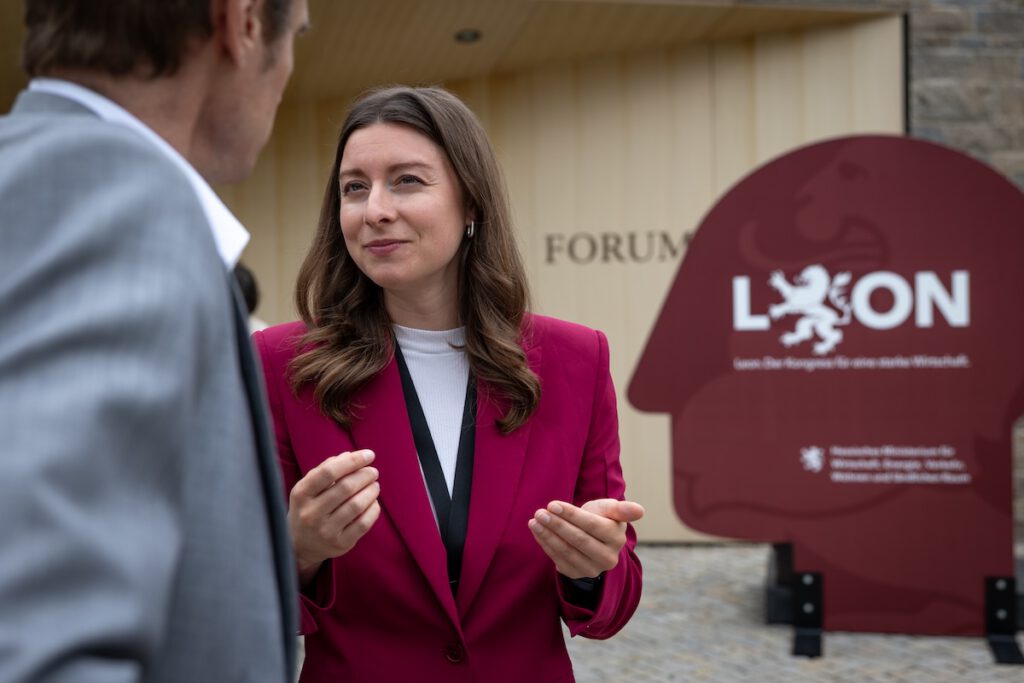
A look back at futurist Carina Stoettner’s closing keynote at LEON 2026 — and what she had to say about the future of industrial work, resilience and the risks of protectionism taken too far.
When the futurist takes the podium
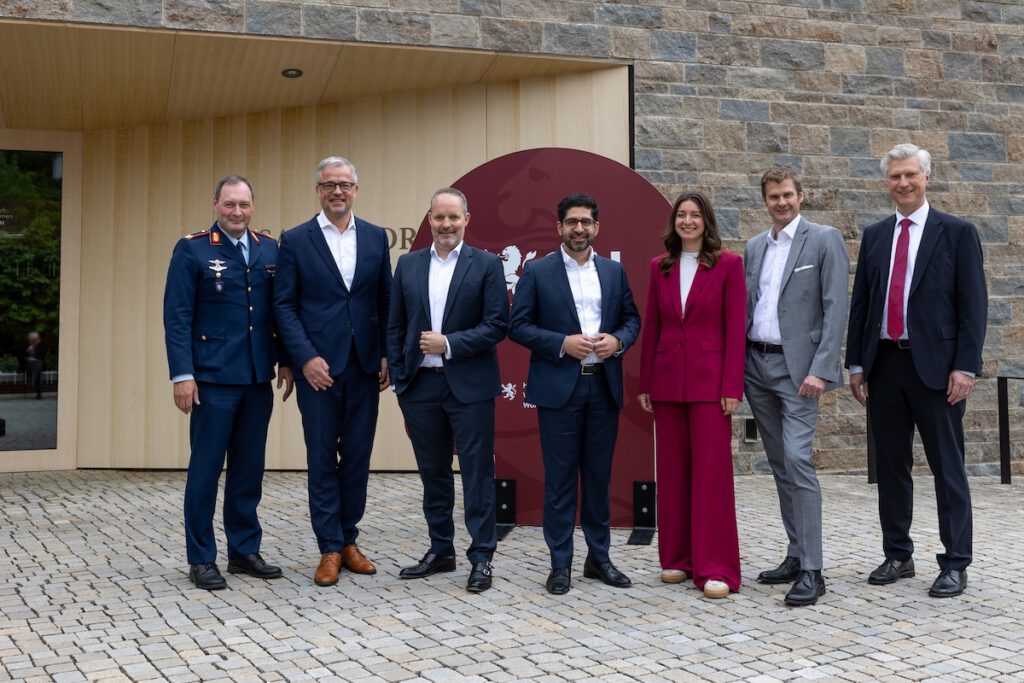
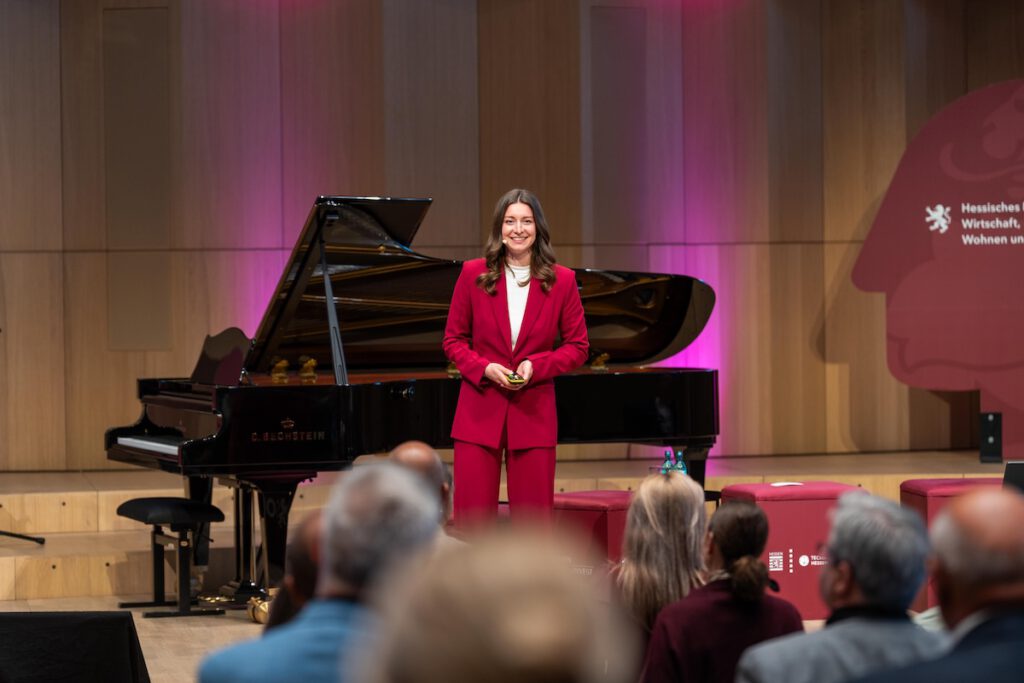
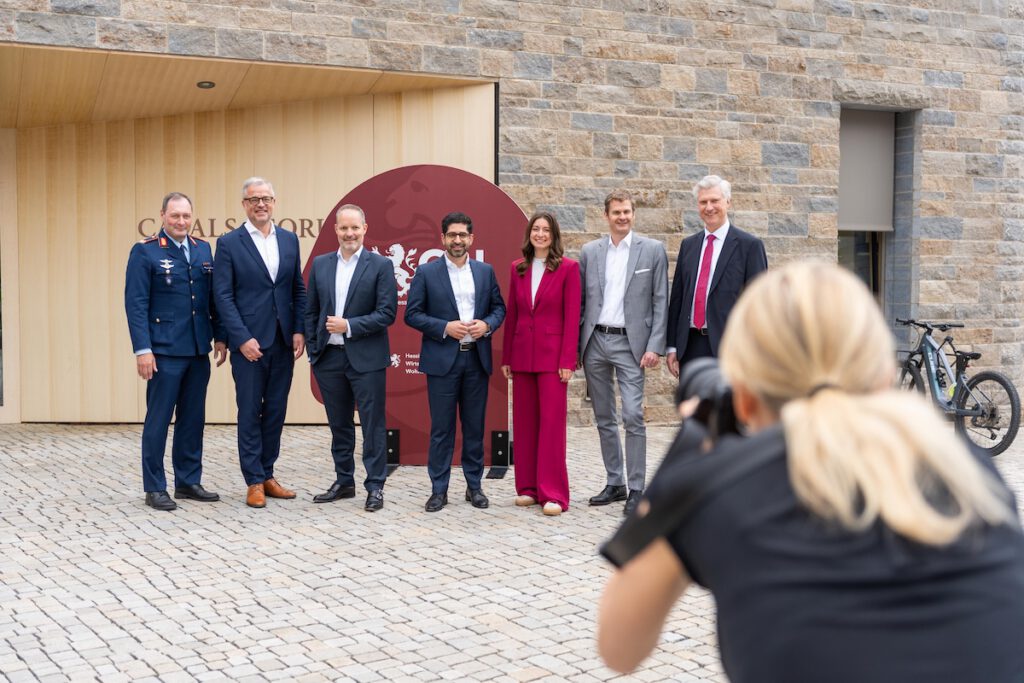
It’s 5:15 p.m. at the Casals Forum in Kronberg. A long day of talks lies behind the hundred or so decision-makers from business, academia, government and the Bundeswehr. The day’s main threads — resilience, security, financing the transition, the Mittelstand as an anchor of stability — have all been drawn. Then Carina Stoettner takes the stage and asks the question: where might German industry and the German economy actually be heading?
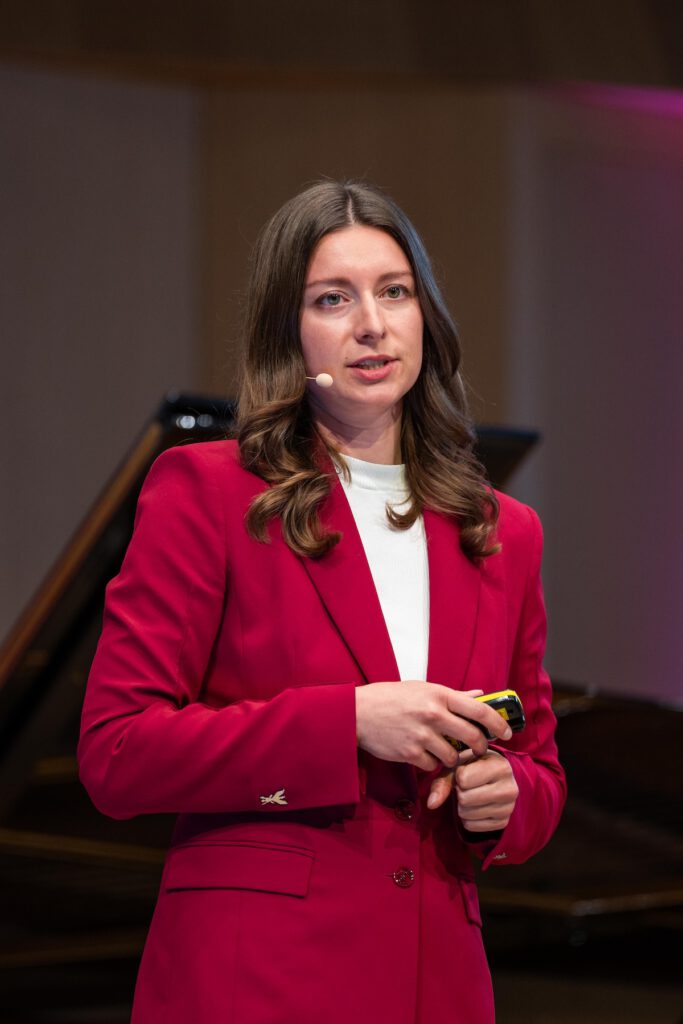
Stoettner is a futurist — not a forecaster extending charts ten years into the future, but someone who works with companies, ministries and education providers to make desirable futures concrete. Her closing keynote, “The Future of Industrial Work,” wasn’t a full stop but a starting gun: for a debate that has been conducted too technocratically in Germany for too long — and now needs a direction.
Resilience isn’t defense — it’s the ability to build a future
All day, resilience had been the leitmotif of LEON 2026. Economics Minister Kaweh Mansoori had called it the decisive precondition for competitiveness. Stoettner picked the term up — and turned it around.
Resilience, as her keynote had it, isn’t an attempt to defend a status quo against an uncertain world. Resilience is the ability to stay capable of acting despite disruptive change — and by means of it — and to shape futures worth having. Treat resilience as a shield and you build bunkers. Understand it as the capacity to shape things and you build platforms.
That set the frame for the keynote’s two main strands: deep tech and radical innovation on one side, education and the future of work on the other.
Deep tech and radical innovation: Germany’s real competitiveness question
Germany has an innovation paradox. Strong in research, strong in patents, strong in its Mittelstand — and still behind the US and China across many key technologies. Stoettner offered a diagnosis that landed in the room: we have perfected incremental innovation and structurally lost the habit of radical innovation.
Deep tech — technologies carrying high scientific risk and long development horizons, from quantum computing to synthetic biology to new energy and materials systems — requires different conditions from the optimizing innovation that German industry grew up on:
Longer capital horizons than the typical German financing mix currently offers
Greater tolerance for failure, both inside companies and in the logic of public funding
Tighter integration of frontier research and industrial scaling, rather than sequential handovers across interfaces that take years
Talent that thinks across disciplines and can move between the lab, the codebase and the factory floor
The trade-offs of protectionism: when resilience becomes a cage
Stoettner devoted perhaps the most delicate part of her keynote to a question the current industrial-policy debate tends to sail around: what happens when protectionism goes too far?
Resilience and sovereignty are legitimate goals — necessary ones, even. But they have a downside that honest industrial policy has to name:
Innovation lost to isolation. Reorganizing critical inputs on a purely national basis costs more than higher unit prices — it costs the competitive pressure and knowledge exchange that drive innovation. Closed systems age faster than open ones.
Capital and talent flight. Researchers, founders and investors choose ecosystems where they can scale. Overdone protectionism sends a signal: this is a place that defends, not one that builds.
The strategic cost of the subsidy spiral. Every industry kept in the country by subsidy ties up money that would have bought more future elsewhere — in deep tech, education, infrastructure. Industrial policy is always also an allocation decision against alternative futures.
Reciprocity risk. Protective measures provoke protective measures. In an escalating protectionist spiral, an export nation like Germany loses structurally more than more closed economies do.
Democratic erosion. When “strategic industries” becomes a permanent category, the entanglements between the state and large corporations grow — and over time they weaken competition and renewal.
Her argument wasn’t a naive call for free trade but a case for proportion: resilience where security genuinely demands it and no other route exists — and openness everywhere else, because openness remains the real source of innovation and prosperity. The future worth aiming for doesn’t lie in maximum self-sufficiency but in intelligent sovereignty built on partnership.
What remains: three imperatives for the coming decade
Three imperatives can be distilled from Stoettner’s keynote — applicable to any industrial economy, and to Hesse in particular:
Bet on deep tech and radical innovation. Incremental improvement is table stakes now, not an advantage. The real work is financing, organizing and scaling technologies with ten- and fifteen-year horizons — starting now.
Think about education and work across a whole working life. Not curricula but learning architectures. Not training as a project but learning as infrastructure.
Balance resilience with openness. Sovereignty where it’s indispensable. Openness everywhere else — as the source of innovation, talent and economic strength.
About the congress: LEON 2026 in Wiesbaden
On 6 May 2026, representatives from business, academia, government and security institutions came together at the Casals Forum in Wiesbaden for LEON, the new business and industry congress for the German state of Hesse. The guiding theme: resilience as the decisive competitiveness question of the 21st century.
Three threads held the day together:
Resilience is becoming a competitiveness question — given fragile supply chains, geopolitical tension and rising energy and security demands.
Industry, innovation and security can no longer be thought about separately. Key technologies like AI and new materials have civilian and security applications.
From a knowledge problem to an implementation problem. “We don’t have a knowledge problem, we have an implementation task,” as Economics Minister Kaweh Mansoori put it in his opening remarks.
The keynotes and talks at a glance
Kaweh Mansoori, Hesse Minister of Economic Affairs — opening remarks
Prof. Marcel Fratzscher (DIW Berlin) — keynote: “After Us, the Future: A New Generational Contract for Freedom, Security and Opportunity”
Peter R. Manolopoulos (CEO, Schunk Group) — “What Makes Us Strong: Resilience in Industrial Mid-Sized Companies”
Hans-Dieter Kemler (Executive Board, Helaba) — “Financing Transformation in Germany — Hesse Leads the Way”
Dr. Pierre Dominique Prümm (Executive Board, Aviation, Fraport AG) — “Rethinking Resilience: How Aviation Shapes the Future in Turbulent Times”
Christoph Bernius (Divisional Board, Cyber Risk, Commerzbank AG) — “Cyber Resilience: Europe’s Path to Security and Economic Strength”
Dr. Kai Beckmann (CEO, Merck KGaA) — video message on the future of Merck
Defence panel with Major General Wolf-Jürgen Stahl (President, BAKS), Thomas Mailänder (EDAG), Daniel Zittel (Daimler Truck), Prof. Andreas Glas (UniBw Munich), Dr. Hans Christoph Atzpodien (BDSV) and Brigadier General Holger Radmann (Hesse State Command): “Why We Need Strong Cooperation Between the Armed Forces, Industry and Innovation”
Nathalia Schomerus (Legal Innovation Lead, Legora) — “Security and Resilience in German Industry: The Cybersecurity Dimension”
Hesse’s industrial front-runners — presentations from six outstanding companies based in the state: JUMO, Energiesysteme Groß, Vacuumschmelze, Ponticon, Stephan Schmidt KG and Alexander Binzel Schweisstechnik / Abicor Group
Carina Stoettner, futurist — closing keynote: “The Future of Industrial Work”
The main stage program was complemented by 13 breakout sessions on subjects including cutting red tape, cybersecurity, sustainable industry, financing transformation and security cooperation — plus a poetic and musical wrap-up to close the day.
LEON is designed as a long-term platform. In Mansoori’s words, it sees itself as the beginning of a dialogue meant to shape the years ahead: “The future of Hesse as a place for innovation and industry is being decided right now.”
Photo: Fotografie Jana KayPhoto: Fotografie Jana KayPhoto: Fotografie KimPhoto: Fotografie KimPhoto: Fotografie KimPhoto: Fotografie Kim
Anyone who attends a conference, a trade fair or a corporate congress will sooner or later come across the term keynote. But what does it actually mean — and where does it come from?
The term and its origins
The word keynote comes from vocal music. A cappella groups — doo-wop ensembles, barbershop quartets — sound a single note together before they begin. That note establishes the key the piece will be sung in and brings every singer into alignment. Carried over into public speaking, the idea is the same: the keynote speaker attunes the audience to the central message of an event. They set the note everything else is pitched to.
“The keynote speaker attunes the audience to the central message — they set the note everything else is pitched to.”
The more formal term is plenary lecture — a talk given to all participants at once. In practice, though, “keynote” has largely taken over, even on German-language event programs.
What a keynote does
A keynote is far more than an opening address. It lays the intellectual and emotional foundation for the whole program: it previews the most important themes of the conference or fair, presents standout developments, and frames the message meant to run through every session and discussion that follows. A keynote gives people their bearings. It answers the question: why are we all here today?
DID YOU KNOW?
At large congresses, several keynotes can run in parallel. The term is increasingly used interchangeably with plenary session or invited talk, with an opening keynote, a closing keynote and further keynotes in between.
Where it sits in the program
Keynotes often open an event — but not always. One can sit in the middle as a motivating bridge between sessions, or at the end as an inspiring close. Where it goes depends on how the organizers want the day to build.
Who gives a keynote?
Keynote speakers tend to be either well-known figures or recognized experts: executives, entrepreneurs, politicians, elite athletes, prominent researchers. In academic settings — university graduations, for instance — these talks are usually called commencement speeches and are given by invited public figures or academics.
Choosing the right speaker is a strategic decision. A recognizable name or someone with genuine authority in the field makes the event more attractive and draws the interest of potential attendees well before the doors open.
The keynote speaker’s wider role
The job often extends beyond the talk itself. In some formats the keynote speaker also acts as conference host, guiding the audience through the full program and giving the event a thread that holds it together.
Fees and bookings
Keynote speakers either work independently or are represented by specialist agencies known as speakers bureaus. When a speaker is booked through an agency, a commission of 25 to 30 percent is standard. Industry practice is for the speaker to absorb that commission, so the fee stays transparent and consistent for the client.
Keynote or plenary lecture: is there a difference?
Although plenary lecture describes the same slot, “keynote” now signals more than a format. It carries an expectation about staging, relevance and impact. Thanks in no small part to large tech events — Apple’s legendary presentations among them — the keynote has established itself as a communication format in its own right, well beyond a simple opening address.
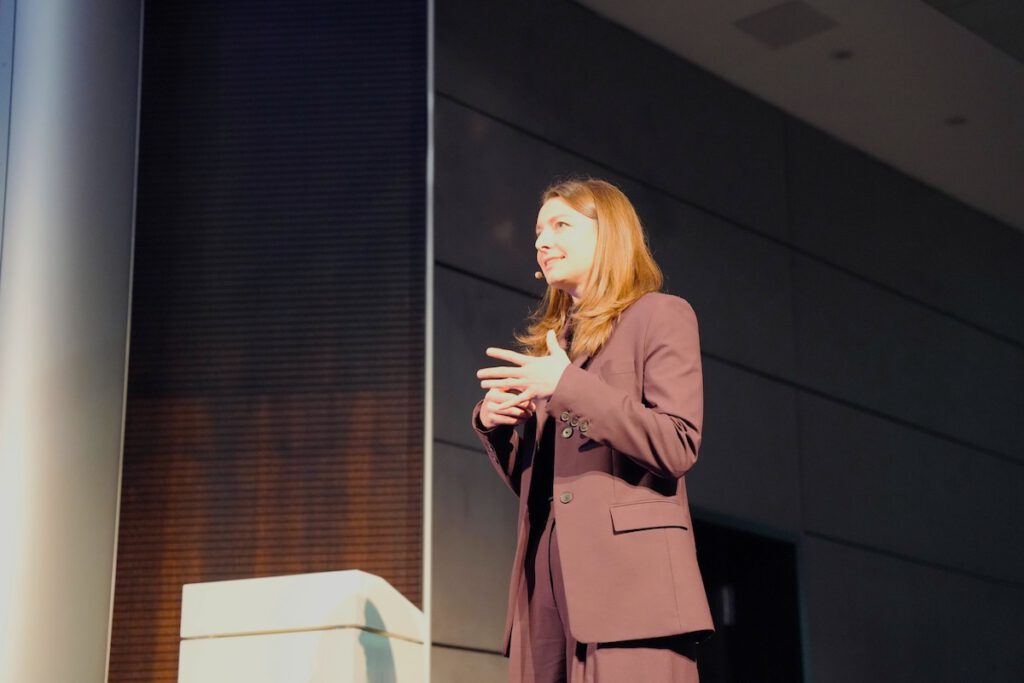
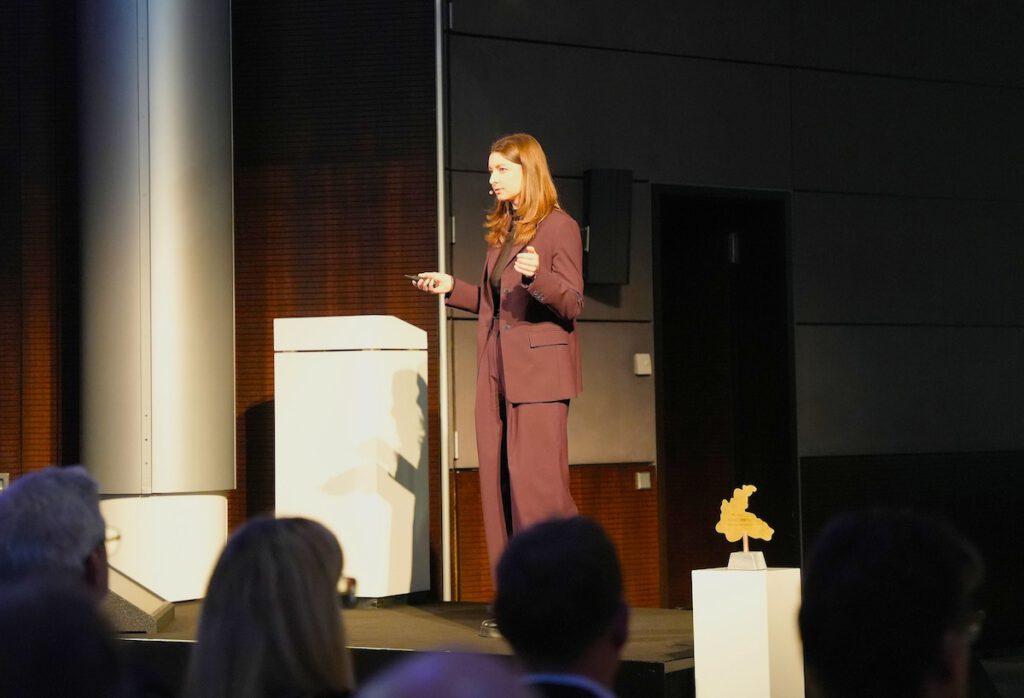
On 1 December 2025, Carina Stoettner was a guest at the Südwestmetall Heilbronn Christmas reception at the Audi Forum in Neckarsulm. Her talk looked at the future of German industry — at the opportunities within the transformation as much as the challenges facing companies and society. Communications consultant Christian Gleichauf wrote up the evening afterwards; his account forms the basis of what follows.
Deep tech is the thing we ought to be paying attention to. Carina Stoettner makes that very clear. And it has a little something to do with Heilbronn.
At the Südwestmetall Christmas reception at the Audi Forum last night, the futurist sketched out several possible futures worth thinking hard about.
In three of four scenarios, the good times in Europe don’t keep rolling. Only if we manage to build on our strengths and set off a few genuine breakthroughs do we get a future to look forward to.
That takes a society-wide willingness to engage with the new. Lifelong learning, a new relationship with science, a new sense of self in industry — in short, transformation.
In the end it will probably be a mix of scenarios. The familiar local-for-local approach will play a role one way or another. But you also have to hope the scenarios that would shrink the German and European economies into insignificance don’t come to pass.
What Stoettner does manage, in the space of a few minutes, is to make the urgency land — in front of an audience that deals with transformation every day of the week.
Christine Grotz, chair of the Heilbronn/Franconia district group at Südwestmetall, asks the fair question: what can we do? Stoettner appeals directly to the employers in the room: industry underestimates the leverage it has. Basic research is one example — and the state won’t be funding all of it. Nor will this happen without partnerships.
Former state secretary Friedlinde Gurr-Hirsch called for new approaches to training and apprenticeships. In front of more than 160 invited guests, Heiko Asum of Fibro Rundtische in Weinsberg put his finger on the sore spot: we’re not fast enough anymore.
Deep tech, collaboration between industry and science, combining Gyro Gearloose’s out-of-the-box thinking with Scrooge McDuck’s commercial instincts, using robotics to keep production in Europe, a clear focus on future technologies like AI, chip production and quantum computing. What’s striking about that list of ingredients: most of it is currently emerging in the Heilbronn ecosystem or out of it (Schwarz Group!).
So we’re watching a blueprint for Europe take shape. And if that’s our one chance of not going under, it sounds like there ought to be a majority prepared to at least pull in the same direction.
Doesn’t that sound like a Christmas message?
Also worth a mention: the inventive welcome video from Senta Woldeck and Güldeniz Acar (where was Jörg Ernstberger? 😉). And not to be forgotten — this year’s Herz der Wirtschaft award went to the Main-Tauber district and Futurelabs gGmbH, an initiative that encourages young people to experiment and gives them a way to put ideas into practice. Fitting, given the theme of the evening.
So — shall we give deep tech a chance?
This piece was originally published by Christian Gleichauf on LinkedIn. Christian is deeply connected in Heilbronn’s fast-growing ecosystem. He advises companies and institutions on communications, drawing on a background in journalism (more at www.wortCraft.de).
Carina Stoettner speaking on the future of industryCarina Stoettner speaking on the future of industrySüdwestmetallIn conversationCarina Stoettner speaking on the future of industrySüdwestmetall Heilbronn Christmas reception
Einwilligung verwalten
Um dir ein optimales Erlebnis zu bieten, verwenden wir Technologien wie Cookies, um Geräteinformationen zu speichern und/oder darauf zuzugreifen. Wenn du diesen Technologien zustimmst, können wir Daten wie das Surfverhalten oder eindeutige IDs auf dieser Website verarbeiten. Wenn du deine Einwillligung nicht erteilst oder zurückziehst, können bestimmte Merkmale und Funktionen beeinträchtigt werden.
Funktional
Always active
Die technische Speicherung oder der Zugang ist unbedingt erforderlich für den rechtmäßigen Zweck, die Nutzung eines bestimmten Dienstes zu ermöglichen, der vom Teilnehmer oder Nutzer ausdrücklich gewünscht wird, oder für den alleinigen Zweck, die Übertragung einer Nachricht über ein elektronisches Kommunikationsnetz durchzuführen.
Präferenzen
Die technische Speicherung oder der Zugriff ist für den rechtmäßigen Zweck der Speicherung von Präferenzen erforderlich, die nicht vom Abonnenten oder Benutzer angefordert wurden.
Statistiken
Die technische Speicherung oder der Zugriff, der ausschließlich zu statistischen Zwecken erfolgt.Die technische Speicherung oder der Zugriff, der ausschließlich zu anonymen statistischen Zwecken verwendet wird. Ohne eine Vorladung, die freiwillige Zustimmung deines Internetdienstanbieters oder zusätzliche Aufzeichnungen von Dritten können die zu diesem Zweck gespeicherten oder abgerufenen Informationen allein in der Regel nicht dazu verwendet werden, dich zu identifizieren.
Marketing
Die technische Speicherung oder der Zugriff ist erforderlich, um Nutzerprofile zu erstellen, um Werbung zu versenden oder um den Nutzer auf einer Website oder über mehrere Websites hinweg zu ähnlichen Marketingzwecken zu verfolgen.