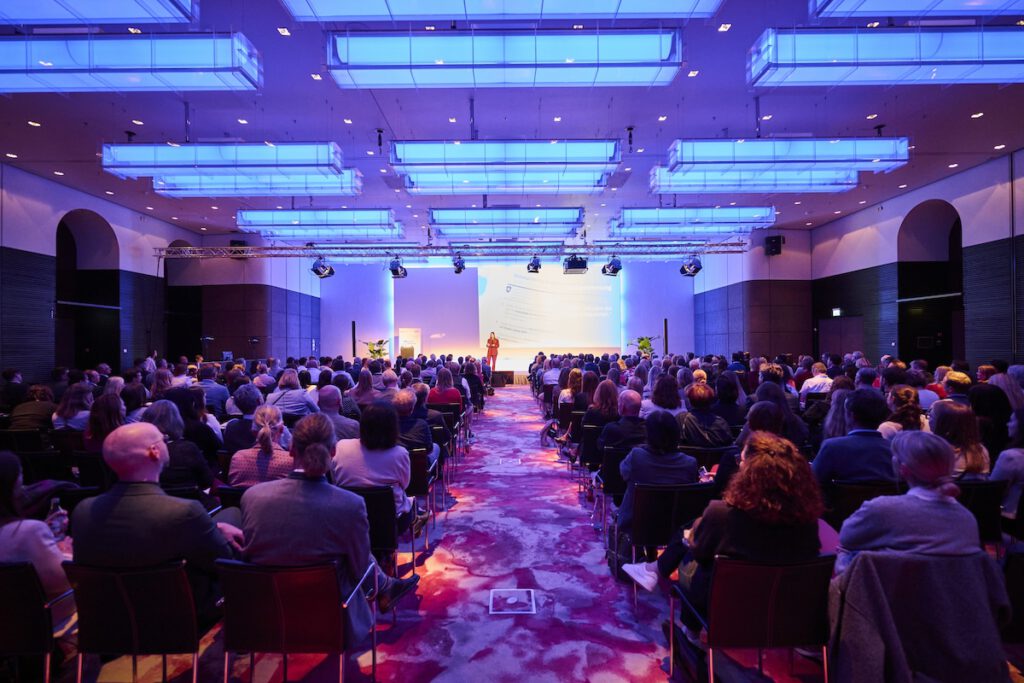
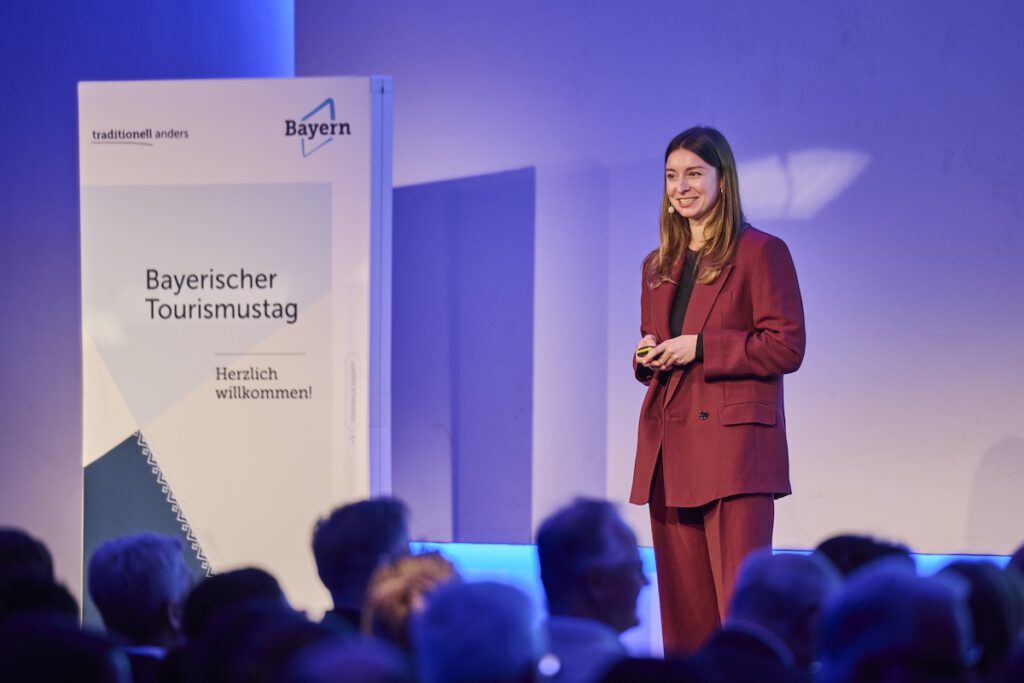
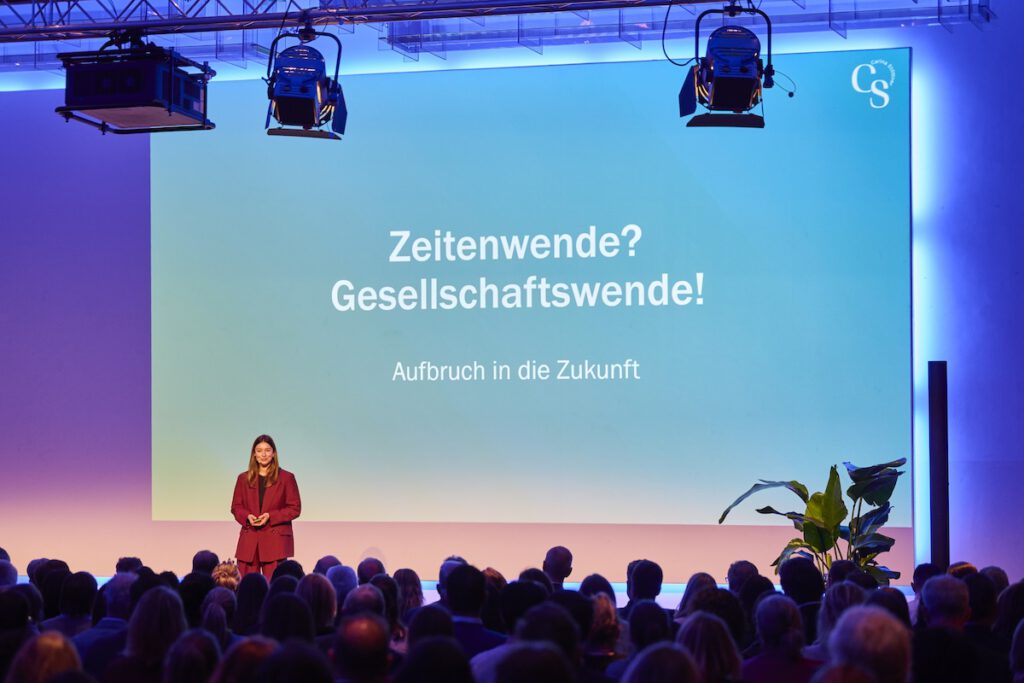
The Bavarian Tourism Day 2025 was all about working together. Under the theme “From Talking to Doing: Cooperation as a Success Factor in Tourism”, one thing came through clearly: turning good ideas into lasting action only works collectively.
Carina Stoettner delivered the keynote, “Zeitenwende? A Society in Change,” inviting the audience to see change as an opportunity rather than a threat. The more complex our environment becomes, she argued, the more we need shared responsibility and new kinds of community. The questions she explored: ➡️ Which social challenges do we have to overcome today in order to build a future worth living in? ➡️ What are the essential pillars of trust? ➡️ How can the “quiet majority” get louder — and why does that matter so much? ➡️ And how, in an age of AI and social media bubbles, do we get back to emphasizing what we have in common rather than what divides us?
Practical examples from Bavaria and beyond — Trans Bayerwald, the Übergangshaus Lübeck, the AzubiTopHotels and the Donaulimes museum network — showed vividly how cooperation works in practice and what it can achieve.
_____
Warm thanks to Barbara Radomski and the whole BayTM team for the invitation, to host Helena Felixberger for guiding the day with such charm — and to everyone who took part for the conversations along the way.
„Wie fange ich eigentlich mit Zukunftsplanung an?“ Diese Frage wird mir von Unternehmer:innen und Führungskräften regelmäßig gestellt. Die einfache Antwort: Es gibt keinen Standardweg. Doch aus meiner Erfahrung in der Foresight-Arbeit mit Unternehmen in unterschiedlichen Branchen lassen sich drei entscheidende Hebel identifizieren, die über Erfolg oder Misserfolg entscheiden.
1. Emotionen erkennen – und ernst nehmen
Corporate Foresight ist mehr als Analyse und Strategie. Wer ernsthaft Zukunftsszenarien entwickelt, hinterfragt zwangsläufig den Status quo – und damit auch die Identität von Führungskräften, die sich stark mit ihrem Unternehmen identifizieren.
Diese Identitätsfragen lösen nicht nur Neugier aus, sondern oft auch Widerstand, Unsicherheit oder Angst. Bevor also eine inhaltlich-strategische Auseinandersetzung beginnen kann, braucht es emotionale Arbeit:
Warum hängen wir so sehr an bestimmten Geschäftsmodellen?
Welche Glaubenssätze und Annahmen über die Zukunft prägen uns – bewusst oder unbewusst?
Wo müssen wir uns selbst infrage stellen, bevor wir andere überzeugen?
Futures Thinking beginnt also nicht mit Zahlen und Trends, sondern mit Selbstreflexion und Dialog auf Augenhöhe.
2. Über den Trend hinausdenken
Viele verwechseln Foresight mit klassischer Trendforschung. Doch: Trends sind sichtbar, zugänglich – und damit auch für jeden Wettbewerber auffindbar. Wer sich ausschließlich an offensichtlichen Entwicklungen orientiert, landet schnell im roten Ozean: Dort, wo alle anderen auch unterwegs sind.
Strategisch wirksame Zukunftsstrategien hingegen entstehen dort, wo Unsicherheit groß ist und die Datenlage dünn:
Welche Trends sind zwar noch unscharf, aber potenziell disruptiv?
Welche Entwicklungen könnten unser Geschäftsmodell fundamental verändern – und sind heute kaum auf dem Radar?
Wo entstehen neue Märkte, die andere (noch) nicht sehen?
Solche Fragen lassen sich nicht im stillen Kämmerlein beantworten. Sie erfordern kollektive Denkarbeit, intensive Diskussionen und konsequente Anwendung von Foresight-Methoden. Hier liegt der wahre Mehrwert von Corporate Foresight: in der strategischen Tiefenbohrung, nicht im Trend-Monitoring.
3. Die richtigen Menschen zur richtigen Zeit einbinden
Ein oft unterschätzter Aspekt in der Foresight-Arbeit ist die richtige Involvierung von Entscheidungsträger:innen. Wer wirklich am Geschäftsmodell arbeiten will, braucht Menschen mit Mandat – nicht nur Zustimmung auf dem Papier.
Das bedeutet:
Vorstände und Executives müssen bereit sein, sich auf Unsicherheit einzulassen.
Es braucht echtes Buy-in, nicht nur symbolische Unterstützung.
Gleichzeitig müssen Fachbereiche wie Produktentwicklung, Marketing, Einkauf oder Vertrieb frühzeitig in den Prozess einbezogen werden – sonst scheitert jede noch so gute Zukunftsstrategie an der Umsetzung.
In Zeiten multipler Krisen ist genau das eine Chance: Viele Mitarbeitende hören derzeit vor allem schlechte Nachrichten – von Kostendruck, Stellenabbau, Marktunsicherheiten. Das fördert Worst-Case-Denken und schwächt die emotionale Bindung ans Unternehmen.
Wer jedoch eine glaubwürdige Vision kommunizieren kann – einen klaren Nordstern für die Zukunft –, hat die Chance, diese Dynamik umzudrehen:
Zugehörigkeit zu stärken
Orientierung zu bieten
und gemeinsam Zukunft zu gestalten.
Im Video erklärt:
Zukunftsplanung strategisch integrieren
Möchten Sie Zukunftsplanung strukturiert und wirkungsvoll in Ihrem Unternehmen verankern? In einem unverbindlichen Vorgespräch klären wir, wie Futures Thinking und Corporate Foresight konkret auf Ihre Organisation angewendet werden können – praxisnah, strategisch fundiert und passend zu Ihrer Führungskultur.
Industry scenarios and innovation: why thinking ahead has become a strategic necessity
One thinking error persists stubbornly across many established industries: the assumption that things will somehow carry on as they always have. This normalcy bias is one of the biggest brakes on innovation we have. Companies that don’t actively push back against it risk sleeping through disruptive change.
Industry scenarios as a strategic early warning system
Which is exactly why scenarios for the future of an industry are a crucial part of strategic innovation work. They make potential paths visible — and reveal early on which kinds of innovation each scenario calls for. Digital business models, circular production, resilient supply chains: thinking through the future of your own sector lets you prepare innovation deliberately rather than simply react.
Four scenarios, four directions for innovation
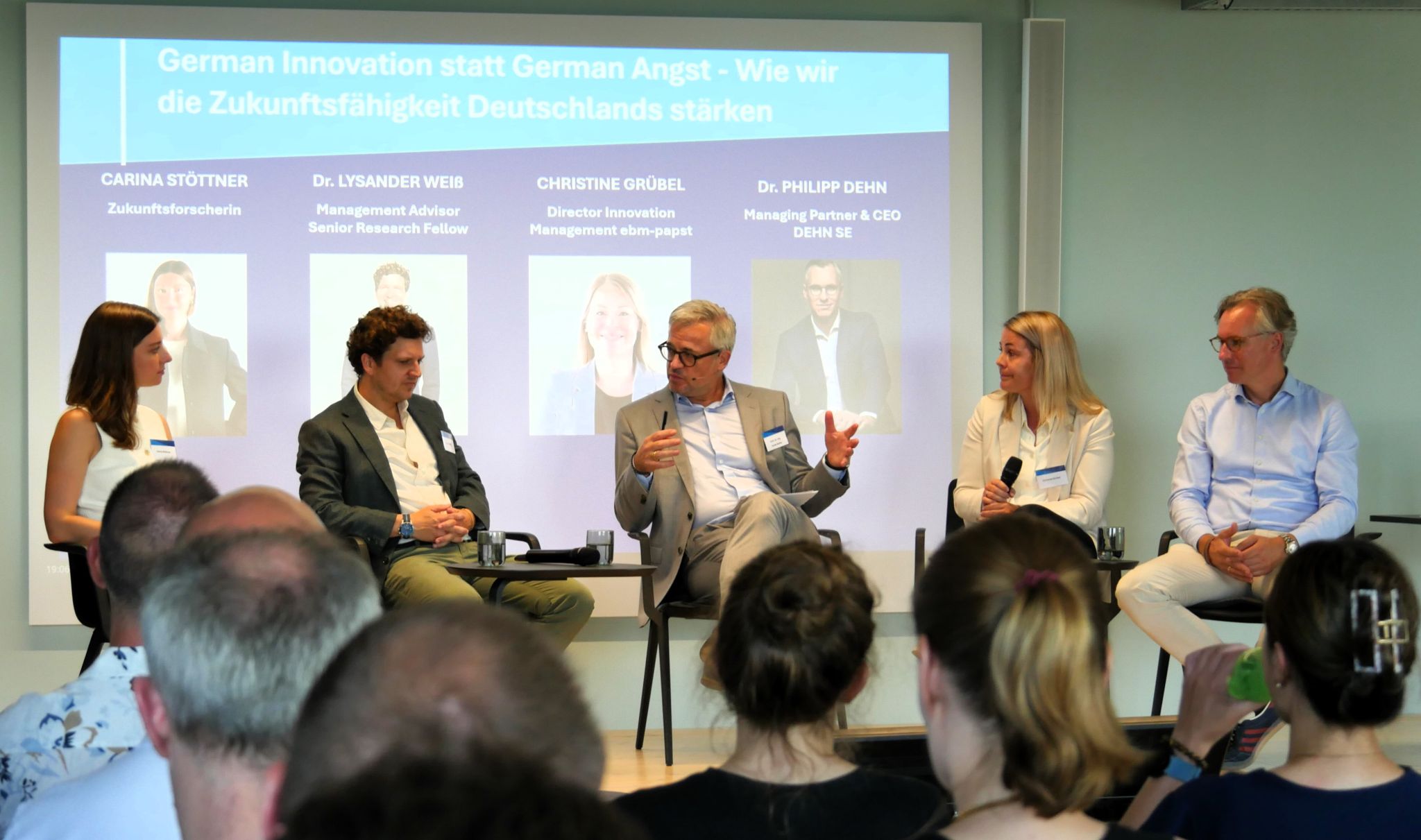
At the launch of Innovation for Growth at IPAI in Heilbronn, I presented four industry scenarios showing how the conditions around us are shifting — and which innovation strategies answer each of them.
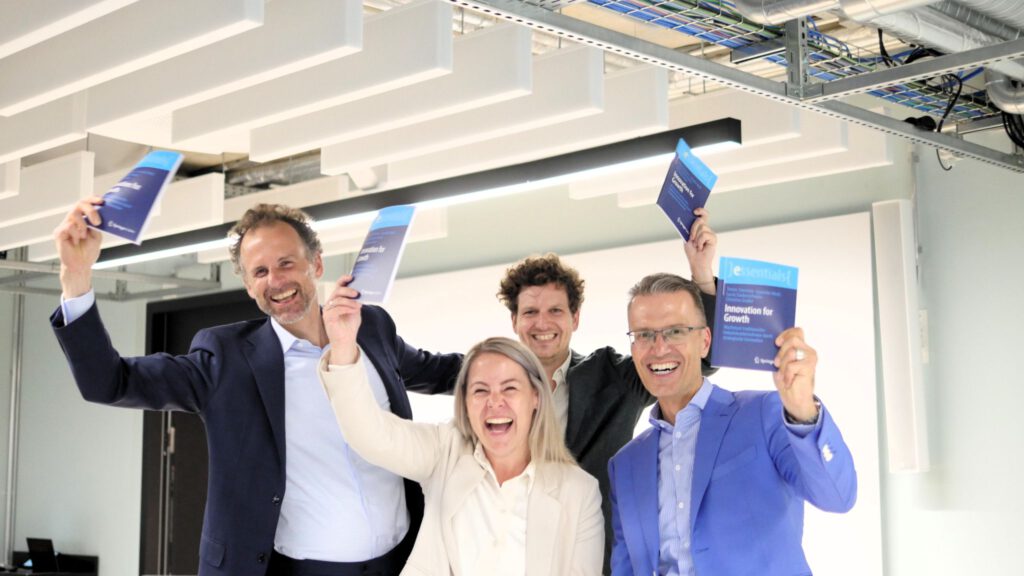
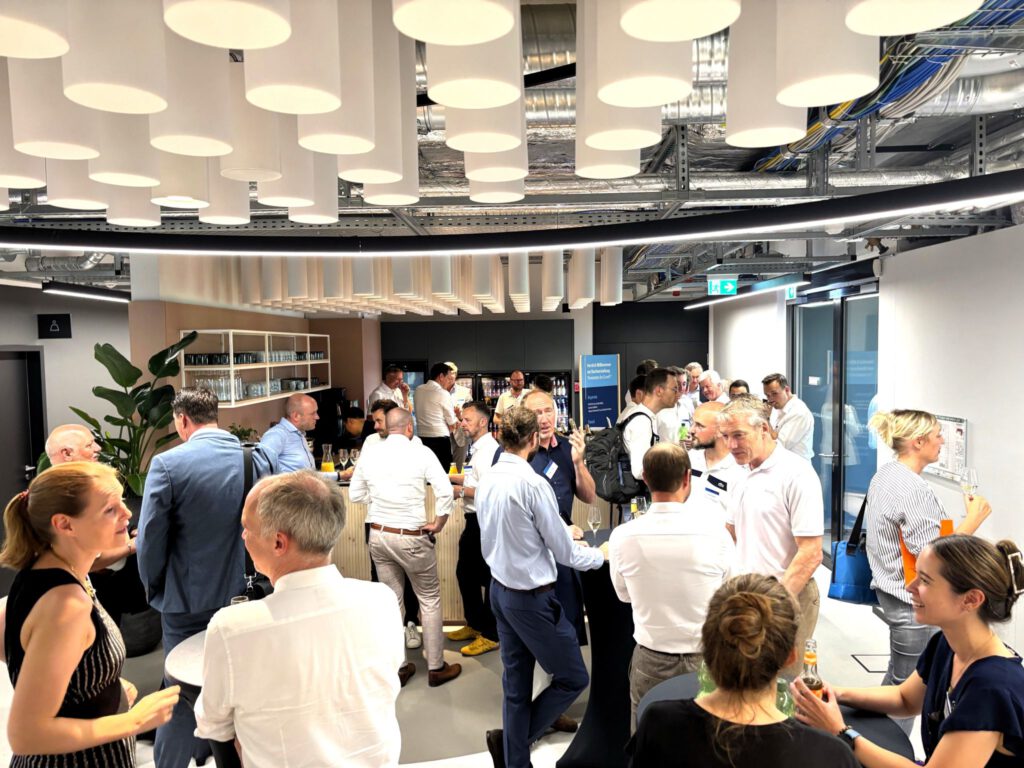
Panel discussion at the launch of Innovation for Growth. Carina Stoettner with Prof. Guido H. Baltes, Christine Grübel, Dr. Lysander Weiß and Philipp Dehn.The authors of Innovation for Growth: Christine Grübel, Dr. Lysander Weiß, Lucas Sauberschwarz and Prof. Tomas Smetana.The discussion that followed with invited guests.
Foresight + innovation = futures literacy
The key lies in connecting foresight with innovation. Building decisions on well-grounded assumptions about the future means deploying resources more precisely, calculating innovation risk more accurately and creating real competitive advantage. That’s what makes a company fit for what’s ahead.
A case in point: ebm-papst and Tomas Smetana
ebm-papst, under Prof. Tomas Smetana, is a striking example of how to restructure not just operationally but structurally. Through strategic innovation the company has managed to question its own field of business and develop it into something built to last — starting from a clear picture of the future and a willingness to leave old patterns behind.
At the event in Heilbronn I was struck by how openly ebm-papst discusses its own business model — and by the nerve it takes to follow new thinking through.
Transformation starts in the mind
The conversations that evening confirmed something again: being ready for the future isn’t a question of technology alone. It starts with the capacity to question yourself, to make bold decisions — and to orient toward the markets that are coming.
My thanks to Tomas Smetana, Lucas Sauberschwarz, Christine Grübel, Dr. Lysander Weiß, Guido H. Baltes and Philipp Dehn for the stimulating conversations and ideas. Innovation for Growth is a real invitation to shift perspective — and a case for thinking in futures.
Einwilligung verwalten
Um dir ein optimales Erlebnis zu bieten, verwenden wir Technologien wie Cookies, um Geräteinformationen zu speichern und/oder darauf zuzugreifen. Wenn du diesen Technologien zustimmst, können wir Daten wie das Surfverhalten oder eindeutige IDs auf dieser Website verarbeiten. Wenn du deine Einwillligung nicht erteilst oder zurückziehst, können bestimmte Merkmale und Funktionen beeinträchtigt werden.
Funktional
Always active
Die technische Speicherung oder der Zugang ist unbedingt erforderlich für den rechtmäßigen Zweck, die Nutzung eines bestimmten Dienstes zu ermöglichen, der vom Teilnehmer oder Nutzer ausdrücklich gewünscht wird, oder für den alleinigen Zweck, die Übertragung einer Nachricht über ein elektronisches Kommunikationsnetz durchzuführen.
Präferenzen
Die technische Speicherung oder der Zugriff ist für den rechtmäßigen Zweck der Speicherung von Präferenzen erforderlich, die nicht vom Abonnenten oder Benutzer angefordert wurden.
Statistiken
Die technische Speicherung oder der Zugriff, der ausschließlich zu statistischen Zwecken erfolgt.Die technische Speicherung oder der Zugriff, der ausschließlich zu anonymen statistischen Zwecken verwendet wird. Ohne eine Vorladung, die freiwillige Zustimmung deines Internetdienstanbieters oder zusätzliche Aufzeichnungen von Dritten können die zu diesem Zweck gespeicherten oder abgerufenen Informationen allein in der Regel nicht dazu verwendet werden, dich zu identifizieren.
Marketing
Die technische Speicherung oder der Zugriff ist erforderlich, um Nutzerprofile zu erstellen, um Werbung zu versenden oder um den Nutzer auf einer Website oder über mehrere Websites hinweg zu ähnlichen Marketingzwecken zu verfolgen.