Tag: Panel

Hope for a Better Future: A Conversation on Stage at the Theater

A conversation about trust, the future and social responsibility at the Markgrafentheater in Erlangen

Can hope be learned again, in a time defined by overlapping crises, political radicalization, technological overload and a sense of powerlessness in the face of ecological breakdown? That question was at the center of the second edition of the talk series Amt 44 at Schauspiel Erlangen, held on 16 December 2025 at the Markgrafentheater.

After a successful first edition in the spring, the format returned to a subject that could hardly be more timely. Hosted by Matthias Köhler, resident director and part of the artistic leadership, the evening wasn’t about quick answers or moral certainties. As the format intends, what mattered was asking the right question.

Four very different perspectives met on the panel:
Peter Dabrock, theologian, ethicist and former chair of the German Ethics Council;
Baro Vicenta Ra Gabbert, author, lawyer and spokesperson for social and ecological justice at Greenpeace;
Vincent C. Müller, philosopher and Humboldt Professor for the Philosophy of Artificial Intelligence;
and Carina Stoettner, futurist and adviser to leadership teams.

Peter Dabrock brought an ethical and theological perspective, understanding hope as a deliberate stance that keeps you able to act even without optimism. Baro Vicenta Ra Gabbert spoke from the practice of activism and showed how hope grows out of everyday commitment — through young people above all, even in the face of political setbacks. Vincent C. Müller opened a philosophical and technological horizon, arguing that thinking worst-case scenarios through properly is a precondition for shaping the future responsibly. Carina Stoettner placed the discussion in the context of futures research, arguing that hope at a societal level rests above all on trust — in the future and in one another — and on the quiet majority finding the courage to speak.

You can read more about the evening in the write-up by Rezensöhnchen or in the Nürnberger Nachrichten (both in German).

The verdict: an absorbing conversation, with plenty of spontaneous contributions and debate.

Would you like to book Carina Stoettner for a panel or a talk? Get in touch. More about the speaker.

Photos: Henrik Stelter

Industry Scenarios and Innovation: Why Thinking Ahead Has Become a Strategic Necessity

Industry scenarios and innovation: why thinking ahead has become a strategic necessity

One thinking error persists stubbornly across many established industries: the assumption that things will somehow carry on as they always have. This normalcy bias is one of the biggest brakes on innovation we have. Companies that don’t actively push back against it risk sleeping through disruptive change.

Industry scenarios as a strategic early warning system

Which is exactly why scenarios for the future of an industry are a crucial part of strategic innovation work. They make potential paths visible — and reveal early on which kinds of innovation each scenario calls for. Digital business models, circular production, resilient supply chains: thinking through the future of your own sector lets you prepare innovation deliberately rather than simply react.

Four scenarios, four directions for innovation

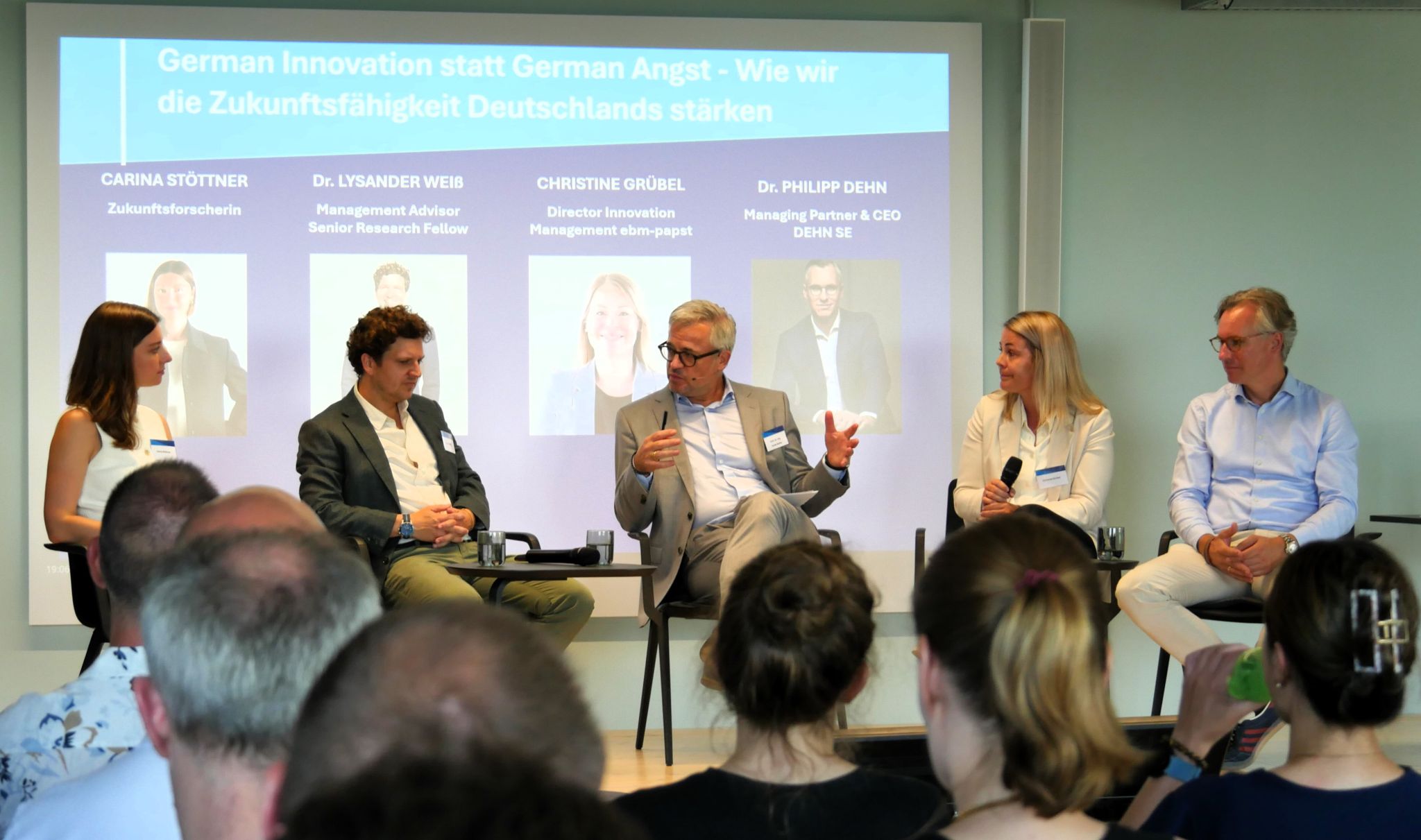
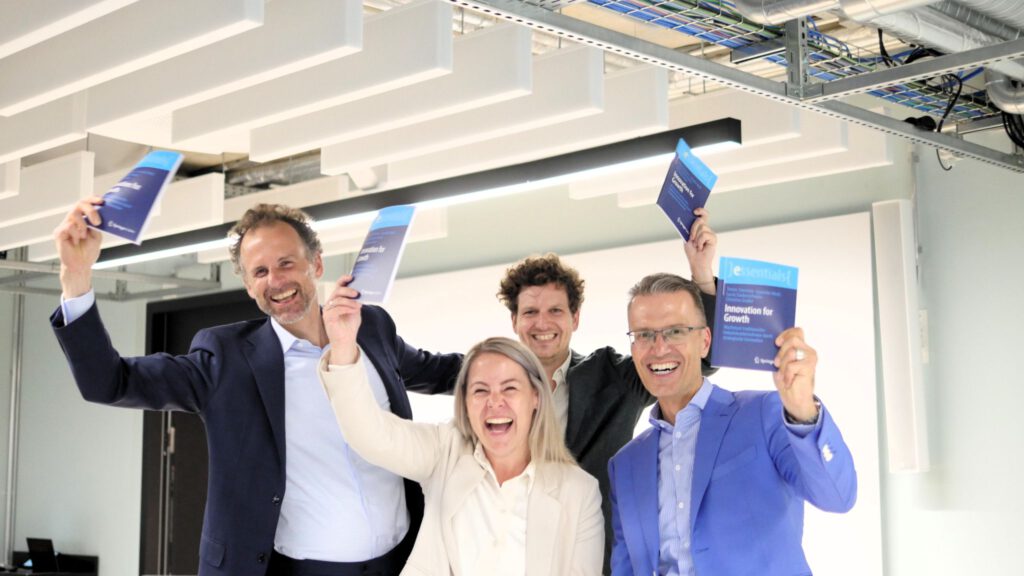
At the launch of Innovation for Growth at IPAI in Heilbronn, I presented four industry scenarios showing how the conditions around us are shifting — and which innovation strategies answer each of them.

Foresight + innovation = futures literacy

The key lies in connecting foresight with innovation. Building decisions on well-grounded assumptions about the future means deploying resources more precisely, calculating innovation risk more accurately and creating real competitive advantage. That’s what makes a company fit for what’s ahead.

A case in point: ebm-papst and Tomas Smetana

ebm-papst, under Prof. Tomas Smetana, is a striking example of how to restructure not just operationally but structurally. Through strategic innovation the company has managed to question its own field of business and develop it into something built to last — starting from a clear picture of the future and a willingness to leave old patterns behind.

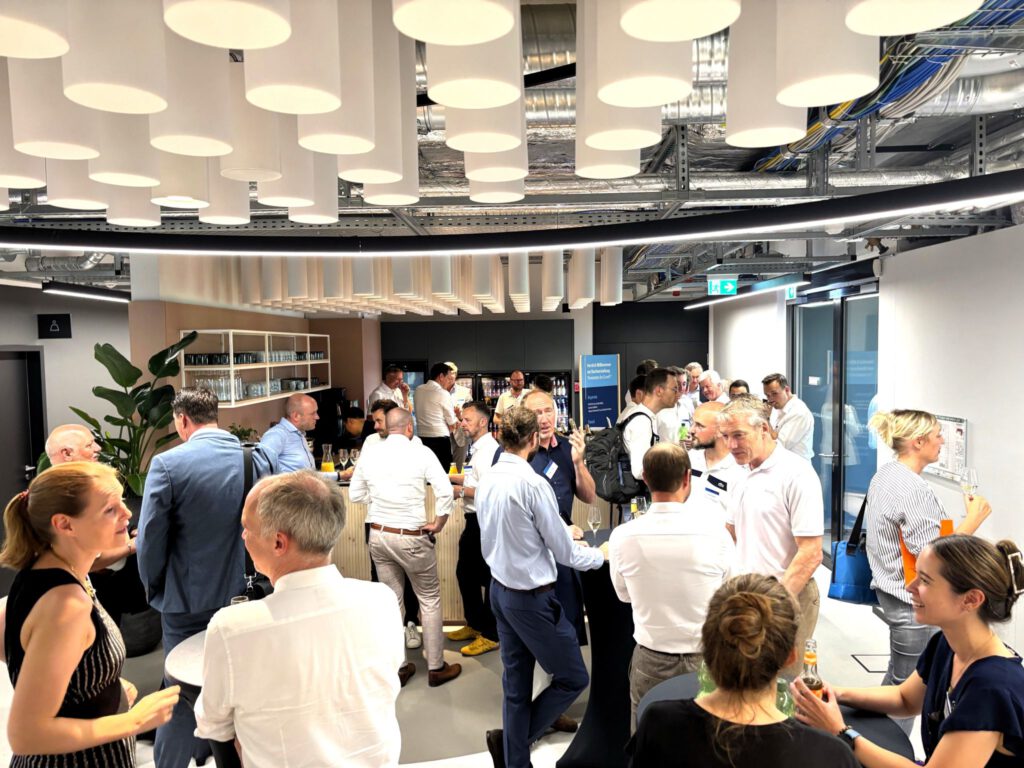
At the event in Heilbronn I was struck by how openly ebm-papst discusses its own business model — and by the nerve it takes to follow new thinking through.

Transformation starts in the mind

The conversations that evening confirmed something again: being ready for the future isn’t a question of technology alone. It starts with the capacity to question yourself, to make bold decisions — and to orient toward the markets that are coming.

My thanks to Tomas Smetana, Lucas Sauberschwarz, Christine Grübel, Dr. Lysander Weiß, Guido H. Baltes and Philipp Dehn for the stimulating conversations and ideas. Innovation for Growth is a real invitation to shift perspective — and a case for thinking in futures.

Investing with Foresight at Erste Group in Vienna — Keynote and Panel

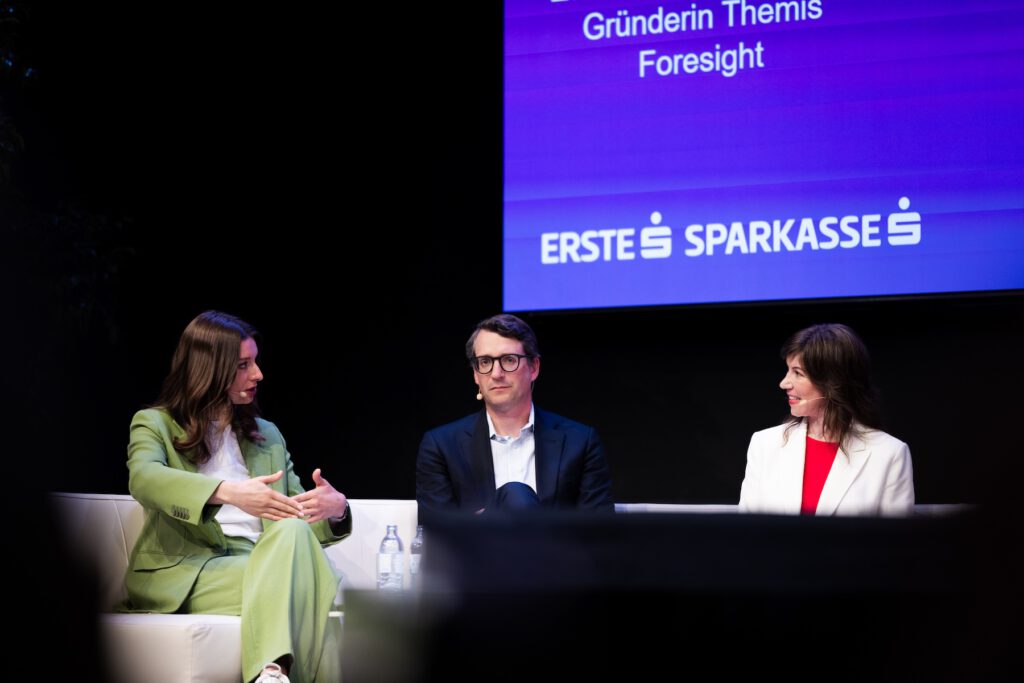
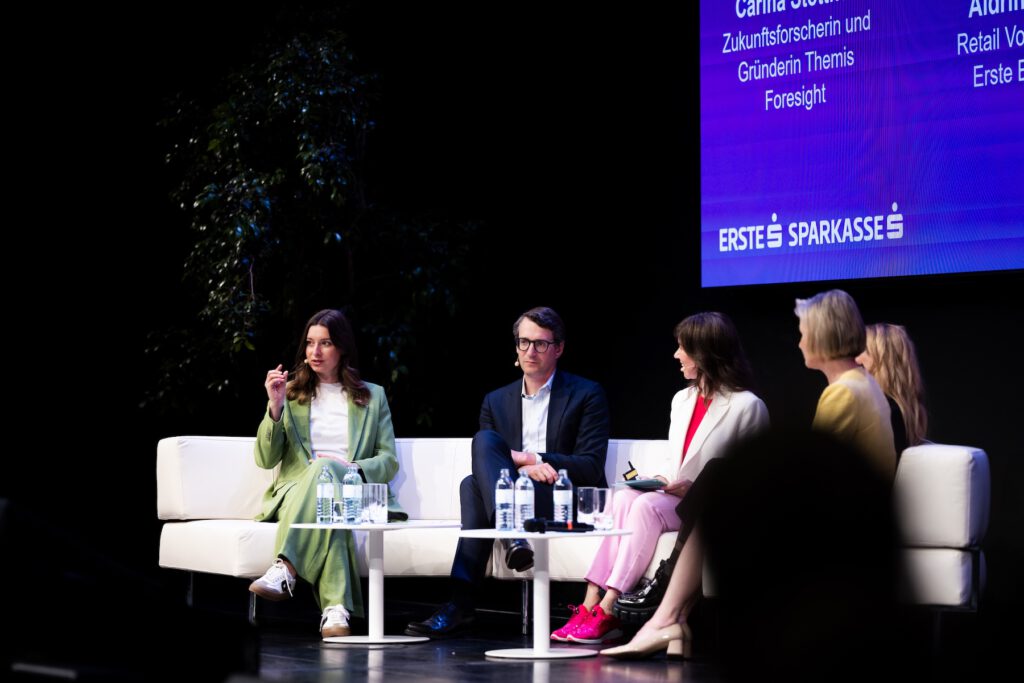
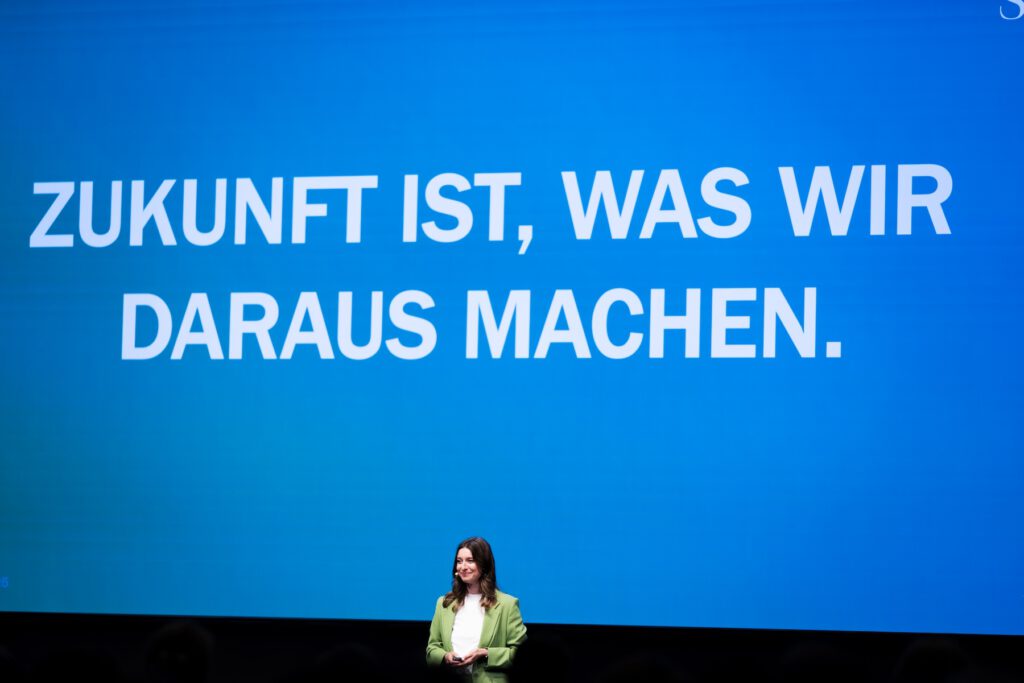
Last week I had the chance to share my perspective at the beautifully organized She Invests event hosted by Erste Group in Vienna — first in a keynote, then on a panel with supervisory board member Caroline Kuhnert, platform specialist Christine Bachler, board member Maximilian Clary and finance expert Olga Miler. A strong line-up, and one that showed just how much thinking about the future and making smart financial decisions matter right now.

Here are my main takeaways:

💶 The past guarantees nothing about the future.
Just because an investment performed well in the past doesn’t mean it will keep working. Our biggest thinking error is usually extrapolating from yesterday, or today, to tomorrow. What looked safe yesterday can disappear tomorrow — Kodak being the obvious example. And what’s hyped today may well be irrelevant in twenty or thirty years. My advice: keep the big picture in view instead of chasing short-term trends.

💶 Get past the negativity bias.
When everything looks bleak, plenty of people think: “I may as well spend my money now.” But what if things turn out well? Working through several possible futures deliberately leads to better decisions and better long-term security.

💶 More confidence with technology, and fair financial arrangements.
Women should be bolder about getting to grips with technological trends. And talk through fair financial arrangements with your partner early. Having provided for yourself means staying calmer in a crisis, having more professional flexibility, and making better decisions over the long run.

💶 People still make the difference.
Technology can simplify saving, analyze data and create transparency. But in emotional or critical moments, you still need a real person to talk to. As we discussed on the panel, the data is unambiguous: portfolios belonging to customers who combine digital tools with personal advice perform better. Which is what makes hybrid solutions convincing — Erste Group’s George app, for instance, where you can still reach an actual human in person or by phone when it counts.

A bit of a shame that George is only available in Austria.

The full event write-up is here.

Many thanks to Monika Sternathova and Lesly Alfaro for the invitation and for such a great event.

Here’s the full video:

Photos: Marlena König