What do you do when your own industry starts to wobble? SÜDKURIER put that question to Carina Stöttner following her keynote at the Friends & Family Day of the Institute for Strategic Innovation and Transformation (IST) at HTWG Konstanz.
Two thought patterns that block decisions
The talk centered on two cognitive biases at work in almost every organization — and ones Carina Stöttner returns to regularly in her keynote “The Future as Opportunity”.
The first: threatening information sticks far better than neutral or positive information. It’s a reflex that made evolutionary sense, but today it can leave leaders blind to the room they actually have to maneuver.
The second works in the opposite direction: the assumption that things will carry on much as they always have. Carina Stöttner tested this on the roughly fifty people in the room with a single simple question — and the result was clear enough that the journalist gave it a section heading of its own.
Scenarios beat forecasts
The article also picks up an example that reliably produces a moment of recognition in her talks. In the early 1970s, one oil company committed to systematic scenario planning against the resistance of the wider industry. When the oil crisis hit, every scenario they had developed turned out to be wrong — and the company was still far better positioned than its rivals. The value of scenario work lies not in the accuracy rate but in the ability to act when it counts.
Journalist Joshua Tress also describes the three phases organizations move through in periods of upheaval, how the questions put to a futurist have shifted since the pandemic and the war in Ukraine, and why the goal of a futures process is allowed to change along the way.
👉 Read the article in SÜDKURIER (25 July 2026, by Joshua Tress) — in German
Book this keynote for your event
“The Future as Opportunity” examines the thought patterns that cloud our view of what’s coming, the concrete value of thinking in scenarios, and how organizations regain their ability to shape their own future — especially in uncertain times. Delivered to audiences at Erste Group, Google, WTS Advisory and the Otto Group, among others.
📩 kontakt@carina-stoettner.de — for a short introductory call about your event.
In January 2026, sociologist and futurist Carina Stöttner founded Futurewise Company. The consultancy works across Europe, helping executive boards and leadership teams stay strategically capable of acting in a climate of permanent uncertainty.
Futurewise runs executive offsites, builds futures thinking projects aimed at opening up new growth areas, and carries out strategy reviews. The goal is to give companies orientation in complex situations — without false certainty, but with a clear basis for making decisions.
The starting point was the upheaval of recent years: the pandemic, geopolitical conflict, the energy crisis, inflation and fragile supply chains. In that environment, Stöttner argues, optimizing existing business models is no longer enough. Growth increasingly emerges where uncertainty is greatest — and those are precisely the spaces companies need to open up in a structured way.
Through scenario work and futures thinking, Futurewise creates space for decisions: room to think through possible futures systematically and weigh strategic options against them. The focus is on resilience as a precondition for new growth — not as retreat, but as a deliberate opening toward future markets and business models.
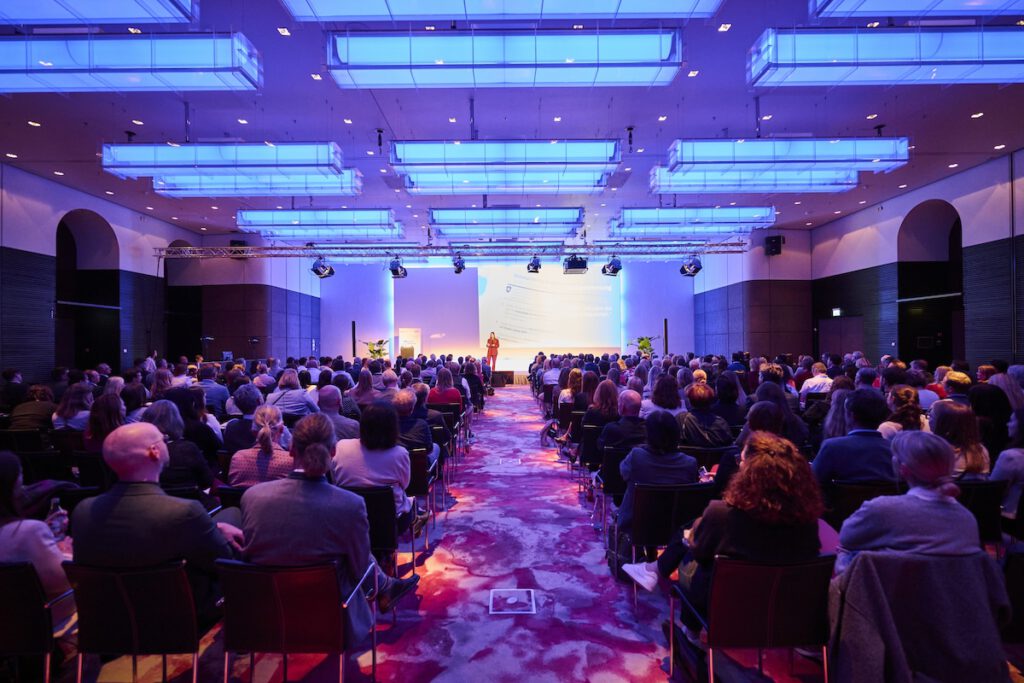
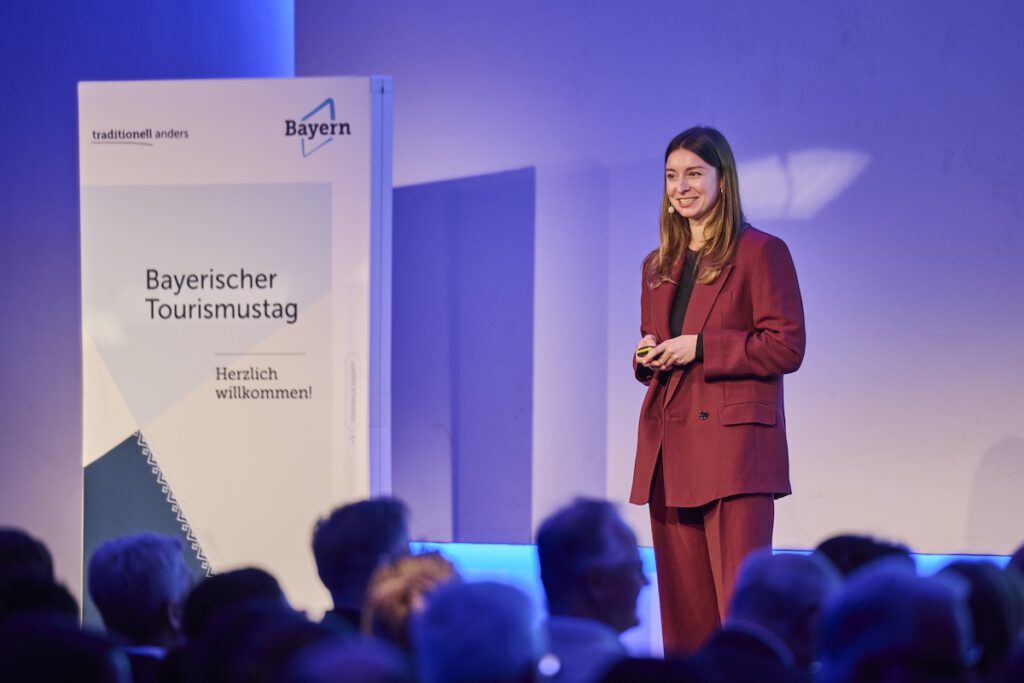
The Bavarian Tourism Day 2025 was all about working together. Under the theme “From Talking to Doing: Cooperation as a Success Factor in Tourism”, one thing came through clearly: turning good ideas into lasting action only works collectively.
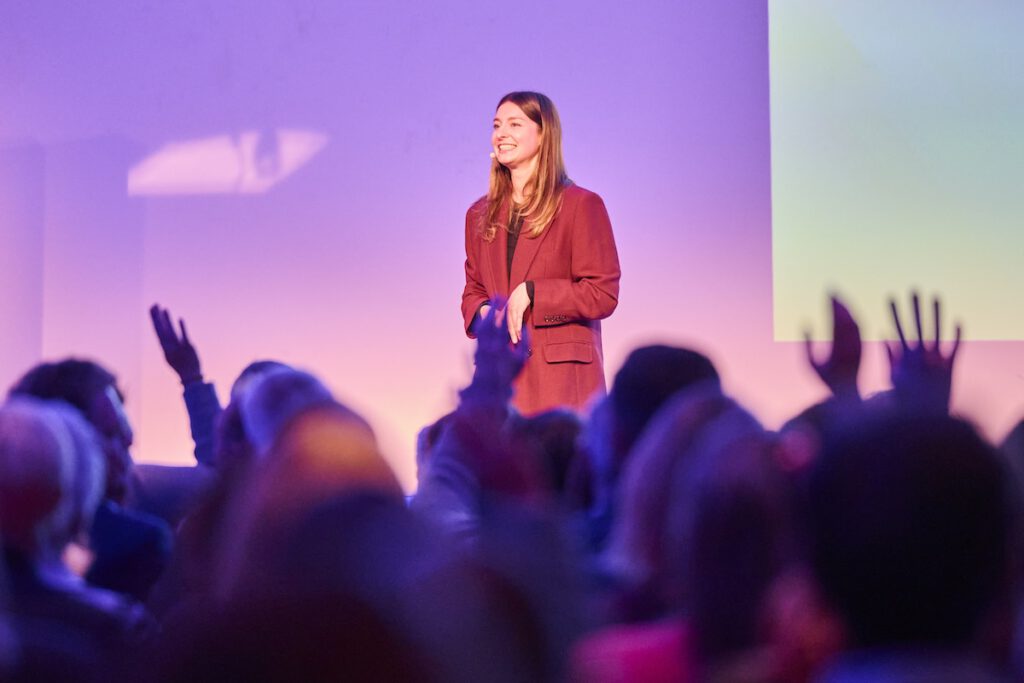
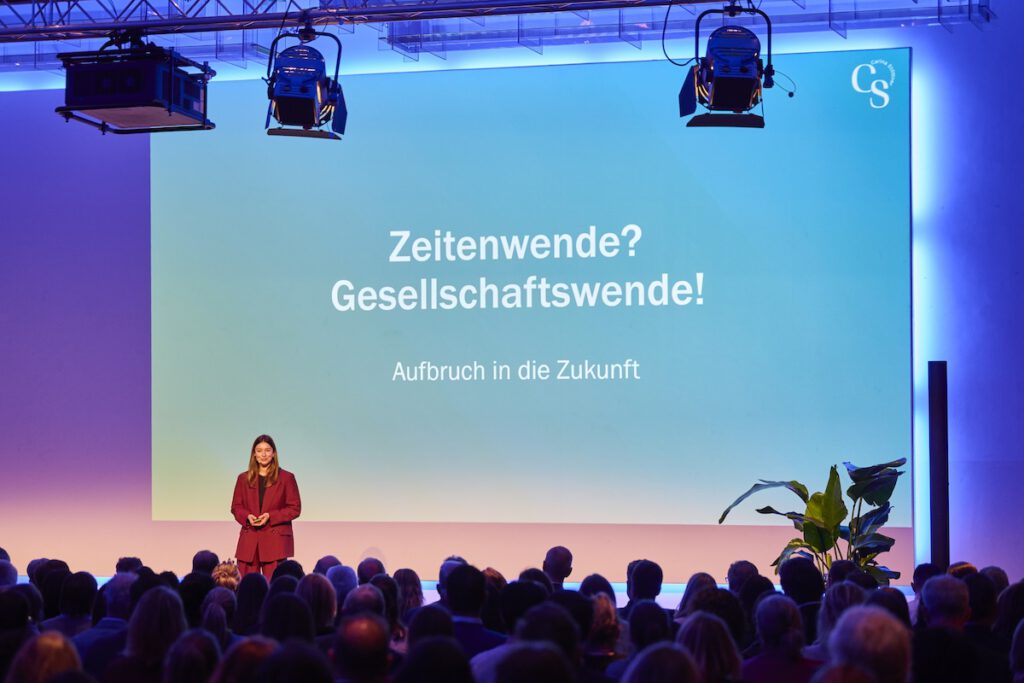
Carina Stoettner delivered the keynote, “Zeitenwende? A Society in Change,” inviting the audience to see change as an opportunity rather than a threat. The more complex our environment becomes, she argued, the more we need shared responsibility and new kinds of community. The questions she explored: ➡️ Which social challenges do we have to overcome today in order to build a future worth living in? ➡️ What are the essential pillars of trust? ➡️ How can the “quiet majority” get louder — and why does that matter so much? ➡️ And how, in an age of AI and social media bubbles, do we get back to emphasizing what we have in common rather than what divides us?
Practical examples from Bavaria and beyond — Trans Bayerwald, the Übergangshaus Lübeck, the AzubiTopHotels and the Donaulimes museum network — showed vividly how cooperation works in practice and what it can achieve.
_____
Warm thanks to Barbara Radomski and the whole BayTM team for the invitation, to host Helena Felixberger for guiding the day with such charm — and to everyone who took part for the conversations along the way.
In einer Welt voller Unsicherheit, technologischer Sprünge und gesellschaftlicher Umbrüche wird eine Frage für Unternehmen zentral: Wie kann man heute kluge Entscheidungen für ein Morgen treffen, das man nicht kennt? Strategisches Foresight bietet keine Vorhersage – sondern eine methodisch fundierte Herangehensweise, um Zukünfte zu explorieren, Komplexität zu strukturieren und unter Unsicherheit Orientierung zu finden. In diesem Beitrag beantworte ich fünf der häufigsten Fragen zum Thema – kompakt und praxisnah.
Was ist strategisches Foresight?
Strategisches Foresight ist die strukturierte Auseinandersetzung mit möglichen, wahrscheinlichen und wünschenswerten Zukünften. Es geht nicht darum, die Zukunft vorherzusagen, sondern darum, mehrere Zukünfte zu explorieren und zu verstehen, wie sich Systeme verändern können.
Die EU sagt: “Foresight is the discipline of exploring and anticipating future possible developments to shape the preferable future.”
Foresight nutzt qualitative und quantitative Methoden, um:
Zukunftsszenarien, Visionen und Orientierungsbilder zu entwickeln,
neue Geschäftsfelder zu erschließen,
oder innovative Produkte und Services zu denken – oft in Kombination mit agilen und Design-orientierten Innovationsmethoden.
Foresight ist ein Denk- und Reflexionsraum, der Organisationen ermöglicht, unter Unsicherheit klüger zu entscheiden. Einen guten Guide für den Beginn und eine Übersicht über Tools bietet das UN-Futureslab.
Wie unterscheidet sich Foresight von klassischer Strategiearbeit?
Klassische Strategiearbeit
Strategisches Foresight
Lineare Planung
Denken in Alternativen, Szenarien
Fokus auf Optimierung
Fokus auf ungedachte Möglichkeiten
Orientierung an Vergangenheit und Ist-Zustand
Orientierung an möglichen Zukunftsdynamiken
Reaktion auf bekannte Trends
Antizipation von Wandel und Emergenz
Ziel: Kontrolle und Planung
Ziel: Orientierung und Handlungsfähigkeit
Foresight erweitert die klassische Strategiearbeit – und macht sie zukunftsfähig in einer Welt, in der Kontrolle allein nicht mehr ausreicht.
Worin besteht der Unterschied zwischen Foresight, Trends und Prognosen?
Diese Begriffe werden oft verwechselt – dabei erfüllen sie unterschiedliche Rollen:
Trends beschreiben bestehende, beobachtbare Entwicklungen (z. B. Digitalisierung, Individualisierung).
Prognosen versuchen, auf Basis von Daten eine bestimmte Entwicklung vorherzusagen (z. B. Marktvolumen in 2028).
Foresight geht einen Schritt weiter: Es nutzt Trends, um ihr Zusammenspiel zu analysieren, Konsequenzen zu durchdenken und mögliche Zukunftsverläufe sichtbar zu machen.
Foresight fragt nicht „Was wird passieren?“, sondern:
Was könnte passieren? Was wollen wir möglich machen und was verhindern?
Warum ist Foresight wichtig für Unternehmen?
In Zeiten von Umbruch und Unsicherheit brauchen Unternehmen mehr als operative Exzellenz – sie brauchen Zukunftskompetenz. Foresight hilft, …
Veränderungen frühzeitig zu erkennen („weak signals“)
Entscheidungen robuster und vorausschauender zu treffen
innovative Potenziale zu erschließen
strategische Risiken zu erkennen und abzufedern
Führung und Kultur auf Zukunft auszurichten
und die Frage zu stellen: Was wäre, wenn…?
Foresight ist keine Spielerei – sondern eine zentrale Fähigkeit für resiliente, lernende Organisationen.
Welche Methoden nutzt man in der Foresight?
Foresight ist kein Bauchgefühl, sondern ein methodisch strukturierter Prozess, der je nach Zielstellung angepasst wird. Zu den wichtigsten Methoden gehören:
Szenarienentwicklung: Entwicklung alternativer Zukunftsbilder
Trend- und Signalbeobachtung: Identifikation relevanter Entwicklungen und Frühindikatoren
The future can’t be predicted — but it can be shaped. To help companies build resilience in a complex world, I work with established and emerging methods from futures research. The question at the center is always the same: how do you turn what we know today into decisions that hold up tomorrow?
Here’s an overview of the methods I and the Futurewise Company work with regularly.
The Delphi method
What is the Delphi method?
Delphi is a qualitative method used in futures research. Over several rounds, experts from different fields are systematically asked to assess how the future might develop. The method was developed at the RAND Corporation and takes its name from the ancient oracle at Delphi.
The first step is in-depth interviews with a selected panel of experts (15 to 35 people). I condense what they say into hypotheses, which go back to the panel anonymously in a second round for assessment. What emerges is a well-grounded picture of possible developments.
What is Delphi good for?
Broadening perspective
Assessing trend and technology scenarios
Finding strategic direction under high uncertainty
In practice
I reach for Delphi when I want to go deeper with a leadership team: where are the future growth opportunities for their company, and where are new risks emerging? We talk to politicians, academics, potential customers and consumers, and also to other entrepreneurs and start-ups. We go into those conversations together and try to understand where the real ruptures are happening. What makes it interesting is that most of what comes out of it isn’t in the headlines or the reports. These interviews give us a direct look into the engine room, or behind the closed doors where political decisions get made.
Scenario analysis
What is scenario analysis?
Scenarios are narrative, plausible futures built from assumptions, drivers and uncertainties. They help companies understand different paths ahead and make strategic decisions that hold up across more than one of them.
Originally coined by Herman Kahn and famously used by Shell to navigate the oil crisis, the method lets you play developments through and see what they would mean for your business model.
What are scenarios good for?
Identifying strategic options
Working through uncertainty
Communicating complex pictures of the future
In practice
There are dozens of ways to build scenarios. In the video below I explain three of them briefly. Simple approaches like the 2×2 matrix work well with clients when we want to think a specific question through efficiently from several directions: what happens if our customer segment’s purchasing power keeps growing — and what if it stalls? What if demand for technology X stays niche — and what if it turns into a mass market? It’s a fast, straightforward way to play out different developments. When a discussion inside a team is getting heated, it particularly helps everyone step back and look at all the possible directions as objectively as they can.
Backcasting
What is backcasting?
Backcasting doesn’t start in the present but in a future worth having. From there we work systematically backwards, deriving the steps that lead to it. That opens up radically different perspectives and breaks through mental blocks.
I work with leadership teams to define a clear picture of the future, then develop short-, medium- and long-term strategies from it together.
What is backcasting good for?
Developing strategies that are visionary and realistic at once
Breaking the habit of short-term reaction
Giving innovation or transformation programs a strategic direction
In practice
Talking about the future generates plenty of good ideas. The problem is that back in the here and now, nobody in the operating business suddenly has time to work on long-term topics as well. Backcasting is a great way to show that if we haven’t delivered Y by point X, the vision we developed won’t become reality. It creates accountability and breaks a big vision down into manageable, actionable steps.
The Futures Triangle
What is the Futures Triangle?
The Futures Triangle, developed by Sohail Inayatullah, analyzes three forces that shape any future:
Push: the drivers of the present
Pull: compelling visions of the future
Weight: the structures of the past that hold things back
The method helps make visible the tensions within which strategic decisions actually play out.
What is the Futures Triangle good for?
Analyzing contradictory demands on the future
Setting strategic priorities
Reflecting on cultural and structural blockers
In practice
“We discussed this three years ago and it didn’t work then, so now it’s off the table.” I hear some version of that in every company I work with. This method is well suited to making those beliefs visible and asking why they exist in the first place. And it applies not only to the past and present but to the future too. Take hyped trends: they can be seductive, and plenty of companies jump straight on board. But is it hype or a long-term opportunity? The Futures Triangle helps you look at that more closely.
The Futures Wheel
What is a Futures Wheel?
The Futures Wheel, developed by Jerome C. Glenn, is a visual thinking tool for systematically mapping the direct and indirect consequences of an event or a trend.
At the center sits a single impulse — a technological innovation, for example. From there we work outward in concentric rings through first-, second- and third-order effects.
What is the Futures Wheel good for?
Analyzing developments systemically
Getting teams involved in creative thinking about the future
Spotting the risks and side effects of early decisions
In practice
Anyone can think a single trend through: AI will take over a large share of graphic design work. The Futures Wheel helps you think one step further. Does that mean those jobs become redundant — and if so, which parts of them? Or does it mean a graphic designer can now handle ten commissions a day instead of one, and eventually has to, because clients increasingly expect lower prices? And if that’s right, being a graphic designer means becoming an AI tool manager running ten tasks in parallel. Which means I need people who can handle that simultaneity. The pressure in the job goes up, and so do the demands on how people think. What does that mean for managing staff, for burnout rates, for how agencies distribute work? A Futures Wheel helps you follow developments like that all the way through.
Trend radar
What is a trend radar?
A trend radar is a structured analytical tool that captures, assesses and visualizes relevant trends and weak signals for use in strategy work. Trends are positioned according to their relevance and their level of uncertainty.
I build trend radars for sectors, technologies or specific questions — the future of work, of industry or of sustainability, for instance.
What is a trend radar good for?
Strategic early warning
Identifying fields for innovation
Communicating knowledge about the future inside the company
Not sure which method fits your question best? I’m happy to help you choose one and put it into practice.
Um dir ein optimales Erlebnis zu bieten, verwenden wir Technologien wie Cookies, um Geräteinformationen zu speichern und/oder darauf zuzugreifen. Wenn du diesen Technologien zustimmst, können wir Daten wie das Surfverhalten oder eindeutige IDs auf dieser Website verarbeiten. Wenn du deine Einwillligung nicht erteilst oder zurückziehst, können bestimmte Merkmale und Funktionen beeinträchtigt werden.
Funktional
Always active
Die technische Speicherung oder der Zugang ist unbedingt erforderlich für den rechtmäßigen Zweck, die Nutzung eines bestimmten Dienstes zu ermöglichen, der vom Teilnehmer oder Nutzer ausdrücklich gewünscht wird, oder für den alleinigen Zweck, die Übertragung einer Nachricht über ein elektronisches Kommunikationsnetz durchzuführen.
Präferenzen
Die technische Speicherung oder der Zugriff ist für den rechtmäßigen Zweck der Speicherung von Präferenzen erforderlich, die nicht vom Abonnenten oder Benutzer angefordert wurden.
Statistiken
Die technische Speicherung oder der Zugriff, der ausschließlich zu statistischen Zwecken erfolgt.Die technische Speicherung oder der Zugriff, der ausschließlich zu anonymen statistischen Zwecken verwendet wird. Ohne eine Vorladung, die freiwillige Zustimmung deines Internetdienstanbieters oder zusätzliche Aufzeichnungen von Dritten können die zu diesem Zweck gespeicherten oder abgerufenen Informationen allein in der Regel nicht dazu verwendet werden, dich zu identifizieren.
Marketing
Die technische Speicherung oder der Zugriff ist erforderlich, um Nutzerprofile zu erstellen, um Werbung zu versenden oder um den Nutzer auf einer Website oder über mehrere Websites hinweg zu ähnlichen Marketingzwecken zu verfolgen.